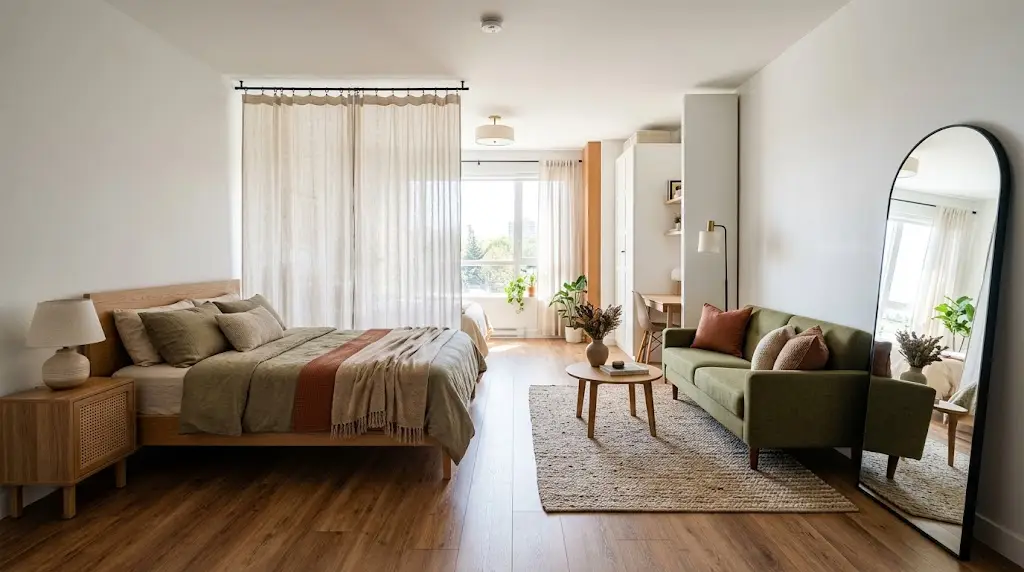
Decorating one open room can feel tricky when your bed, sofa, dining area, and storage all need to share the same space.
Too much furniture can make the room feel crowded. Too little structure can make it feel unfinished.
The best one room apartment decor ideas create visual breathing room while giving every corner a clear purpose.
You do not need a huge apartment to make your home feel open and comfortable. Smart furniture placement, lighter colors, vertical storage, mirrors, thoughtful lighting, and subtle room zoning can completely change how the space feels.
I have noticed that small apartments often look larger when there is less visual competition. A clear walkway, a few larger pieces, and some intentionally empty space can make a bigger difference than adding more decor.
Here are 15 ideas that can help your one room apartment feel brighter, calmer, and surprisingly spacious.
1. Keep the Center Open
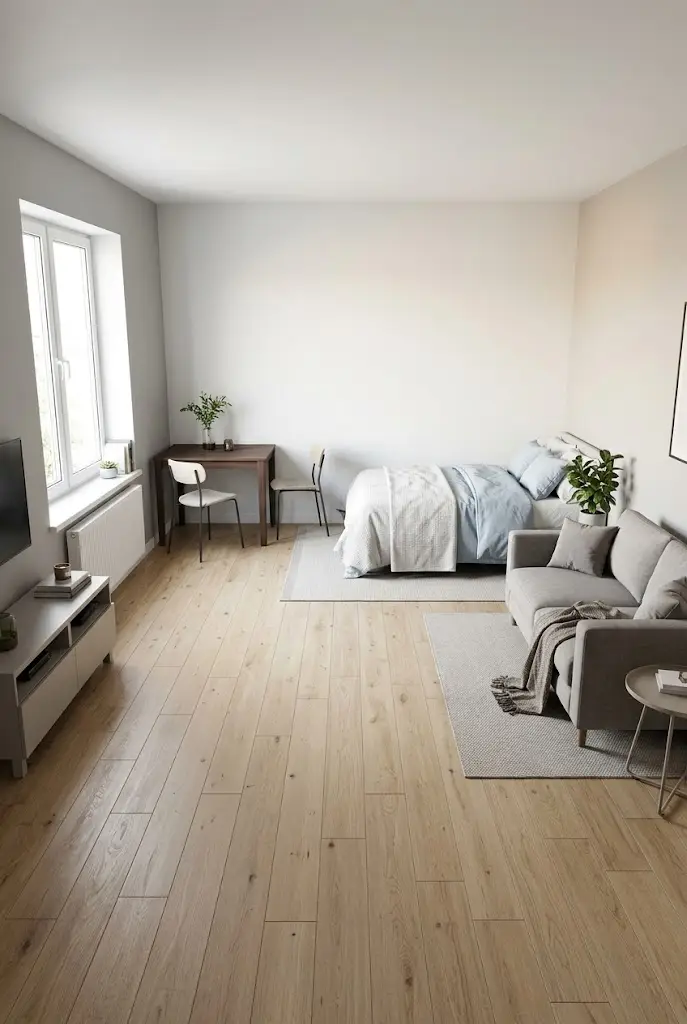
Start with the floor plan before thinking about decor.
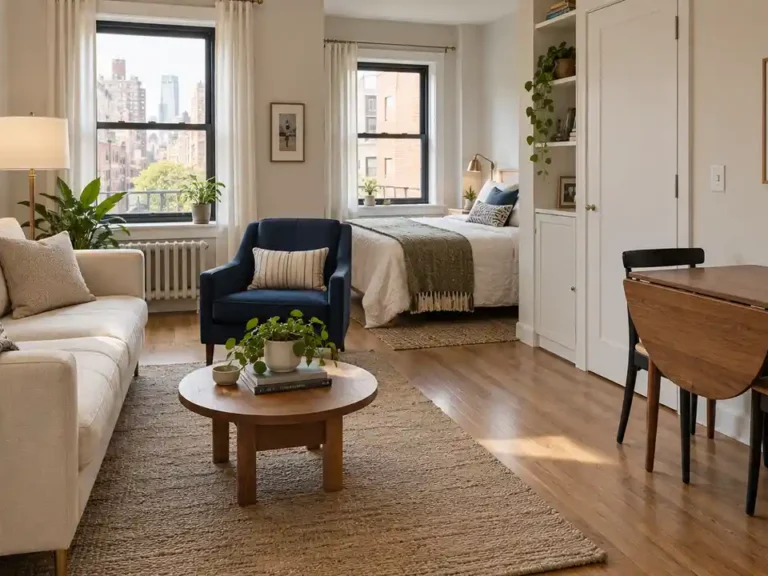
Try to keep the middle of the apartment as open as possible.
Place larger furniture closer to the walls and create one clear walking path from the entrance to the main living areas.
Visible floor space makes a room feel less crowded.
It also helps your eye travel farther across the apartment.
In my experience, even a modest open area in the center can make a tiny room feel noticeably easier to live in.
2. Choose Slim Furniture
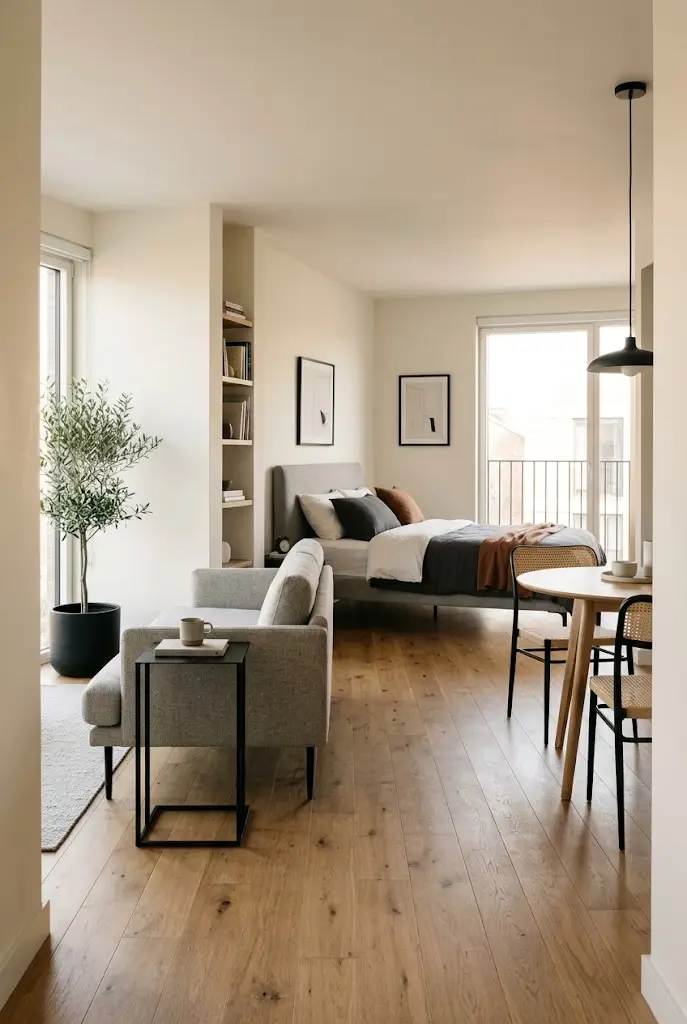
Large furniture can overwhelm a compact apartment very quickly.
Look for a sofa with narrow arms, raised legs, and a modest depth.
Choose side tables with slim frames.
Use lightweight chairs instead of bulky upholstered seating.
Furniture that leaves more floor visible tends to feel visually lighter.
This does not mean every piece needs to be tiny.
One comfortable sofa can work beautifully when the rest of the room stays simple.
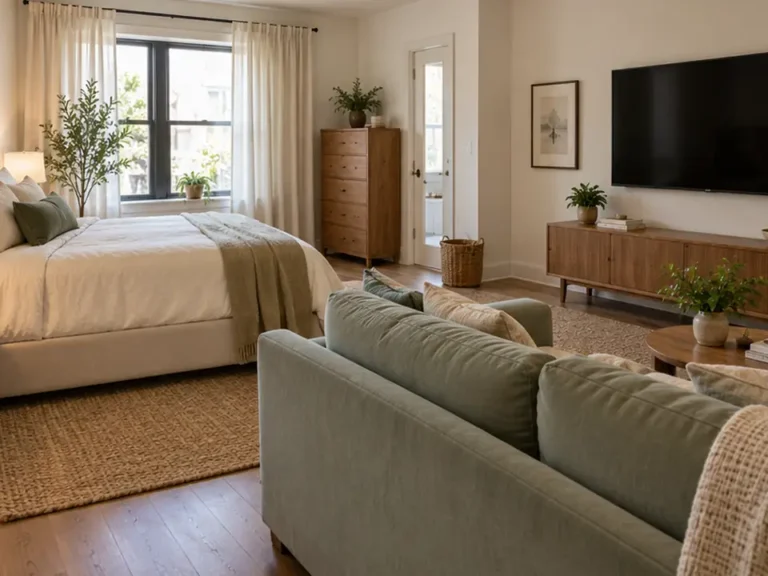
3. Put the Bed in a Corner
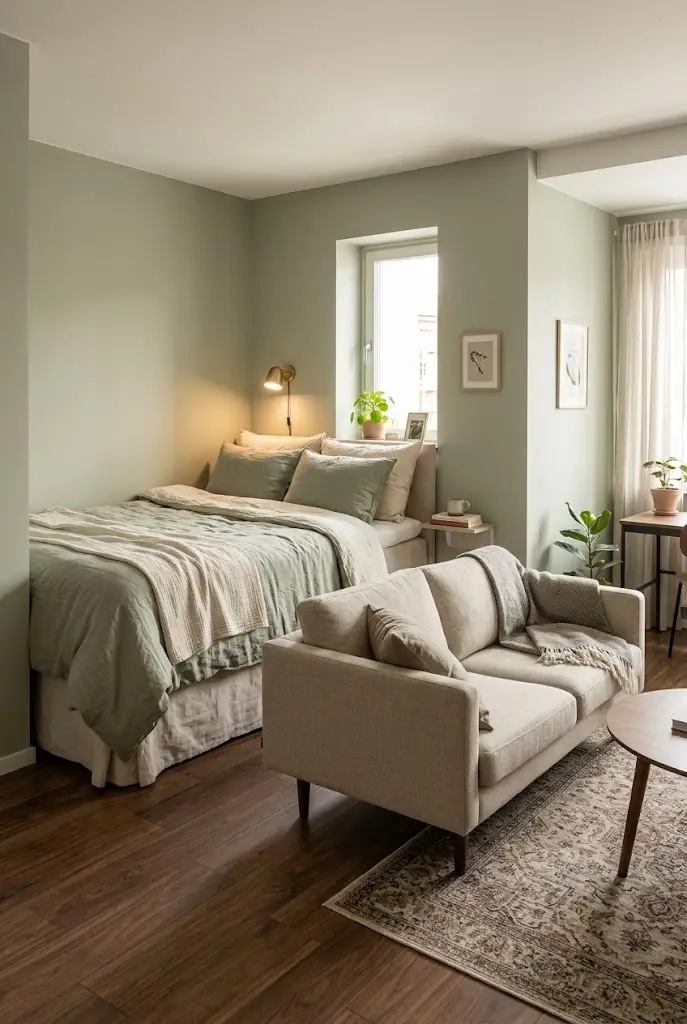
The bed is often the largest object in a one room apartment.
Placing it in a corner can free up valuable floor space and make the sleeping zone feel more intentional.
Use soft bedding, a wall mounted light, and one small bedside surface to create a cozy nook.
If possible, position the bed away from the main entrance.
That little bit of separation can make the apartment feel more private.
4. Define the Living Zone
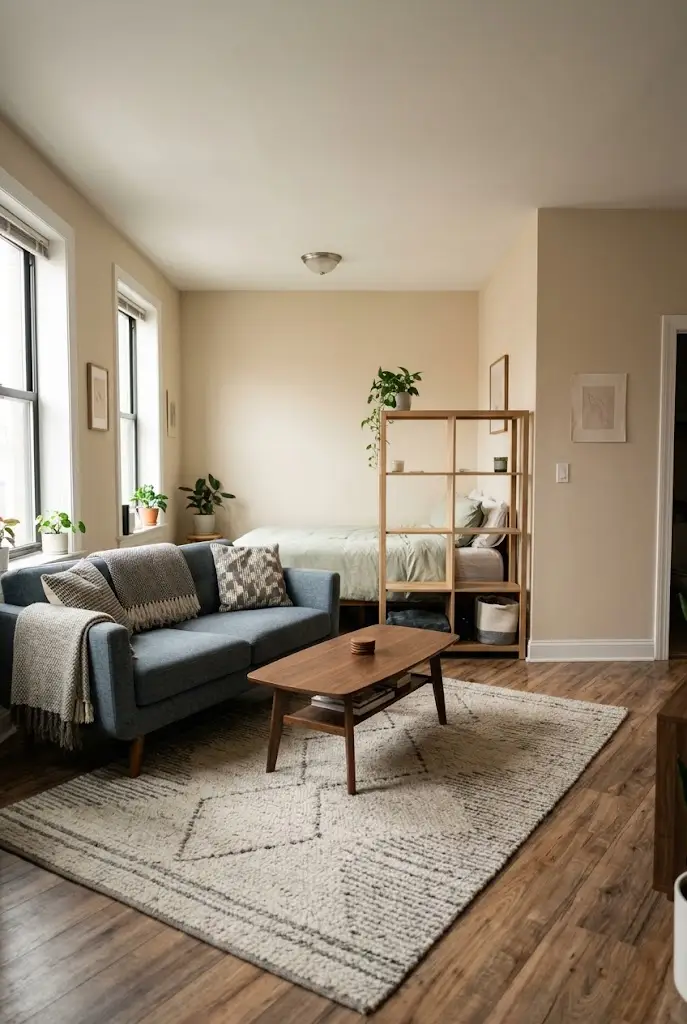
A rug can make your sofa area feel like a real living room.
Place it beneath the sofa and coffee table to visually group the furniture together.
Your eye will naturally read that section as one zone.
Choose a rug large enough to anchor the seating without covering nearly every inch of visible floor.
A subtle pattern can add personality while still keeping the room calm.
5. Use a Large Mirror
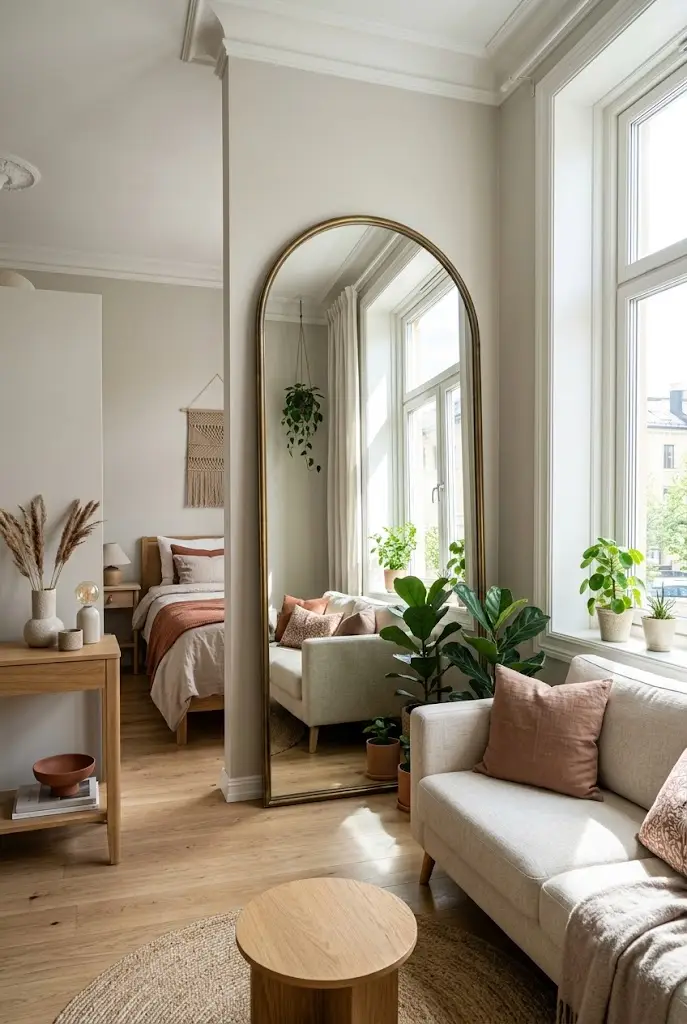
Mirrors can help a small room feel brighter and deeper.
Place a large mirror where it can reflect natural light or an attractive part of the apartment.
A tall mirror can also draw attention upward.
This is especially useful if your one room apartment has only one main window.
Avoid positioning the mirror where it reflects a cluttered corner.
The goal is to multiply light and openness, not visual mess.
6. Keep Windows Clear
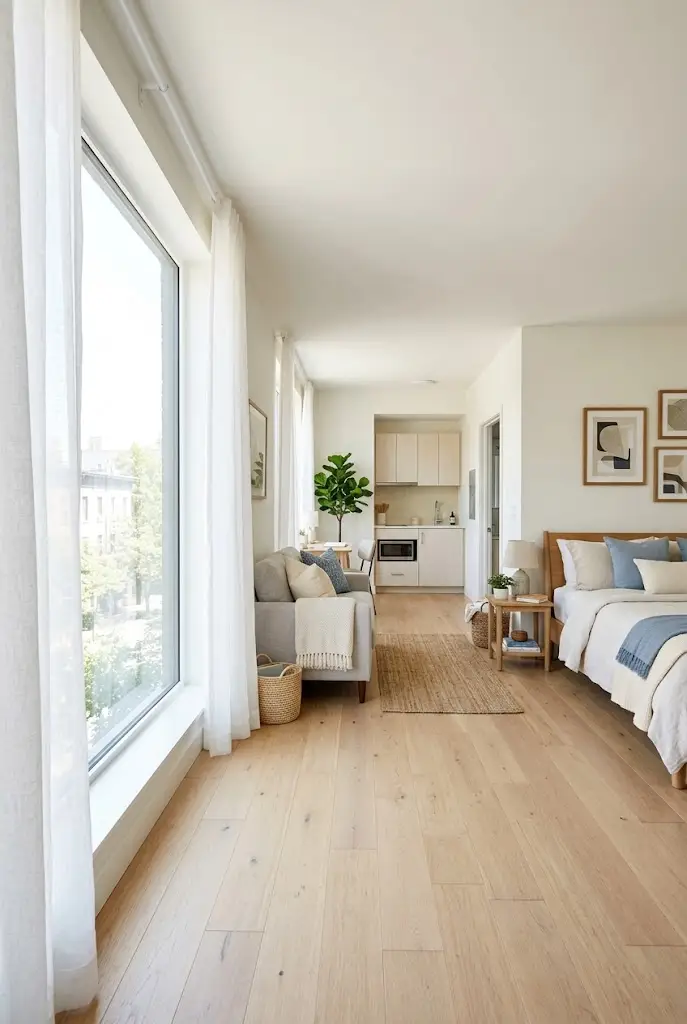
Natural light is one of the easiest ways to make a small apartment feel bigger.
Avoid placing tall cabinets or bulky furniture directly in front of your main window.
Use light curtains that allow daylight to enter.
Mounting curtains closer to the ceiling can also make the room feel taller.
Keep the window area visually simple.
The farther light reaches into the apartment, the more open the whole room can feel.
7. Use Vertical Storage
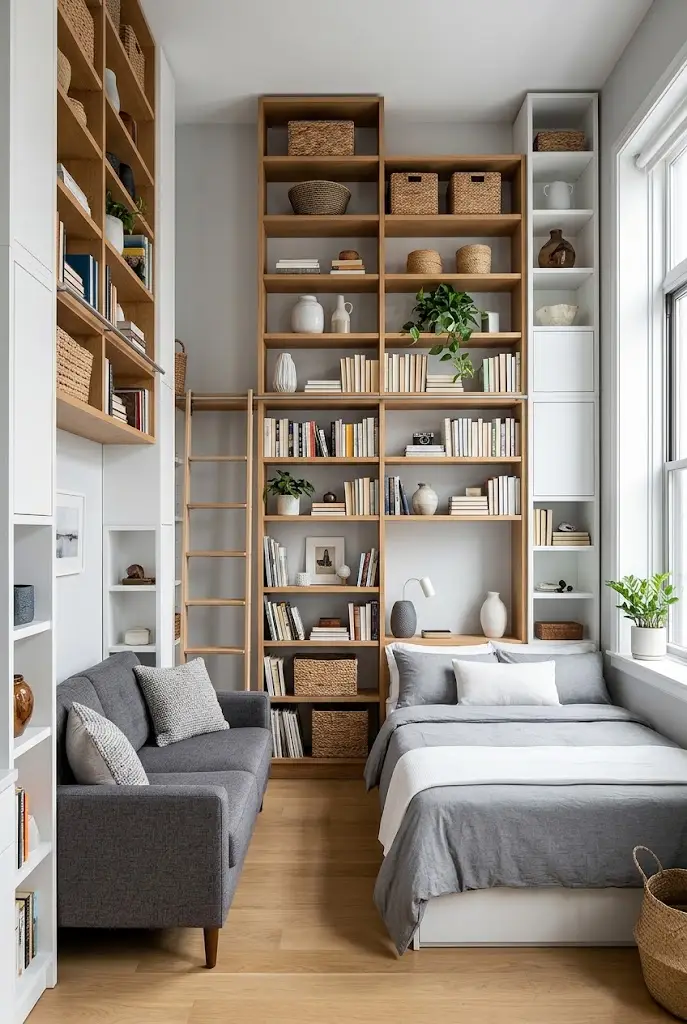
When floor space is limited, look upward.
Tall bookcases, wall shelves, hooks, and slim storage towers can hold plenty without spreading across the room.
Keep everyday items within easy reach.
Store less frequently used belongings higher up.
Vertical storage also draws the eye upward, which can make the ceiling feel taller.
I have seen this work especially well when tall storage is kept close to a wall rather than placed in the middle of the apartment.
8. Add Open Shelving
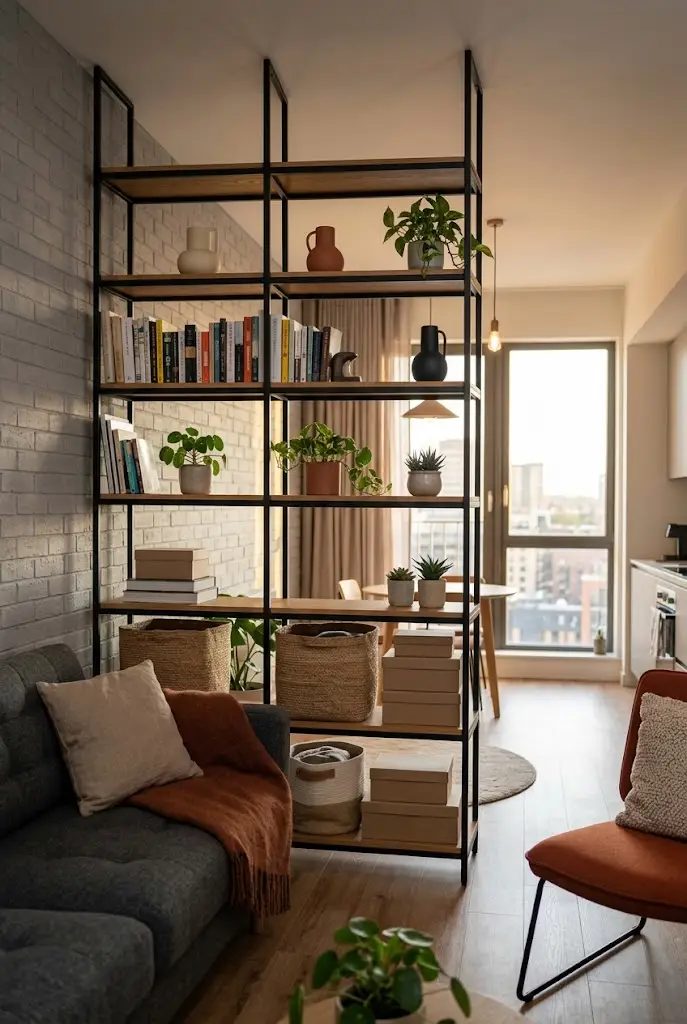
Open shelving can provide storage without feeling as heavy as a solid cabinet.
Use it for books, plants, ceramics, baskets, and attractive everyday objects.
Leave some areas empty.
That open space matters.
A shelf packed from edge to edge can make the room feel busier.
For a calmer look, use baskets on the lower shelves and lighter decorative pieces higher up.
9. Create a Soft Divider
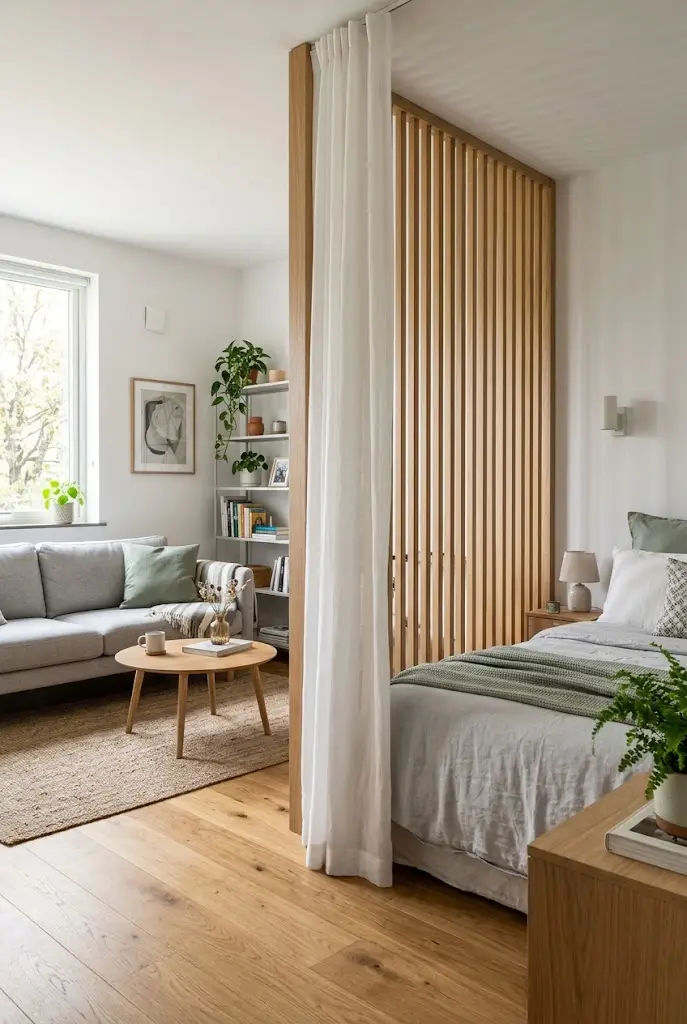
Sometimes one room needs a little separation.
Use a curtain, open shelf, slatted screen, or tall plant to create a gentle boundary between the bed and living area.
Avoid creating a complete visual wall unless privacy is your main priority.
A lighter divider allows daylight and sightlines to continue through the apartment.
This helps you create two distinct zones without making either side feel tiny.
10. Pick a Simple Palette
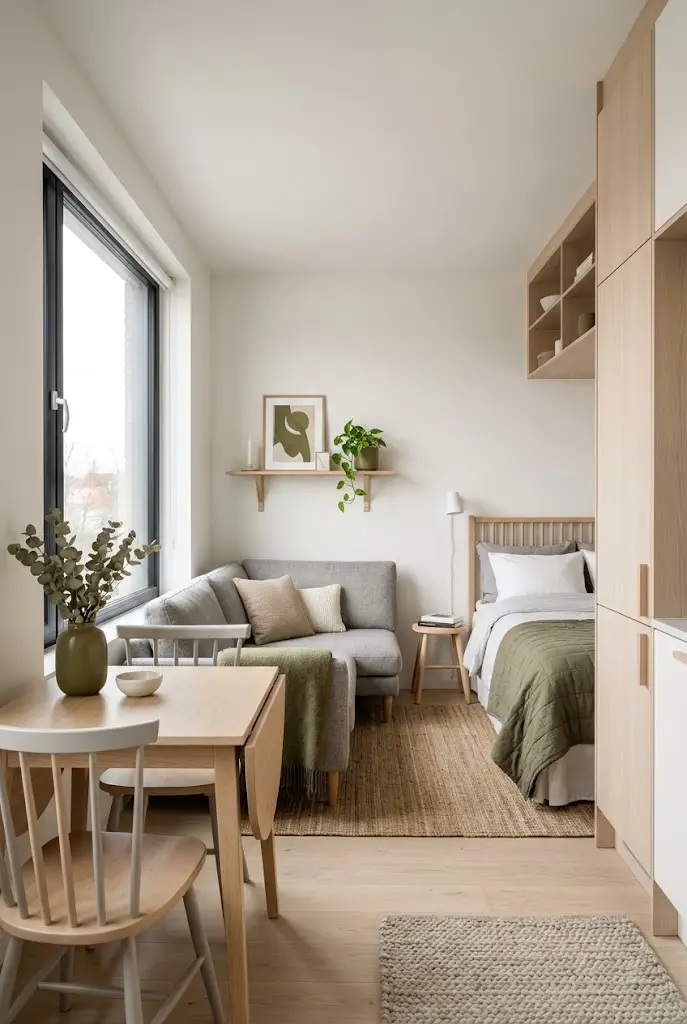
A consistent color palette can make the apartment feel more connected.
Try warm white, cream, beige, taupe, soft gray, or pale wood as your foundation.
Then add character through artwork, cushions, plants, and a few deeper accents.
You do not need every item to match.
The goal is to repeat enough colors that the room feels intentional.
Too many unrelated shades can make a small space feel visually fragmented.
11. Add Texture for Warmth
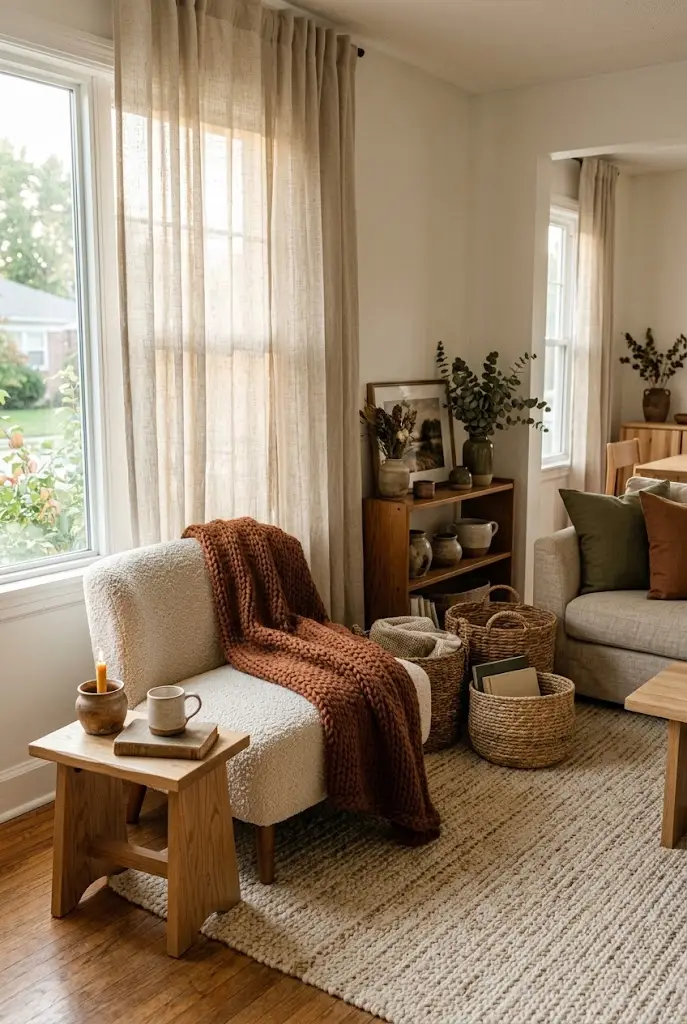
A light color palette can feel flat if every surface looks the same.
Add texture instead of adding lots of new colors.
Use linen curtains, a woven basket, a textured rug, soft cushions, ceramic decor, and natural wood.
These details create depth without making the room feel busy.
I have noticed that texture is especially useful in small apartments because it adds personality without demanding more physical space.
12. Choose Double Duty Furniture
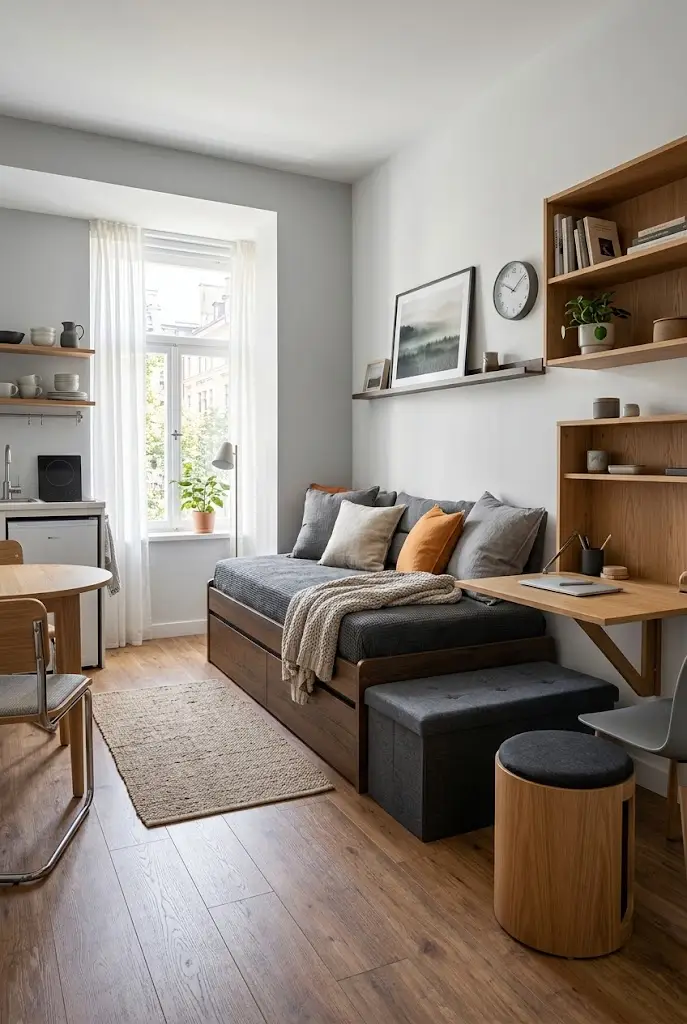
Furniture should work hard in a one room apartment.
A storage ottoman can hold blankets and become extra seating.
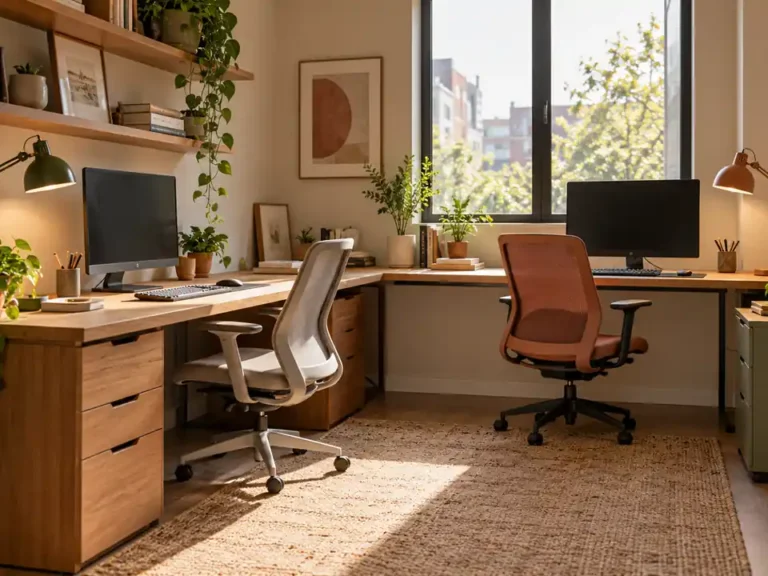
A wall mounted table can function as both a desk and dining area.
A daybed can act as a sofa during the day.
A storage bed can hold clothing or bedding underneath.
When one piece does two jobs, you need fewer individual pieces.
That leaves more room for walking and makes the apartment feel less crowded.
13. Layer the Lighting
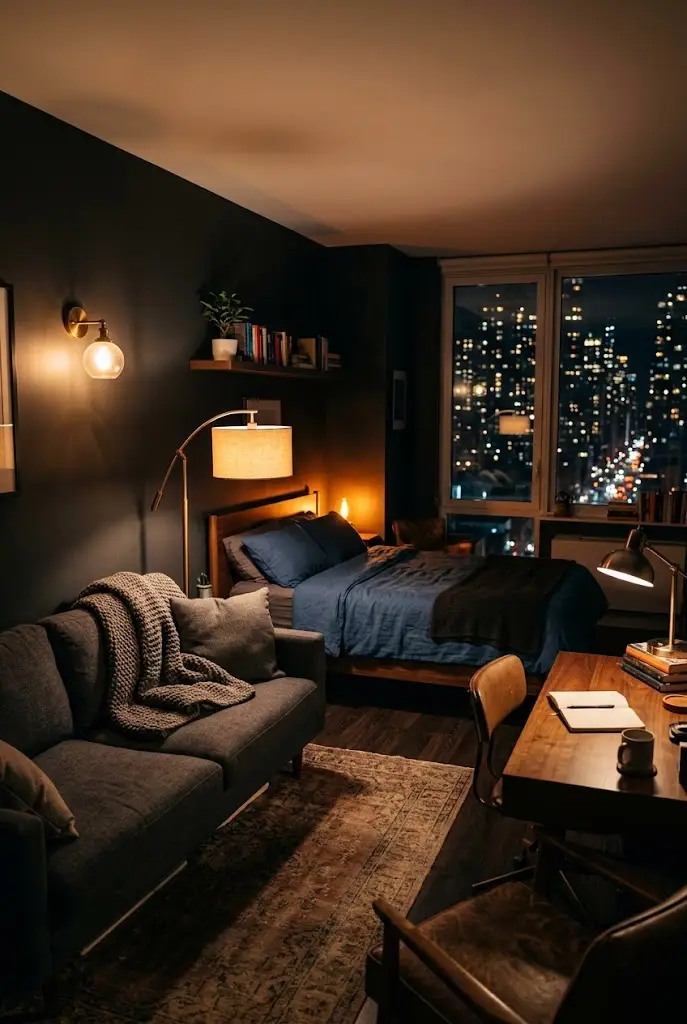
One bright ceiling light can make a small apartment feel flat.
Use several smaller light sources instead.
Place a lamp near the sofa.
Add a wall light beside the bed.
Use another small lamp near your desk or shelves.
Different pools of warm light help each zone feel distinct after dark.
They also bring out texture and make the apartment feel more comfortable.
At night, good lighting can make one open room feel much more layered.
14. Keep Surfaces Clear
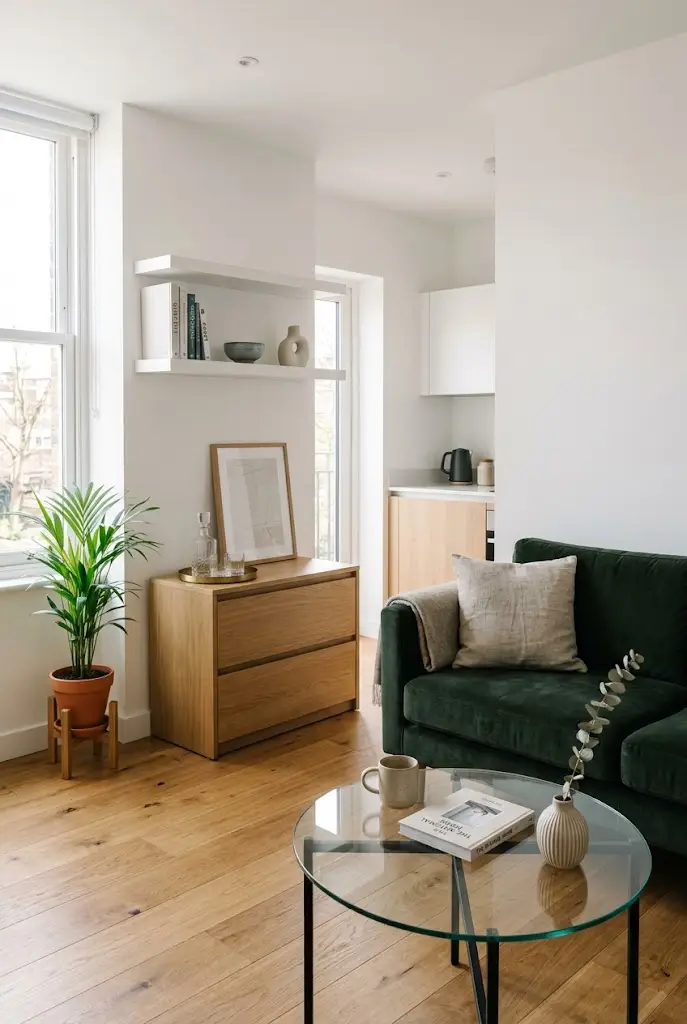
Coffee tables, counters, dressers, and shelves can fill up surprisingly fast.
Try to keep some surfaces mostly clear.
A small tray, one plant, or a few books may be enough.
Your kitchen counter should still have space for cooking.
Your coffee table should still be useful.
In my experience, clearing one crowded surface can make the entire room feel calmer almost immediately.
Open space is part of the decor too.
15. Leave Some Corners Empty
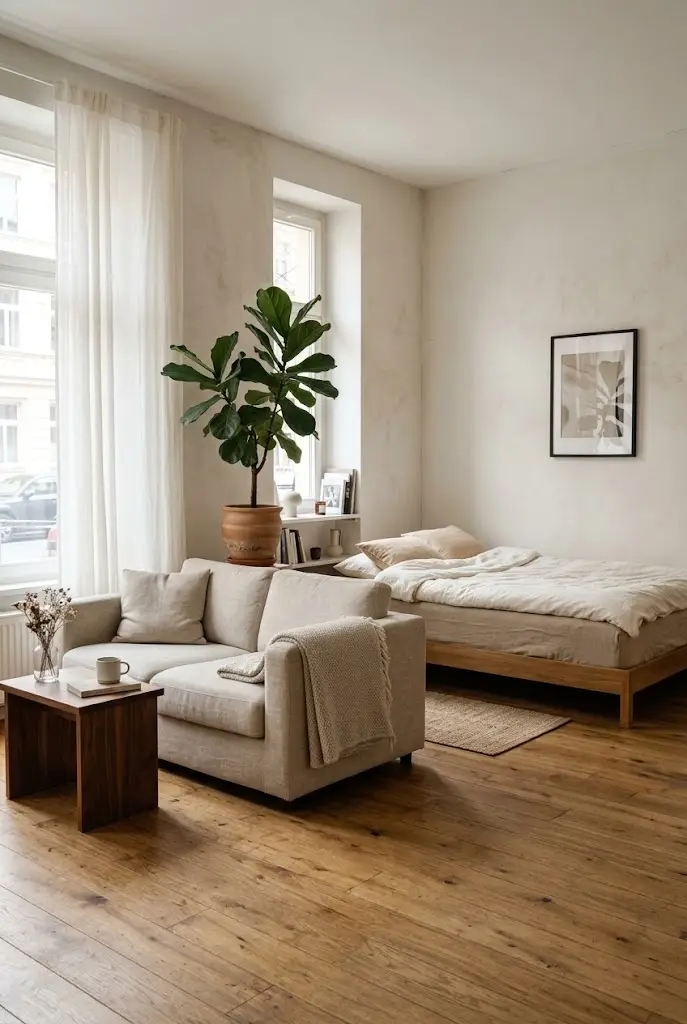
Not every corner needs furniture.
This can be difficult when you live in a small apartment and want to use every inch.
But filling every empty area can make the room feel even smaller.
Allow one or two corners to stay simple.
Leave a section of wall mostly clear.
Let some floor remain visible.
These quiet areas give your eye somewhere to rest.
They also make the furniture and decor you choose feel more intentional.
How to Arrange One Room
Start with the largest essential piece.
For most people, that is the bed.
Place it where it creates the least disruption to the main walking path.
Next, position the sofa or primary seating.
Then add your dining or work surface.
Storage should come after the main zones are established.
This prevents you from filling the room with cabinets before you know how you actually need to move through the space.
Walk through your proposed layout before committing to it.
You should be able to move comfortably between the entrance, bed, kitchen, and bathroom.
How to Create Zones
You do not need walls to make different areas feel separate.
Use rugs to define the living area.
Place the bed in a corner.
Turn the sofa so its back creates a natural boundary.
Use open shelving or curtains if you need stronger separation.
Lighting can help too.
A bedside lamp signals the sleeping zone.
A desk lamp creates a work area.
A pendant over a small table can make the dining corner feel more intentional.
Small visual cues are often enough.
How to Reduce Clutter
Start with what you can see.
Clear the kitchen counter.
Reduce the number of objects on your coffee table.
Use baskets for small everyday items.
Keep cables hidden where possible.
Group similar items together.
Then look at furniture.
If two pieces perform almost the same function, consider whether you need both.
A smaller apartment feels more spacious when each object has a clear role.
What Colors Work Best
Light colors can help reflect daylight, but you do not need an all white apartment.
Warm white, cream, soft beige, light taupe, and muted gray can create an airy foundation.
Then bring in deeper shades through smaller pieces.
Olive green, rust, chocolate brown, charcoal, and muted blue can add depth without overwhelming the room.
Wood tones are helpful too.
They bring warmth into a small space and keep a light palette from feeling cold.
Make One Room Feel Complete
A one room apartment does not need to feel like your entire life has been squeezed into one box.
The right layout can create a sleeping zone, living area, workspace, and dining corner without building permanent walls.
The smartest one room apartment decor ideas protect open floor space, use vertical areas wisely, and keep each zone visually connected.
Start with movement.
Keep your main walkway clear.
Then define your most important zones.
Choose furniture that earns the space it occupies.
Use light, mirrors, texture, and thoughtful storage to make the apartment feel more open.
Most importantly, resist the urge to fill every empty corner.
When your room has space to breathe, even a compact apartment can feel calm, comfortable, and much bigger than expected.
Read More:
400 Sq Ft Studio Apartment Layout Ideas You’ll Wish You Tried Sooner
17 Modern Studio Apartment Ideas for Stylish Apartment Living
Community
Join the conversation
Add a useful idea, ask a specific question, or share what worked in your space. Every comment is reviewed before it appears.