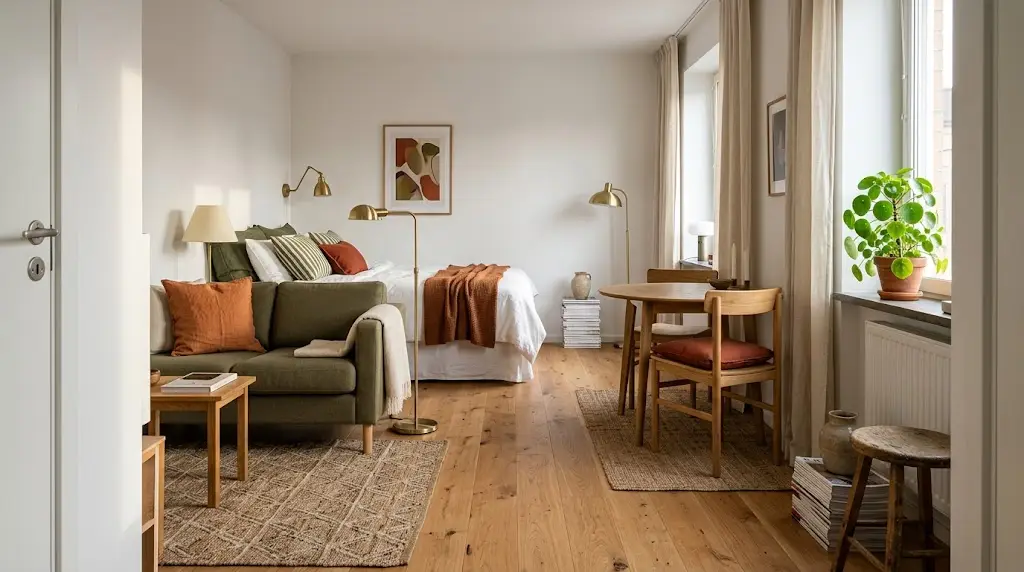
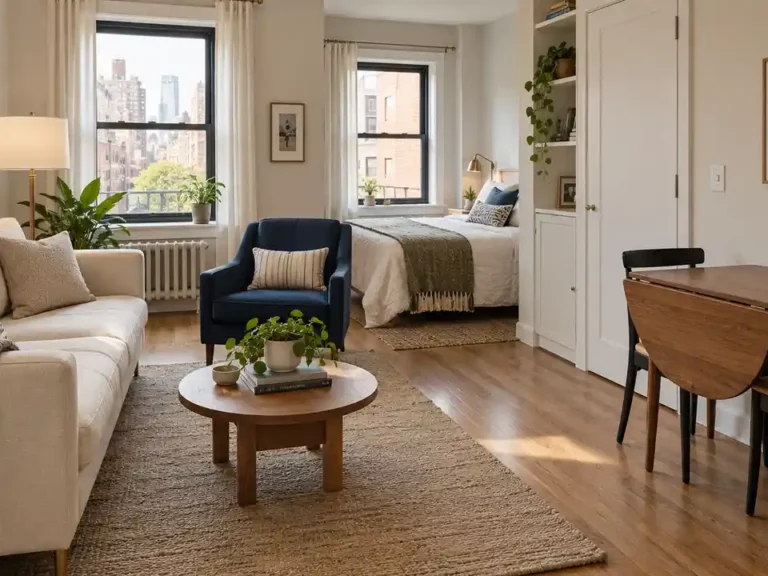
A beautiful sofa, cozy bedding, and a dining table you love can still feel disconnected in one room. These studio apartment design ideas help the pieces work together so your home feels calm, personal, and thoughtfully arranged.
The trick is giving your sleeping, living, and dining areas a few things in common. Repeated colors, related materials, and balanced details can make separate corners feel like parts of the same home.
You can start with what you already own. Choose one favorite piece, notice its colors and textures, and build connections around it.
1. One Shared Color Palette
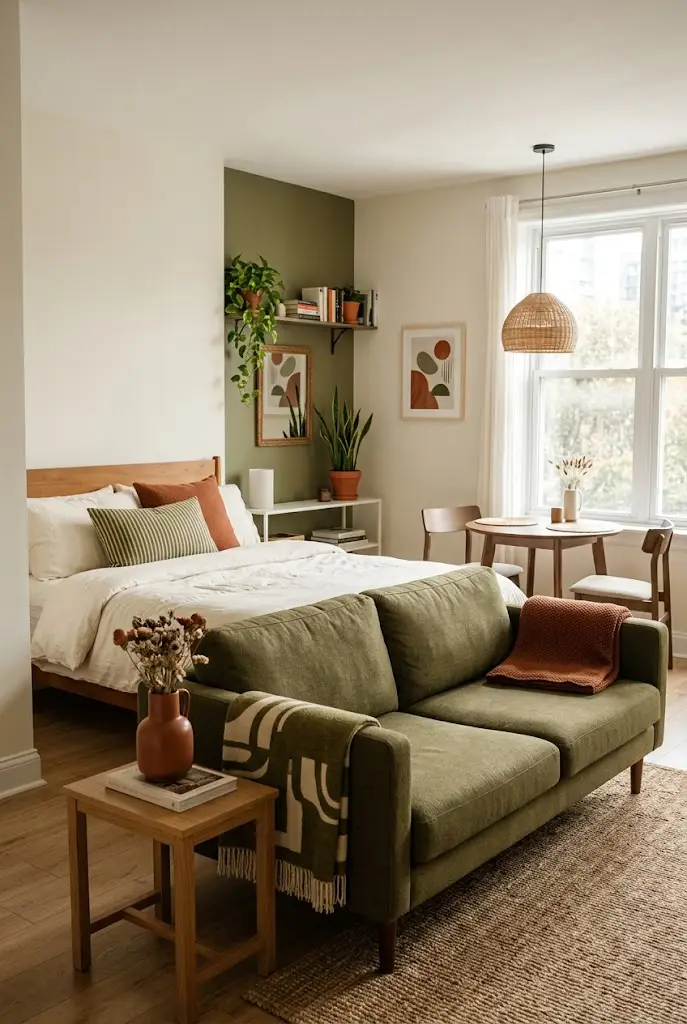
When the bed, sofa, and dining area each have a completely different palette, a studio can feel visually busy.
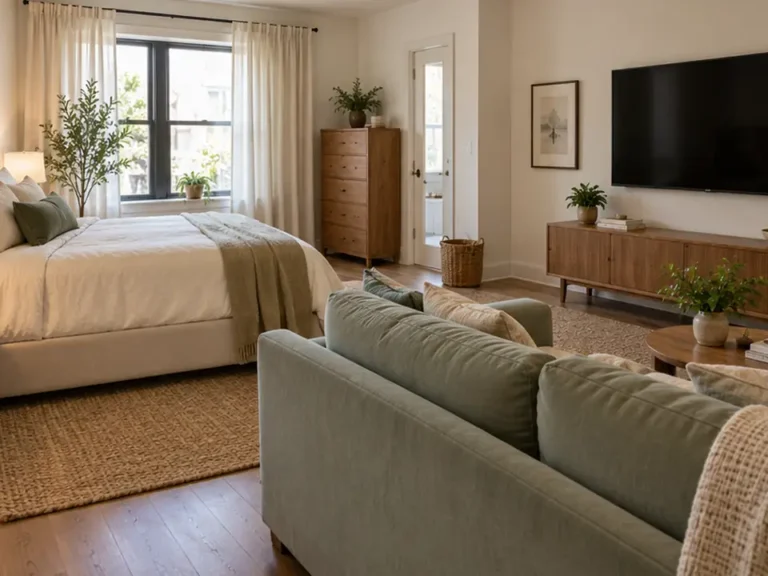
Start with a main background color, a supporting color, and a smaller accent. Warm white walls, olive textiles, and touches of rust make one possible combination. Soft gray, dusty blue, and walnut create another.
Carry those colors through the room in different amounts. Olive might appear as a sofa in the living area, a striped pillow on the bed, and a small print beside the table.
Repeat the colors without giving every area the same proportions. This creates connection while leaving each corner its own character.
2. A Favorite Starting Piece
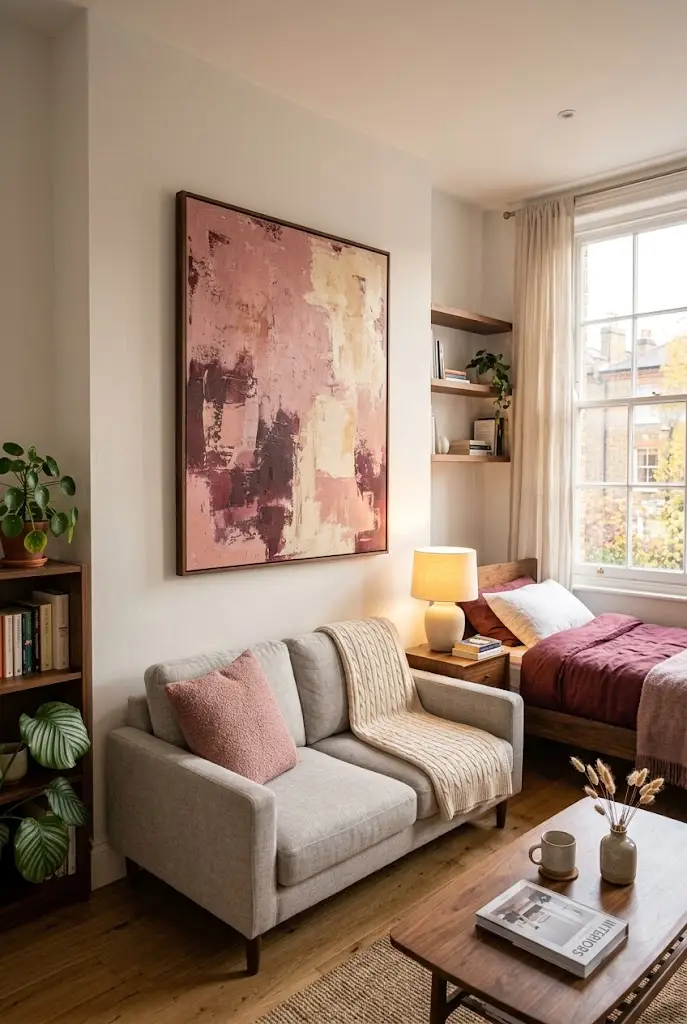
Buying individual items because they look attractive can leave you with a room full of competing styles.
Choose something you already love as your starting point. It could be a patterned rug, a painting, or a vintage wood dresser.
Pull two or three details from it. A print with dusty pink, burgundy, and warm ivory could guide your bedding, cushion covers, and lampshade.
Keep larger purchases compatible with that direction. You do not need to match every color exactly.
This approach gives you a useful reference when shopping and helps you decide which pieces belong in the room.
3. Connected Wood Tones
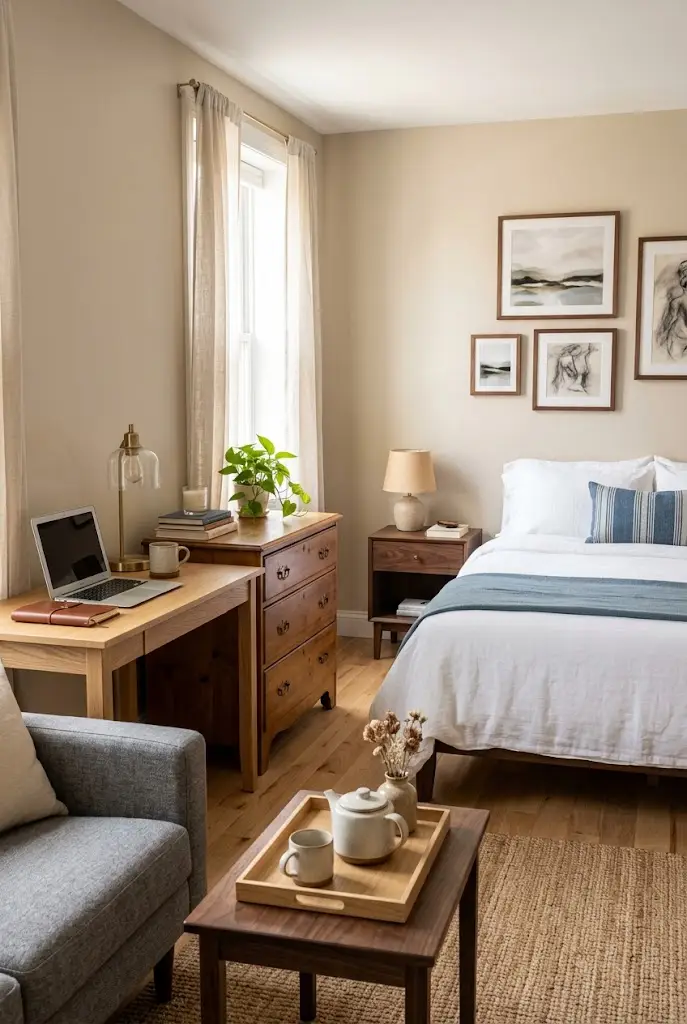
An oak desk, a dark dresser, and a reddish dining table can work together, but they need a little visual connection.
Start by noticing whether your wood finishes look warm, cool, or fairly neutral. Then repeat a similar tone somewhere else in the room.
A walnut picture frame can connect with a dark bedside table. An oak tray on the sofa table can echo a lighter desk.
You do not need an identical furniture set. A few repeated tones can make mixed pieces feel collected and intentional.
If a wood finish feels isolated, try adding a small related accessory before replacing the furniture.
4. A Soft Bed Backdrop
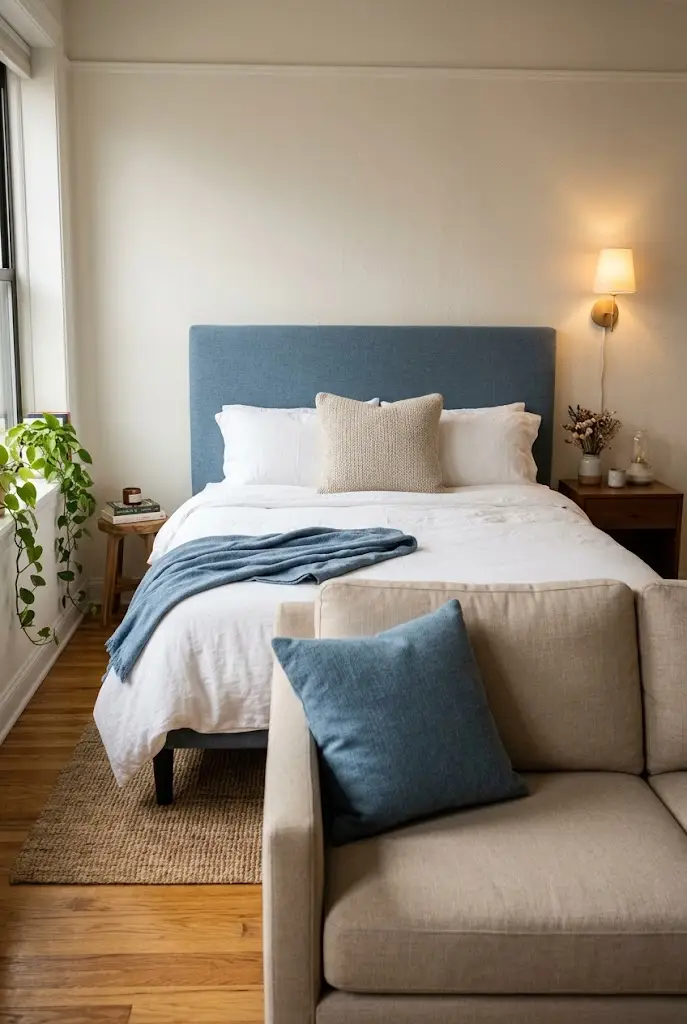
The bed is often visible from almost everywhere in a studio. Giving it a clear backdrop can help the sleeping area feel settled.
Try a simple upholstered headboard, a large textile wall hanging, or a painted section behind the bed where decorating permission allows.
Choose a color already used elsewhere. A muted blue headboard can connect with blue details in your rug or artwork.
Keep the backdrop suited to the scale of the bed. An oversized feature that extends into the dining area may make the zones feel confused.
Finish with simple bedding so the backdrop has room to stand out.
5. Bedding That Echoes Seating
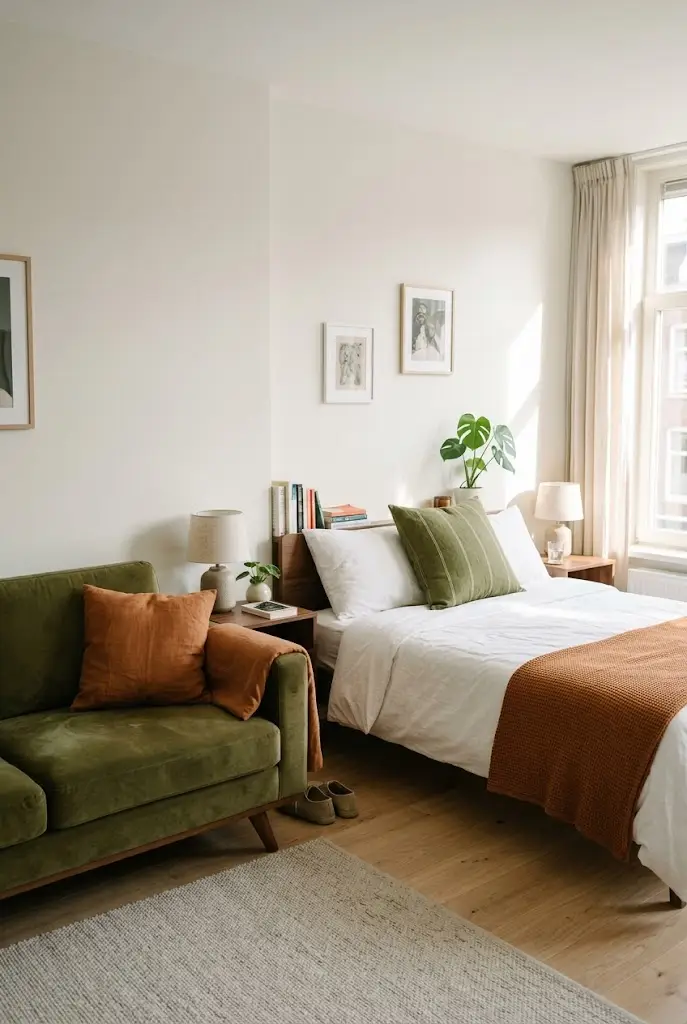
Your bed and sofa occupy a large part of the room’s visual space. Coordinating them can change how the whole studio feels.
They do not need matching covers. Instead, give them one shared color or texture.
Pair an olive sofa with white bedding and an olive striped pillow. A rust blanket at the foot of the bed can connect with one rust cushion across the room.
Let one area carry the stronger pattern while the other stays quieter.
Keep decorative pillows manageable. If they cover the bed every morning and the floor every night, simplify the arrangement.
6. A Grounding Living Rug
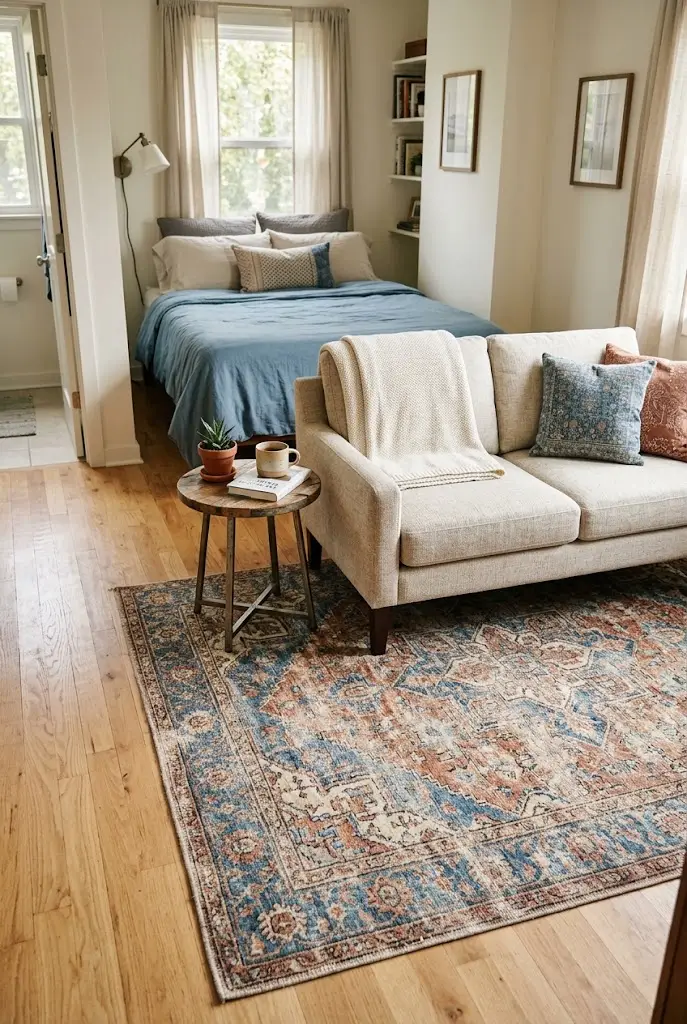
A rug can give the seating area a clear boundary without putting anything between it and the bed.
Choose a size that relates to the sofa and available floor space. Where the layout allows, placing the sofa’s front legs on the rug can help the furniture feel grouped.
Look for colors that connect with your bedding or curtains. A faded blue and rust pattern can bring several existing pieces into the same palette.
Check nearby doors and walking routes before settling on the position.
One well placed rug may be enough. Several tiny rugs can make a compact room feel divided into too many fragments.
7. Curtains With Continuity
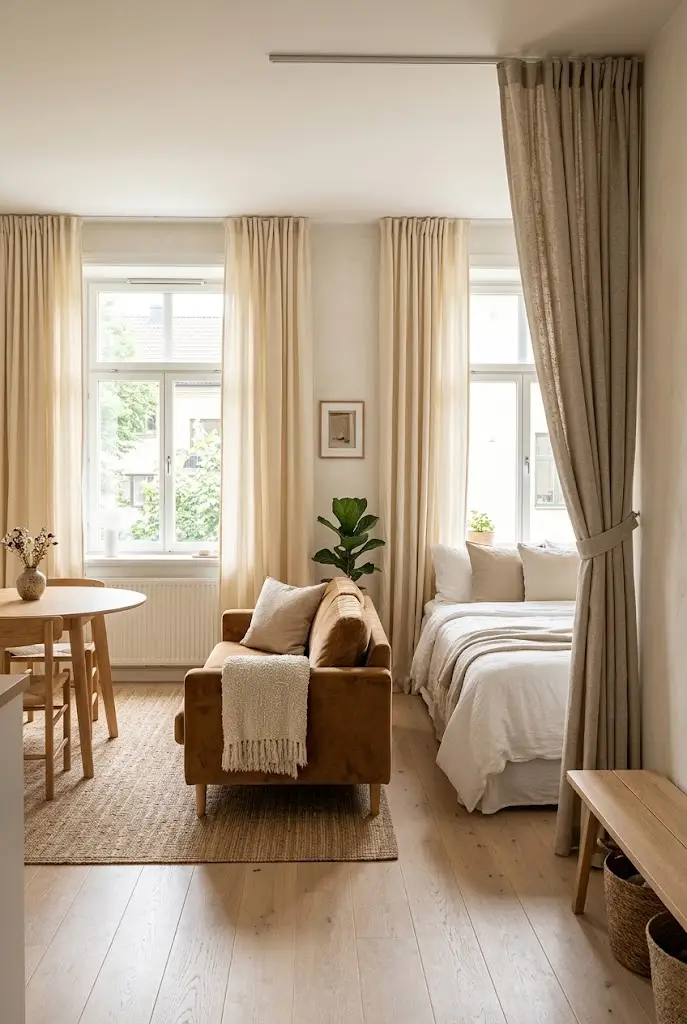
Window treatments are a useful place to repeat color and fabric across a studio.
If you have several windows, related curtains can make the room feel more consistent. They can share a color even if different windows need different lengths or fittings.
A curtain around the sleeping area can also connect with the window curtains without being identical. Warm ivory at the windows and muted oatmeal beside the bed create a soft combination.
Choose fabric according to the privacy and light control you need. Sheer fabric softens the view but does not provide dependable privacy when the room is lit at night.
Keep curtains clear of heaters and easy to open.
8. Repeated Metal Accents
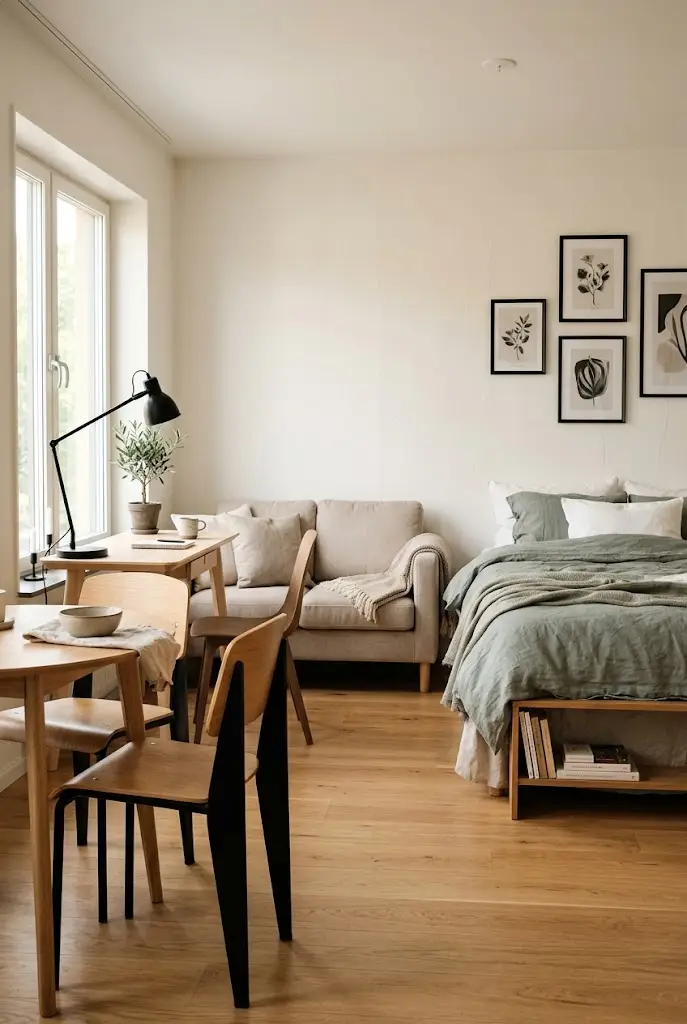
Small metal details can connect furniture that otherwise looks quite different.
A black desk lamp can echo black picture frames and dining chair legs. A brass bedside light can relate to a brass tray or cabinet handle.
Choose a main finish to repeat, then let other finishes appear more sparingly.
You do not need to replace every handle or fitting. Start with portable pieces such as lamps, frames, and small accessories.
Spread the repeated finish across the room. If every brass detail sits on one shelf, it will do less to connect the separate areas.
9. Lamps Across the Room
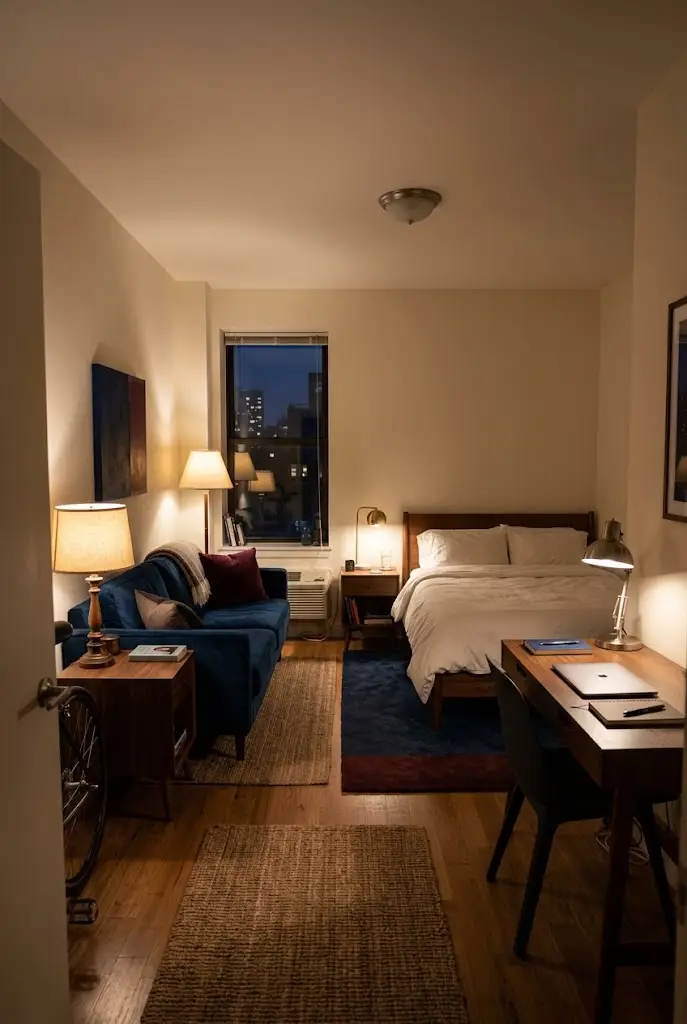
One bright ceiling light can leave a studio feeling uneven, especially when the bed and living area share the same space.
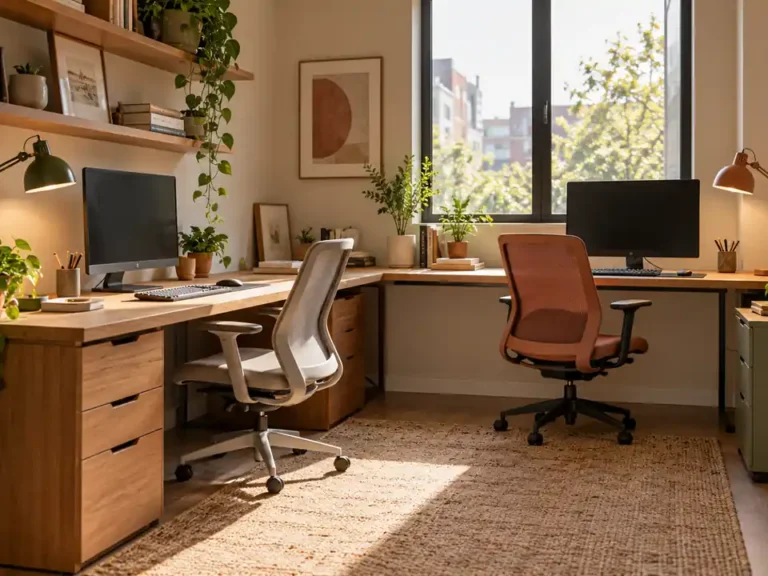
Place light where you use it: a reading lamp beside the sofa, a bedside light, and a task lamp at the desk.
For a comfortable evening look, choose bulbs with a similar warm appearance in the living and sleeping areas. Your workspace may need a different brightness for practical tasks.
The lamps themselves can share a shape, finish, or shade color.
Place them so light feels distributed across the room, and keep cords out of walking routes. A softly lit corner can feel like part of the home instead of a dark leftover space.
10. Artwork With a Connection
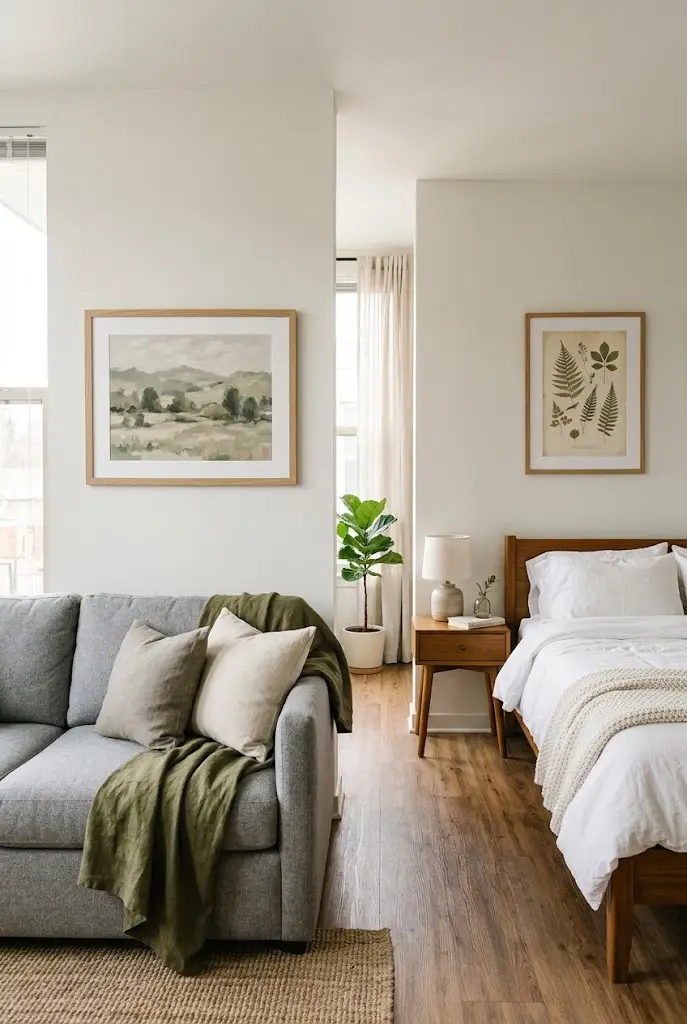
Artwork can give each zone personality while helping the studio feel unified.
Choose pieces with a shared color, subject, or framing style. A landscape above the sofa and a small botanical print near the bed can work together when both include muted green and use oak frames.
Vary the size according to the wall and furniture below it.
Avoid filling every empty patch immediately. Leaving some wall space clear gives your favorite pieces more presence.
For a simple starting point, hang one larger piece in the living area and one smaller related piece near the sleeping area.
11. A Consistent Furniture Shape
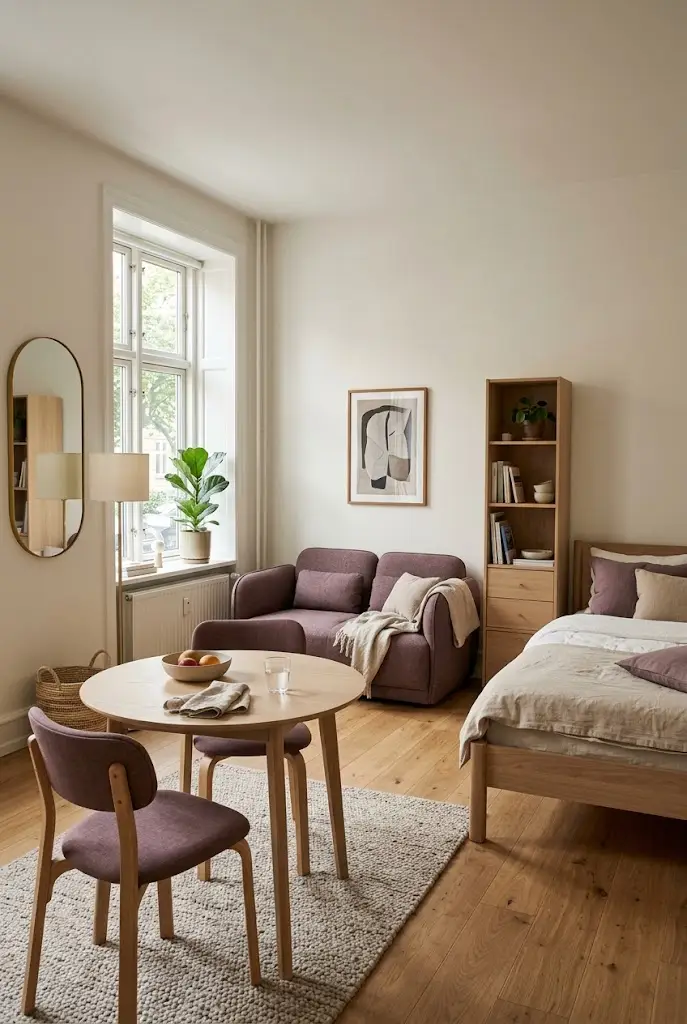
Furniture shapes can create a subtle connection even when colors and materials differ.
A round dining table might relate to a curved mirror and a lamp with a rounded shade. A sofa with soft arms can echo an upholstered headboard with curved corners.
Choose a shape you enjoy and repeat it selectively.
Too many different statement shapes can make a small room feel busy. Keep some pieces simple so the more sculptural ones remain noticeable.
Comfort and fit still come first. A round table is only helpful if its footprint and chair space suit your layout.
12. Storage That Blends In
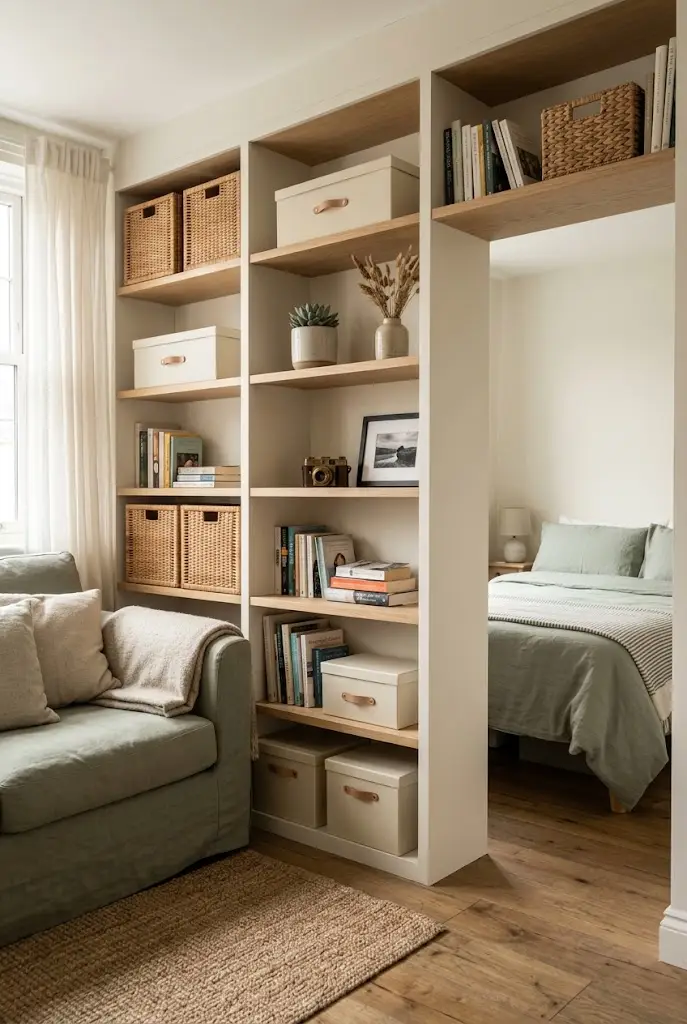
Visible storage affects the look of a studio as much as the sofa or bed.
Choose baskets, boxes, and cabinets that relate to your existing colors and materials. Woven baskets can connect with a jute rug, while matte white boxes can sit quietly against pale shelving.
Group similar containers where it makes practical sense. This creates a calmer appearance than a different style in every compartment.
Leave a few shelves open for books or personal objects rather than filling the whole unit with containers.
Keep everyday items easy to reach. Storage should support your routine while reducing the number of loose objects across the room.
13. A Styled Room Divider
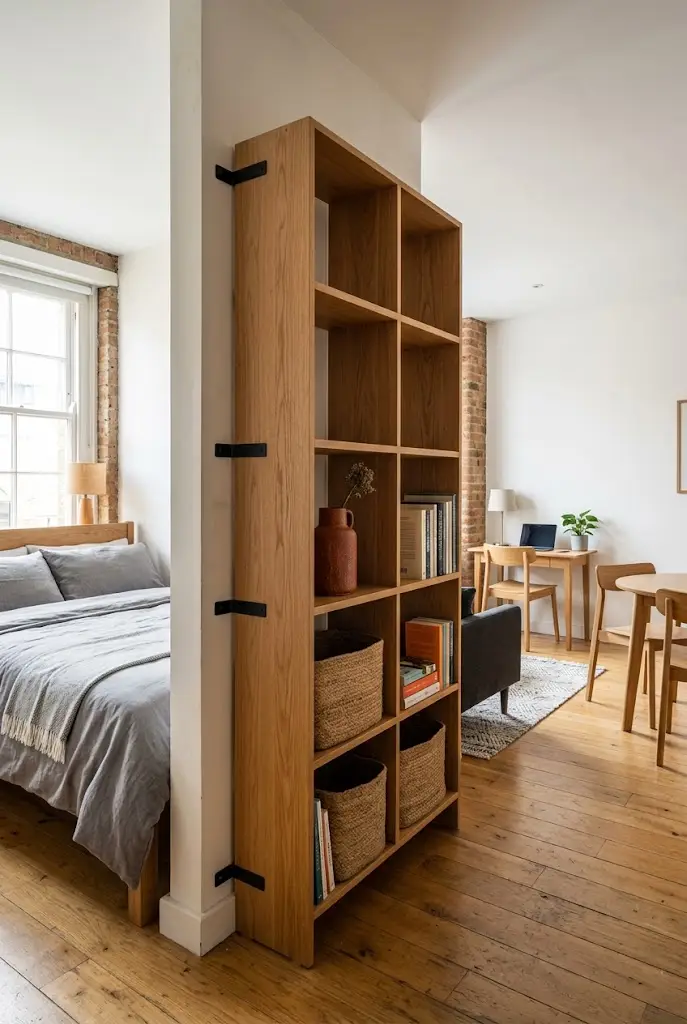
A divider is visible from several parts of the apartment, so its finish can help connect the whole room.
An oak bookshelf can echo your desk and dining table. A walnut slat screen can relate to picture frames or bedside furniture.
Style open shelving from both sides. Use a few books, closed baskets, and decorative pieces, leaving enough open space to preserve views through the unit.
Repeat your accent color in one or two objects rather than filling every shelf.
Check that the divider leaves a useful walking route and follows the manufacturer’s installation and anchoring requirements. Its appearance matters, but so does its placement.
14. Plants in Related Pots
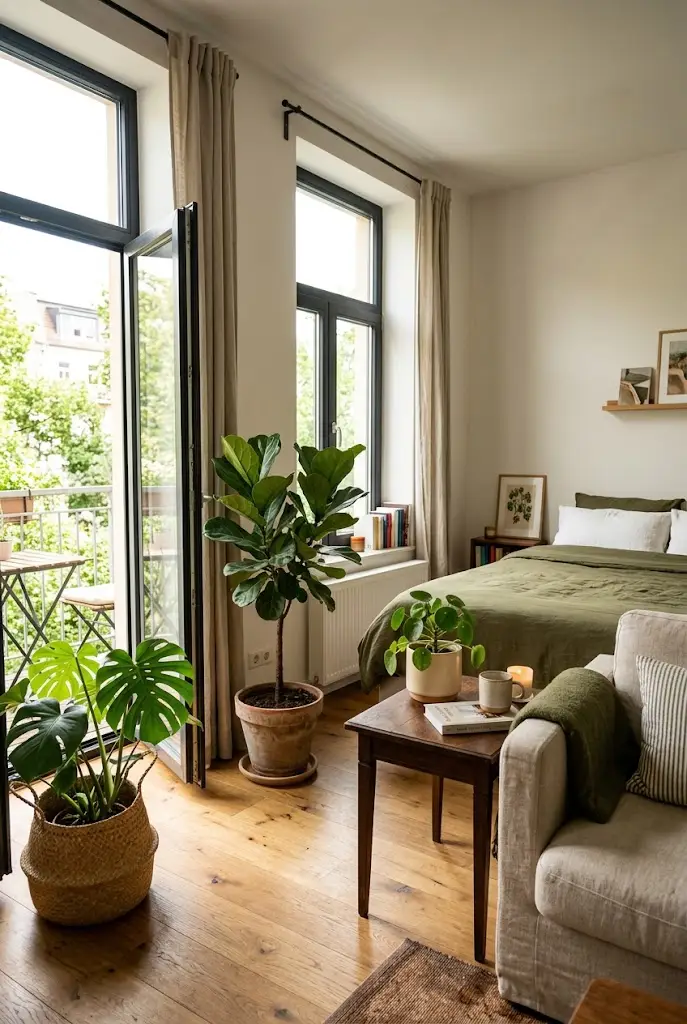
Plants can bring life to separate corners without adding another large piece of furniture.
Choose their positions according to available light. A plant beside the window may thrive where the same plant would struggle near the entrance.
Connect them with pots in related finishes. Terracotta, warm white ceramic, and one woven outer basket can sit comfortably within an earthy palette.
Vary plant height and leaf shape so the arrangement feels natural.
Keep larger plants outside the main route and avoid filling every surface with small pots. A few suitable plants can create stronger visual connections than many crowded together.
15. A Personal Display Spot
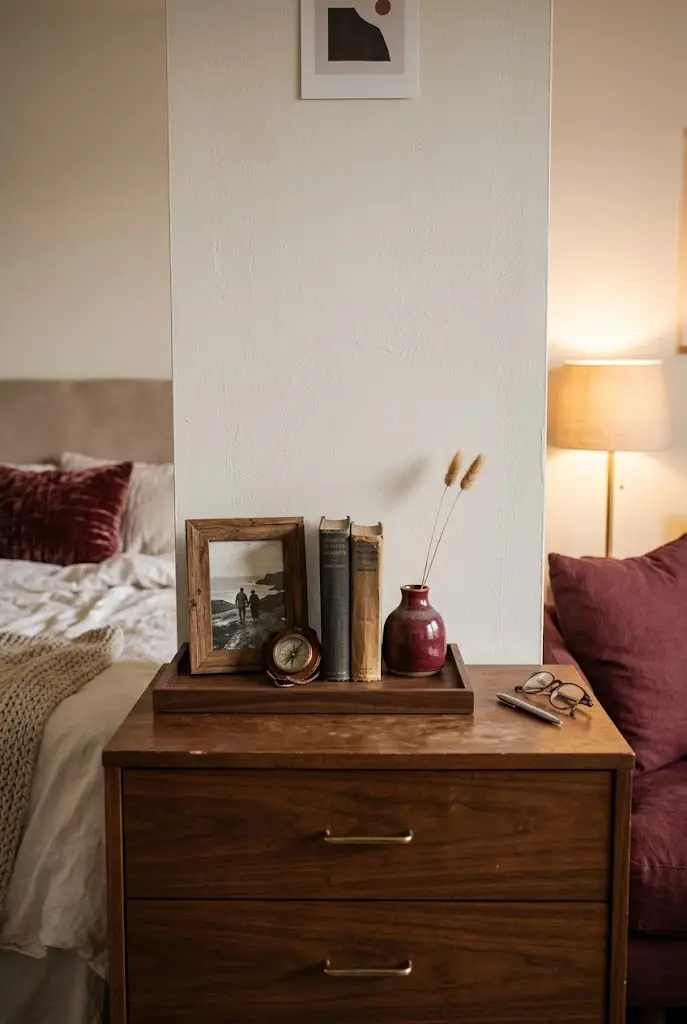
A room feels complete when it includes things that mean something to you.
Choose one shelf, dresser top, or small wall area for a personal display. Mix a framed photograph, a favorite book, and an object collected on a trip or received as a gift.
Use a tray or a small stack of books to group the pieces. Repeat a room color through the frame or a nearby ceramic vase.
Leave enough clear surface for the furniture’s everyday purpose.
Your home does not need to look like a showroom. A few personal objects can give a coordinated room the warmth that matching furniture alone cannot provide.
Start With Three Connections
You do not need to change every area at once.
Begin with three simple connections:
- Repeat one color between your bed and sofa.
- Carry one material, such as oak or black metal, into another area.
- Add lighting to a corner that feels disconnected at night.
Then look across the room from the entrance. Notice which pieces feel related and which still seem isolated.
The most useful studio apartment design ideas build on the furniture and details you enjoy. Small changes to bedding, lighting, artwork, and storage can help the whole space feel more comfortable and more like you.
Community
Join the conversation
Add a useful idea, ask a specific question, or share what worked in your space. Every comment is reviewed before it appears.