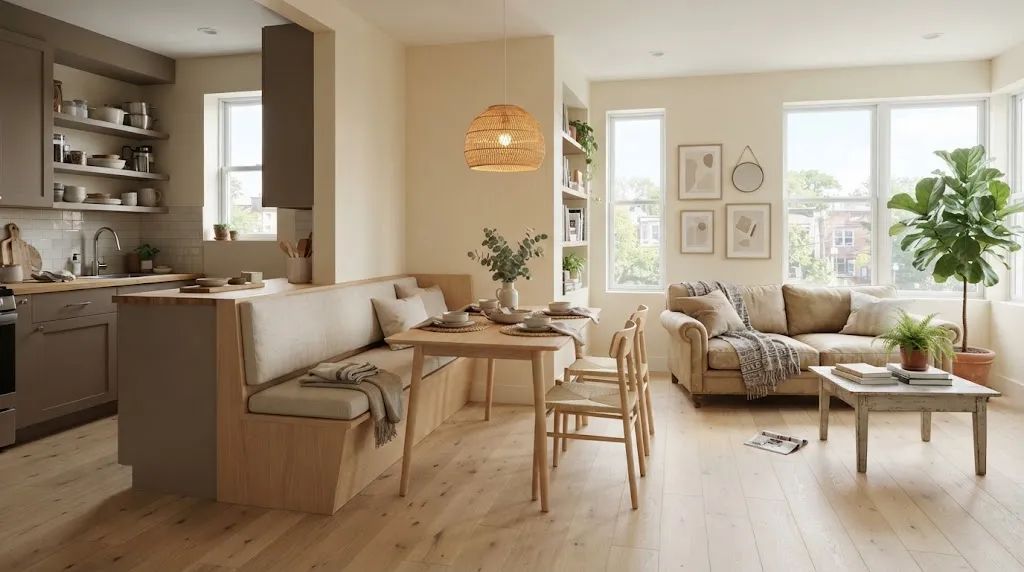
Creating a dining area in a one-bedroom apartment can feel like a difficult puzzle. You want a comfortable place to eat, work occasionally, host a friend, or enjoy your morning coffee, but you may not have enough room for a traditional dining table and a full set of chairs.
The solution is not necessarily to eliminate the dining area altogether. With the right furniture and layout, even an unused corner, kitchen edge, hallway section, or living-room wall can become a practical place to eat.
The most successful one bedroom apartment dining area ideas focus on flexibility. A table can fold away when it is not needed, a bench can serve multiple purposes, and a narrow console can become a dining surface when necessary.
Whether your apartment has an open kitchen or a separate living room, these ideas can help you create a dining space without making the apartment feel crowded.
1. Choose a Small Round Dining Table
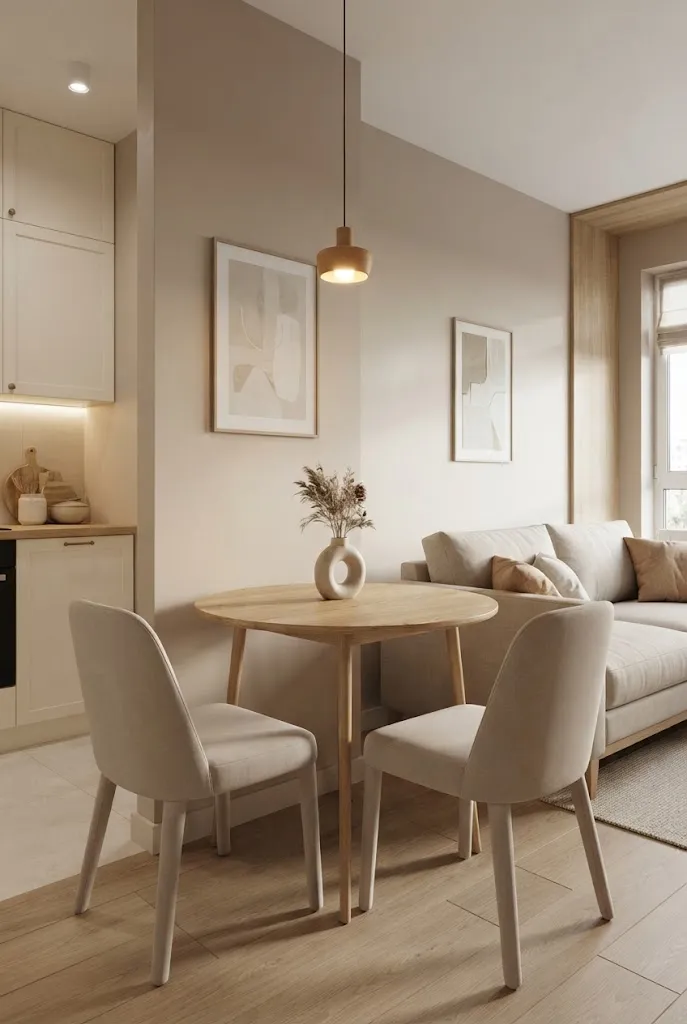
A round table can be an excellent choice when space is limited because it does not have sharp corners that interrupt the surrounding walking path.
Place a small round table near the kitchen, beside a window, or in an open corner of the living room.
A pedestal-style base can provide additional legroom and make it easier to tuck chairs underneath when the table is not being used.
Choose a diameter that suits your actual needs rather than buying the largest table that can technically fit.
For one or two people, a compact round table may provide all the dining space you need while leaving more room around it.
2. Install a Wall-Mounted Drop-Leaf Table
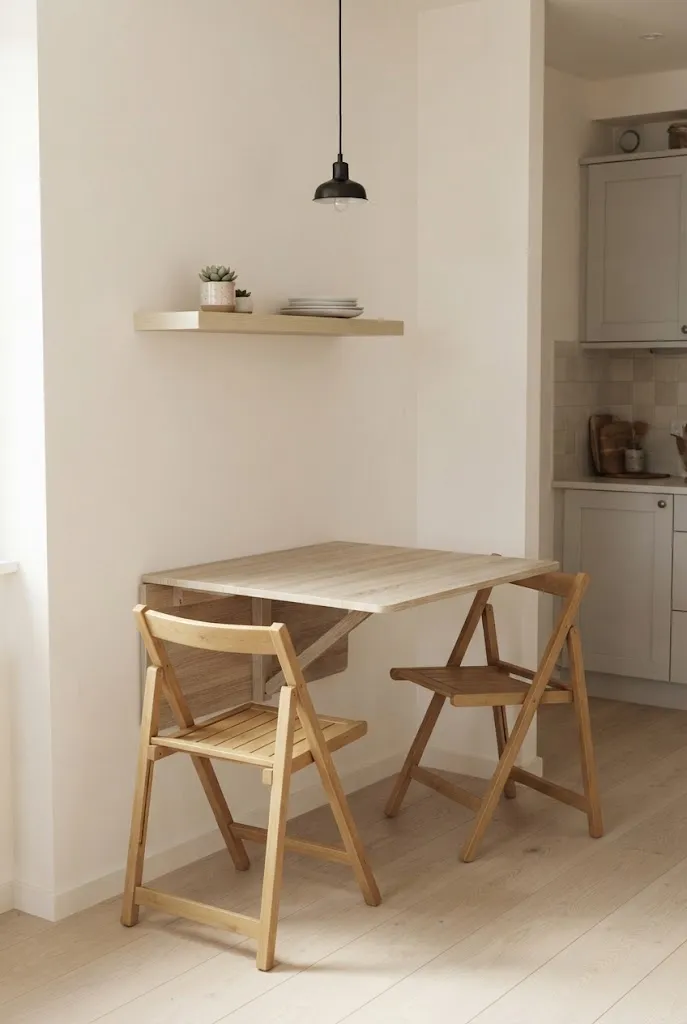
A drop-leaf table can provide a full dining surface when you need it and almost disappear against the wall when you do not.
Mount it securely at a comfortable dining height and pair it with lightweight folding chairs or stools.
When the table is folded down, the wall can become part of the room rather than looking like a permanent dining station.
This option works particularly well in narrow apartments where a conventional table would interfere with movement.
You can also use the surface as a small desk when you are not eating.
3. Use a Dining Bench Along the Wall
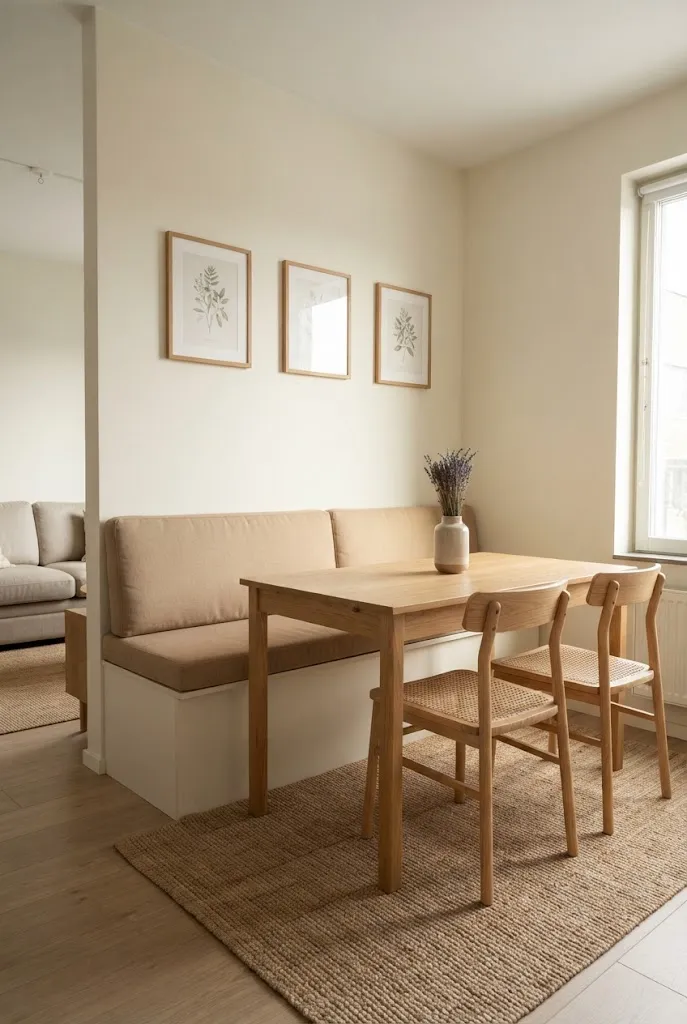
Instead of placing chairs on every side of the table, position one side directly against a wall and use a narrow bench.
The bench can accommodate two people while taking up less visual and physical space than individual chairs.
Choose a bench with hidden storage if possible. It can hold table linens, reusable shopping bags, or other apartment essentials.
When the dining area is not in use, the bench can also function as additional seating for guests.
This arrangement creates a cozy dining nook without requiring a separate dining room.
4. Turn a Kitchen Peninsula Into a Dining Area
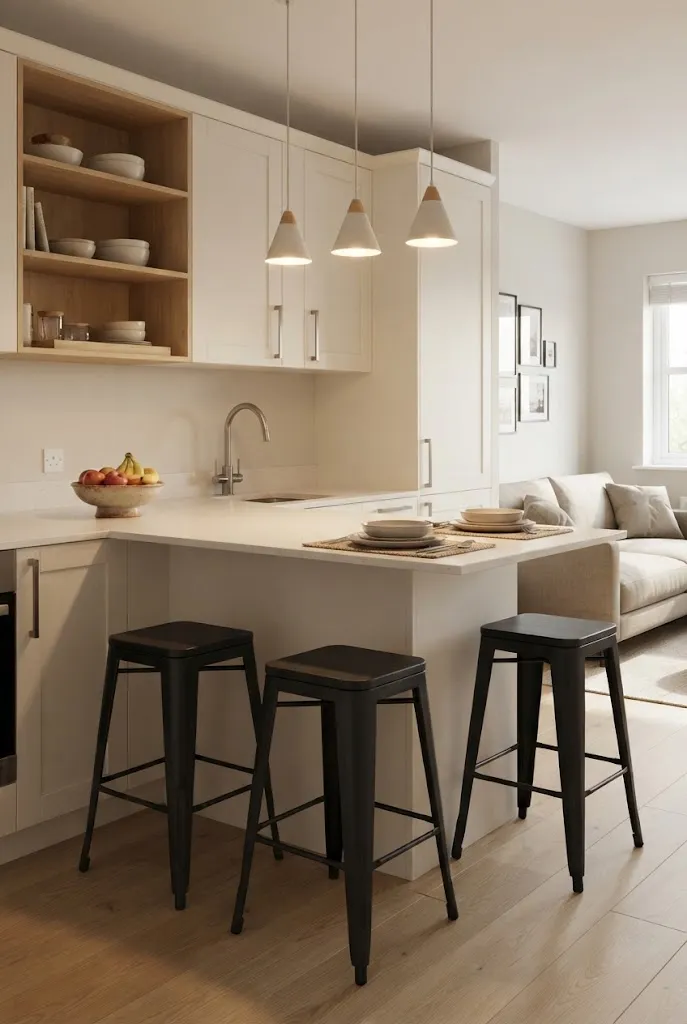
If your kitchen already has a peninsula or extended countertop, you may not need a separate dining table.
Add comfortable counter-height stools underneath the overhang and treat the peninsula as your everyday dining space.
This keeps food preparation and dining close together while eliminating the need for another large piece of furniture.
Choose stools that can slide completely underneath the counter when not being used.
A simple arrangement can give you a dedicated eating area without adding another visual zone to the apartment.
5. Try a Narrow Dining Table Behind the Sofa
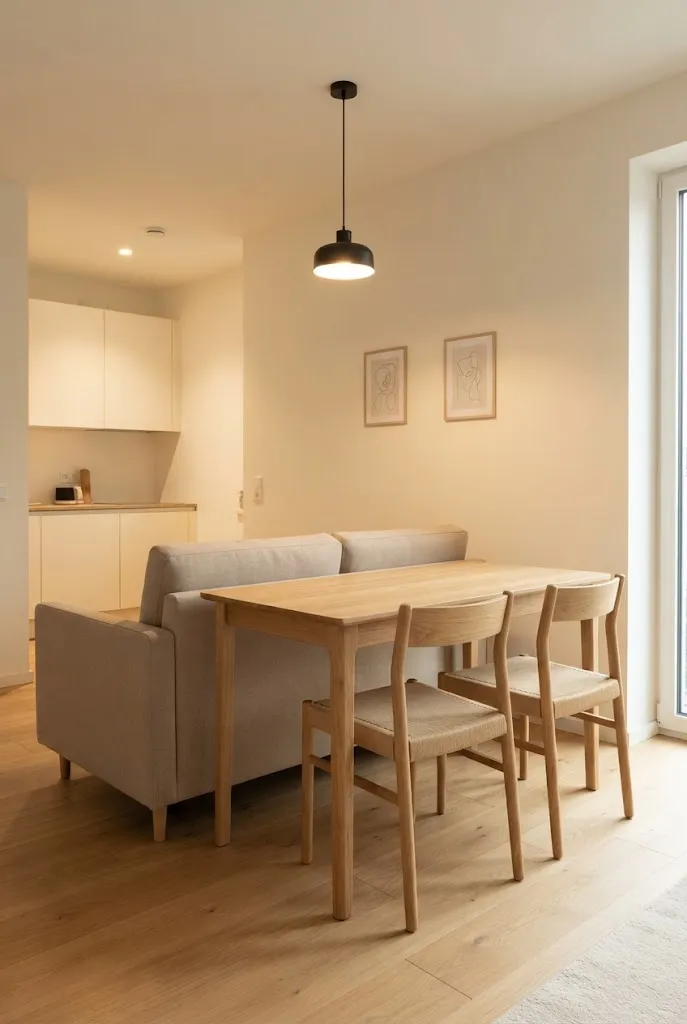
The space behind a sofa is often overlooked.
If you have enough clearance, place a slim dining table directly behind the sofa. The table can serve as a dining surface while also acting as a visual transition between the living and dining areas.
Choose a narrow design rather than a full-depth dining table.
Pair it with stools or compact chairs that can be pushed underneath.
Before using this layout, make sure there is enough space for people to sit comfortably without blocking the main walkway.
6. Use a Convertible Console Table
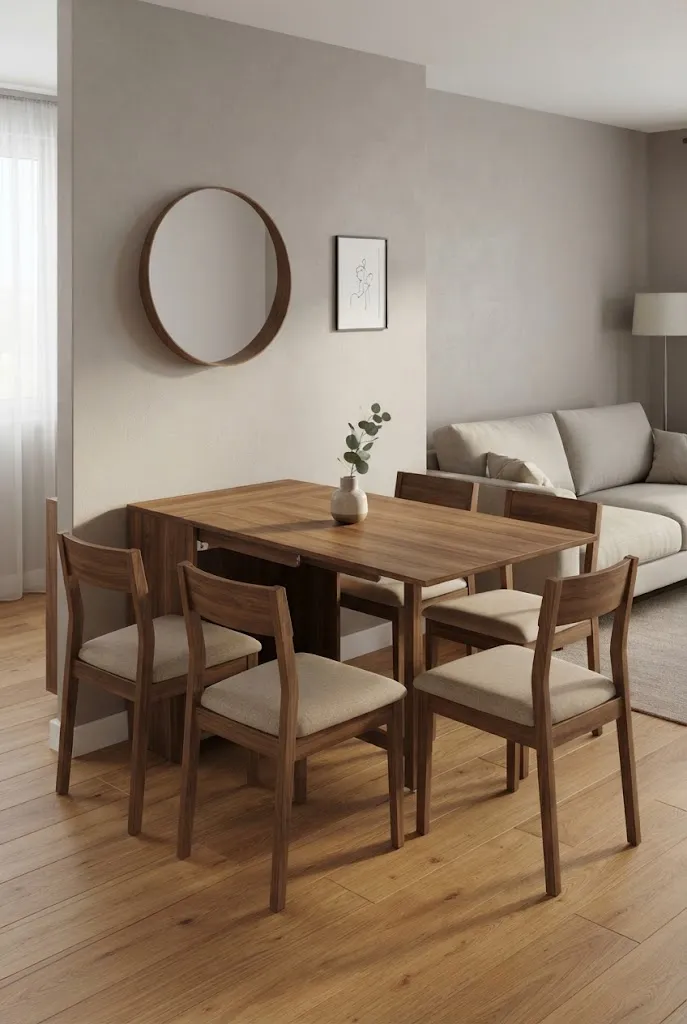
A console table can become a dining solution when you choose a design that expands.
Look for a console that can extend into a larger dining table when guests arrive.
During everyday use, it can sit against the wall and hold décor, keys, or a small lamp. When needed, it can open up to accommodate several people.
This is particularly useful for apartments where hosting is occasional rather than an everyday requirement.
You get the functionality of a dining table without dedicating the floor space to one all the time.
7. Create a Breakfast Nook Beside a Window
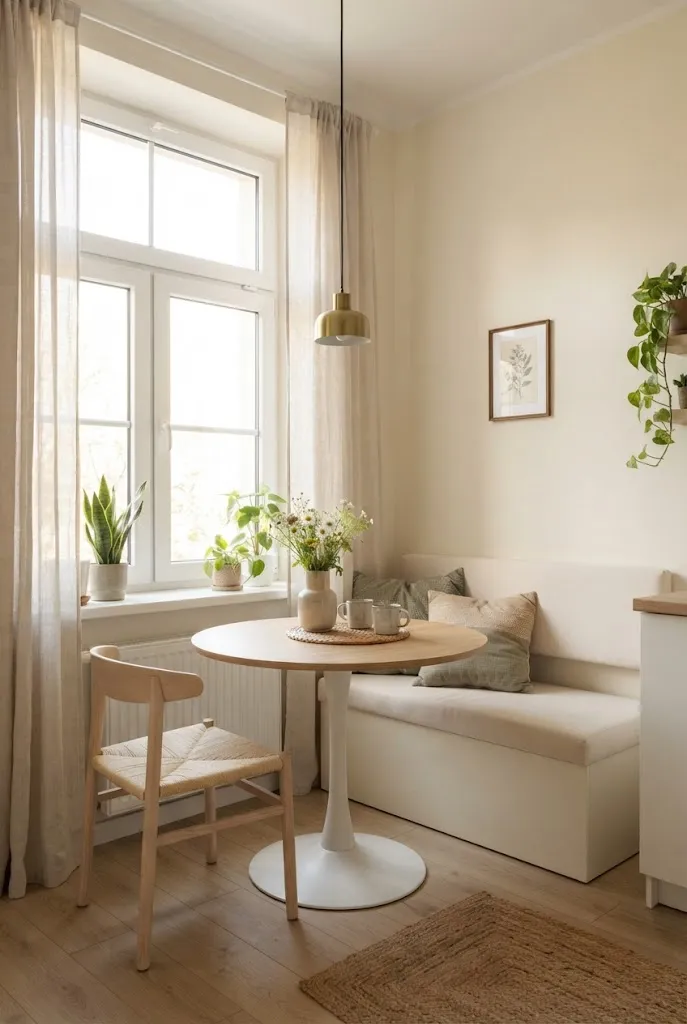
A sunny window can become a natural location for a small dining nook.
Place a compact table near the window and use one or two chairs with slim profiles. If the window area has enough width, a built-in or freestanding bench can provide additional seating.
Morning light can make this small space feel inviting without requiring extensive decoration.
Keep the table relatively simple so the window remains the visual focus.
This arrangement works especially well for apartments where the kitchen and living room do not have enough room for a traditional dining setup.
8. Choose a Pedestal Table With Stackable Chairs
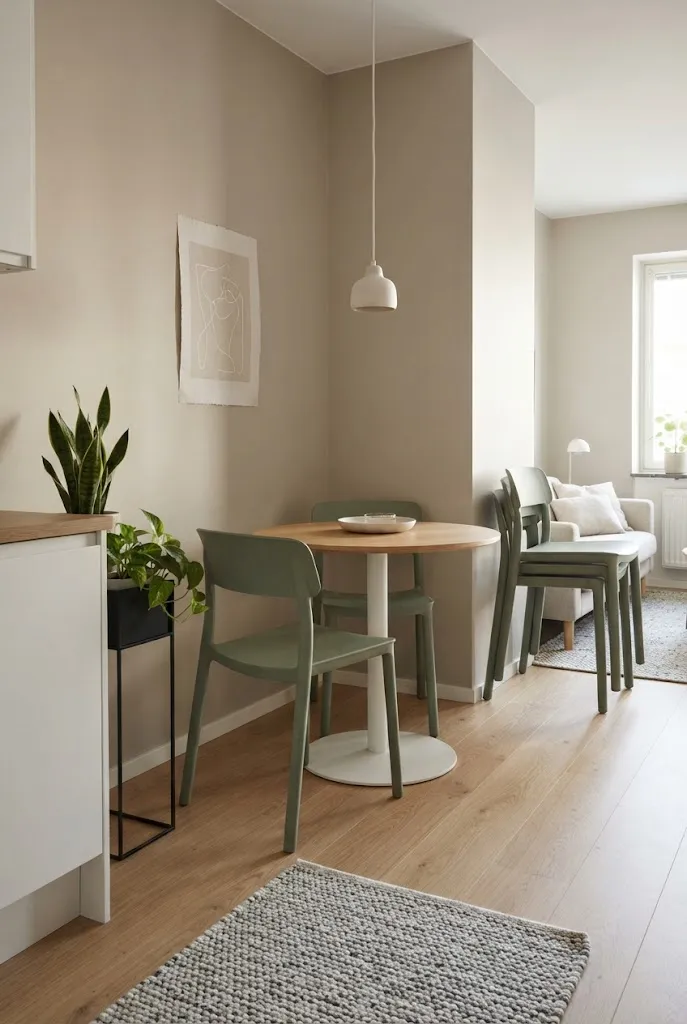
Furniture with flexible proportions can make a significant difference in a small apartment.
A pedestal table eliminates the need for four table legs around the perimeter, which can make it easier to position chairs and move around the dining area.
Pair it with stackable chairs that can be stored in a closet or against a wall when you need more floor space.
Use only the number of chairs you regularly need and bring out additional seating when guests arrive.
This creates a dining area that can expand or contract according to your schedule.
9. Use a Counter-Height Dining Setup
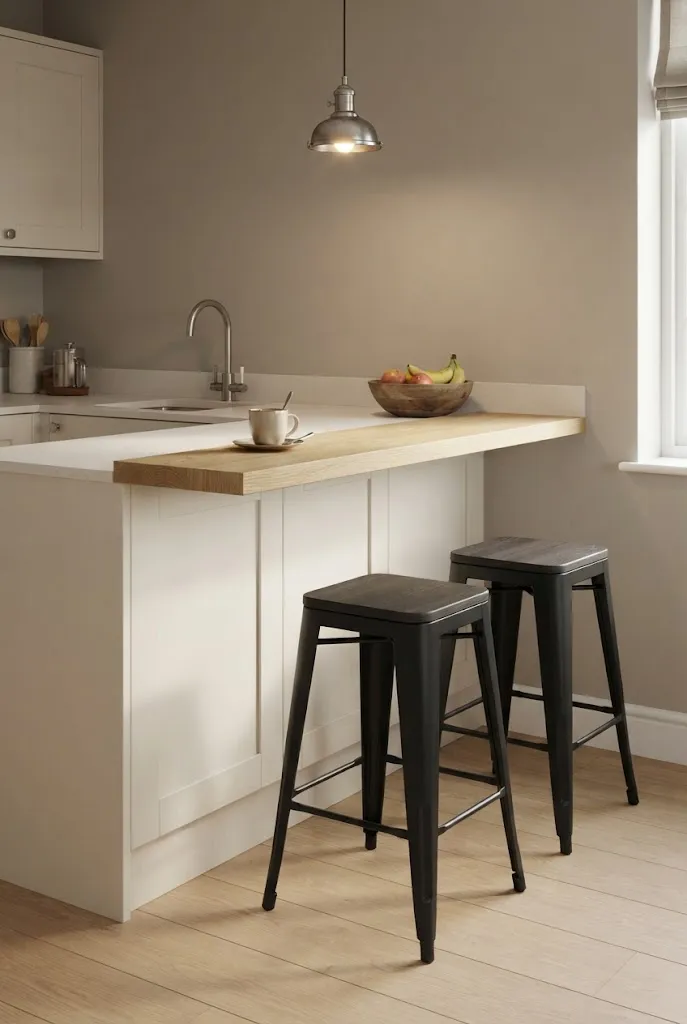
A counter-height table can provide a casual dining area without requiring the same footprint as a traditional dining arrangement.
Place a narrow counter-height table against a wall or beside the kitchen.
Use stools that tuck underneath completely when you are finished eating.
The extra vertical space beneath the table can make the area feel less crowded, particularly when the table is narrow.
This setup can also work as a casual workspace for a laptop, making the dining furniture more useful throughout the day.
10. Put a Small Dining Table in an Unused Corner
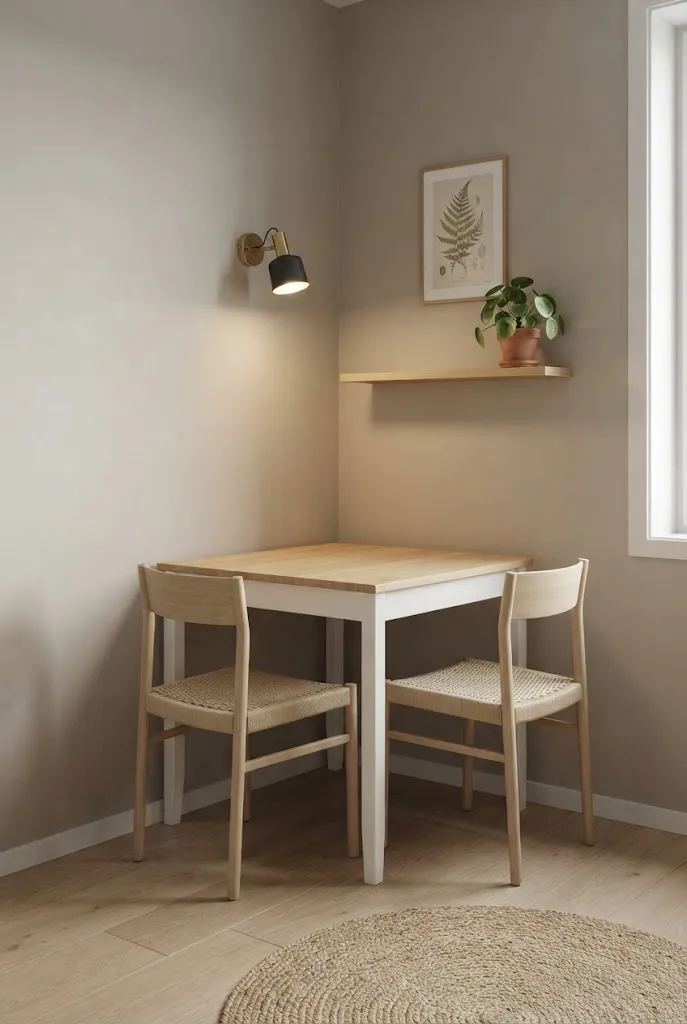
Look around your apartment for corners that are currently doing very little.
A corner near the kitchen, living room, or bedroom entrance might be large enough for a small square or round table.
Do not automatically assume that a dining area needs to be in the center of the living room.
A corner dining arrangement can make better use of an awkward section of the apartment while keeping the main living area open.
Add a simple pendant light or wall-mounted lamp above the table to visually define the area.
11. Choose Folding Dining Chairs
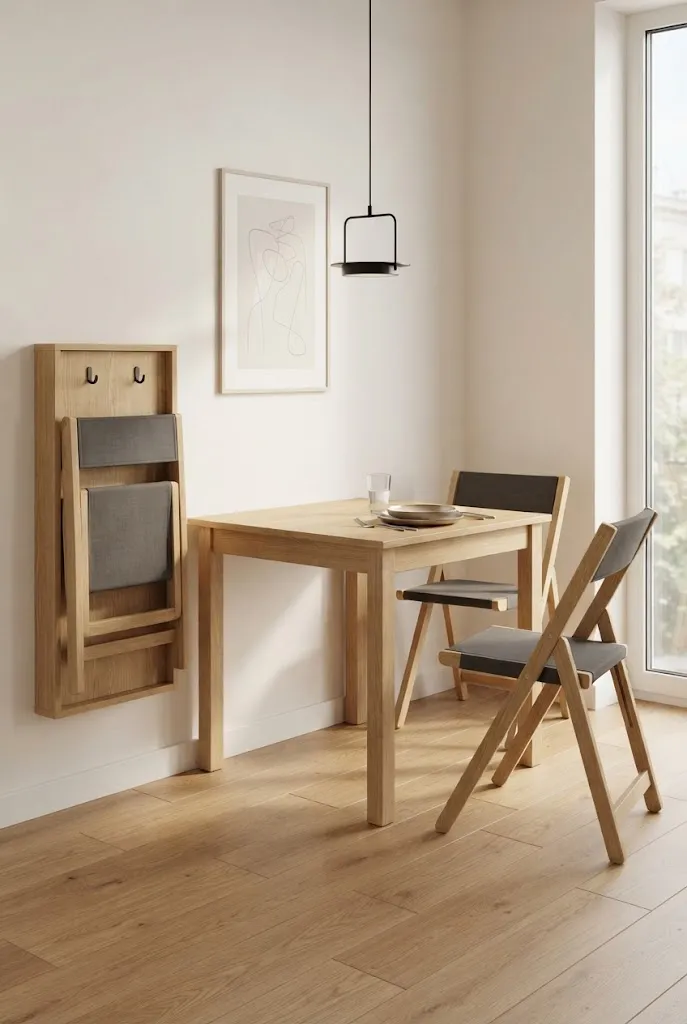
A small table can still become inconvenient if the chairs take up too much space.
Folding chairs solve part of the problem because they can disappear when you need additional floor space.
Keep two chairs beside the table for everyday use and store additional chairs in a closet, behind a door, or against an unused wall.
Look for folding chairs with comfortable backs and sturdy construction rather than treating them as temporary furniture.
When selected carefully, they can look just as intentional as conventional dining chairs.
12. Create a Dining Nook With a Built-In Bench
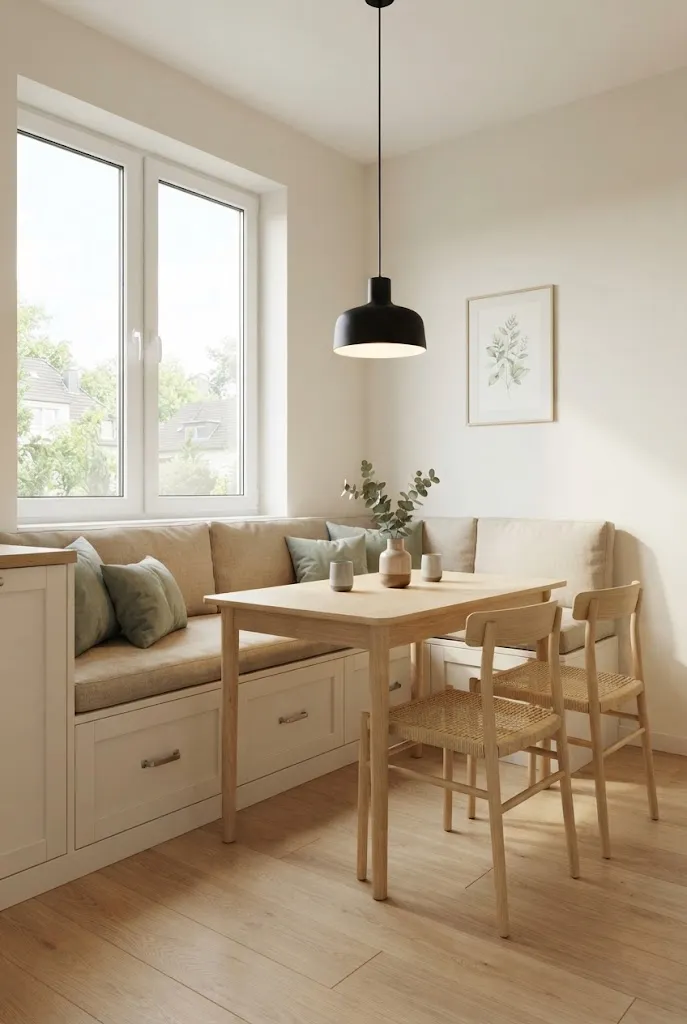
If you own your apartment or are planning a longer-term renovation, a built-in dining nook can make excellent use of a difficult space.
Install a bench along one wall and place a compact table in front of it.
The bench can include drawers or lift-up storage beneath the seat, providing a useful place for items that otherwise need another cabinet.
Add a couple of lightweight chairs on the opposite side.
This arrangement can create a cozy dining corner while keeping the footprint relatively compact.
13. Use a Small Bar Table for Two
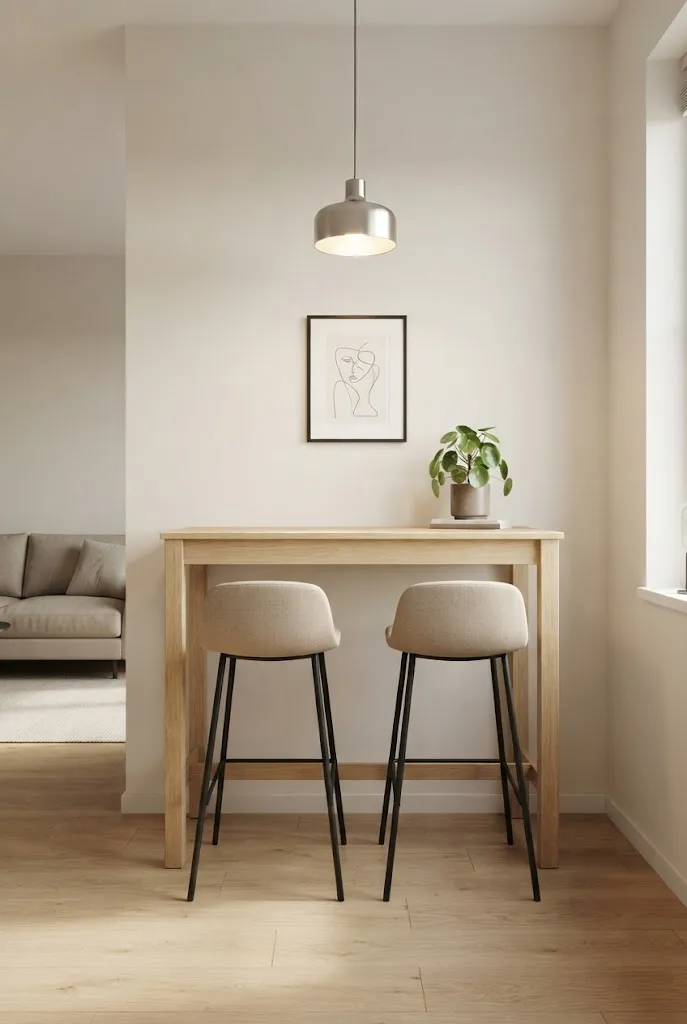
If you usually eat alone or with one other person, a large dining table may simply be unnecessary.
A narrow bar table can provide enough surface for two plates, drinks, and a few serving items while taking up very little floor space.
Place it against a wall or near the kitchen and use two stools that slide completely underneath.
This creates a casual dining area that can also function as a coffee station, laptop desk, or breakfast spot.
14. Combine the Dining Area With Your Home Office
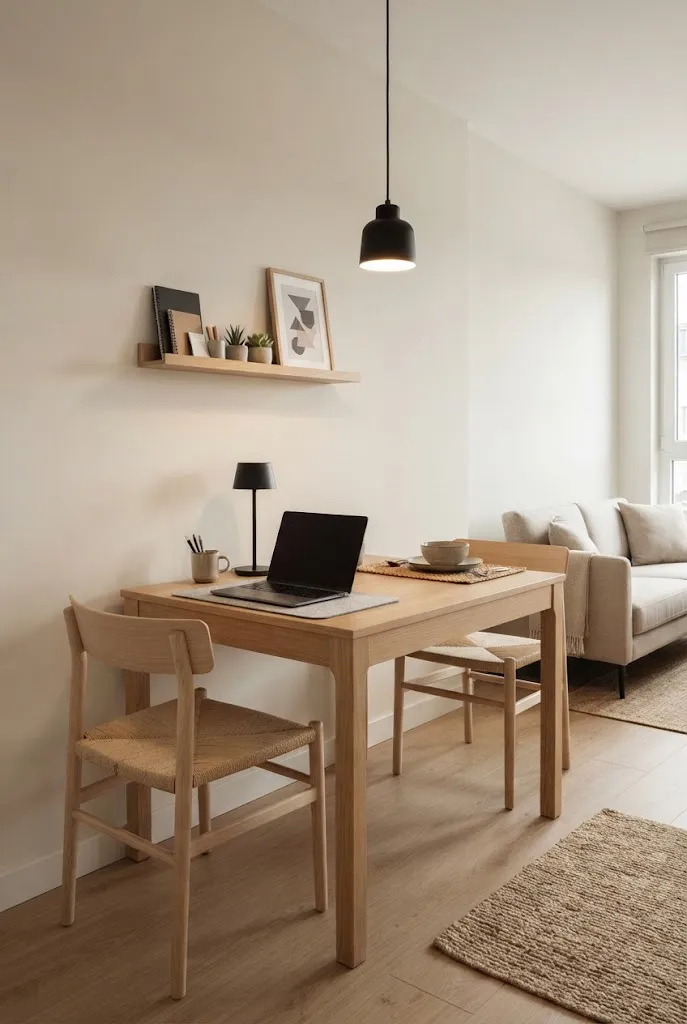
Instead of assigning separate furniture to eating and working, let one table perform both functions.
Choose a table wide enough for a meal but compact enough for your laptop.
Keep work equipment organized in a nearby drawer or basket so the dining surface can be cleared quickly.
A simple table against a wall can become a breakfast area in the morning, a workspace during the afternoon, and a dining table in the evening.
This approach is particularly useful when your apartment does not have room for separate work and dining zones.
15. Use a Folding Wall-Mounted Dining Table
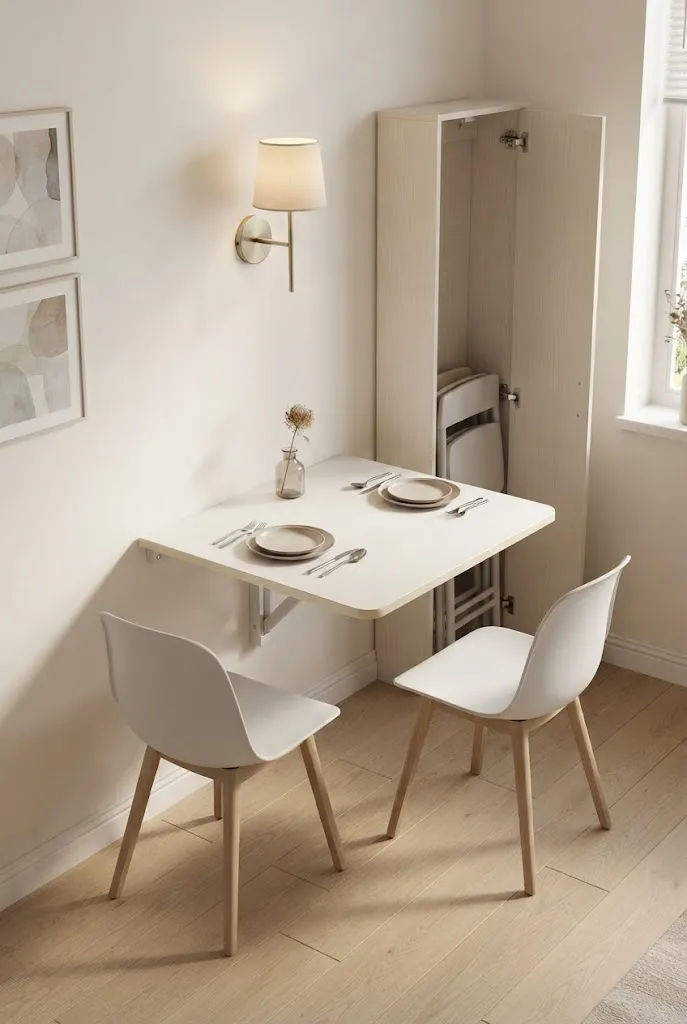
For extremely tight layouts, a wall-mounted folding table can provide a dining surface only when you need it.
When closed, it can sit almost flush against the wall. When opened, it creates enough space for a meal.
Pair it with lightweight chairs that can be stored nearby.
This setup can be especially useful in a narrow kitchen or along a hallway wall where a permanent table would obstruct movement.
Keep the surrounding wall relatively uncluttered so the folded table does not compete with other features.
16. Add a Dining Table Between the Kitchen and Living Room
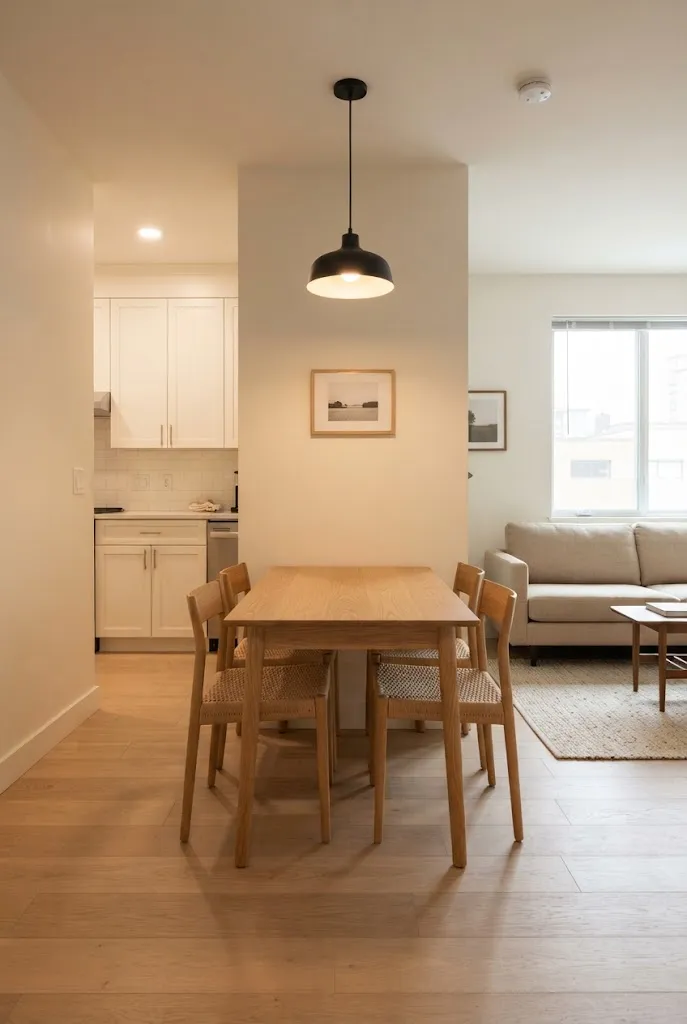
If your apartment has an open-plan layout, use the transition between the kitchen and living area as the dining zone.
A narrow rectangular table can sit between the two spaces and visually connect them.
Place the longer side parallel to the main walkway so people can move naturally around it.
Choose chairs that are visually light and easy to push underneath.
This arrangement creates a clear dining area without requiring a separate room or enclosure.
17. Make the Dining Area Feel Intentional With Lighting
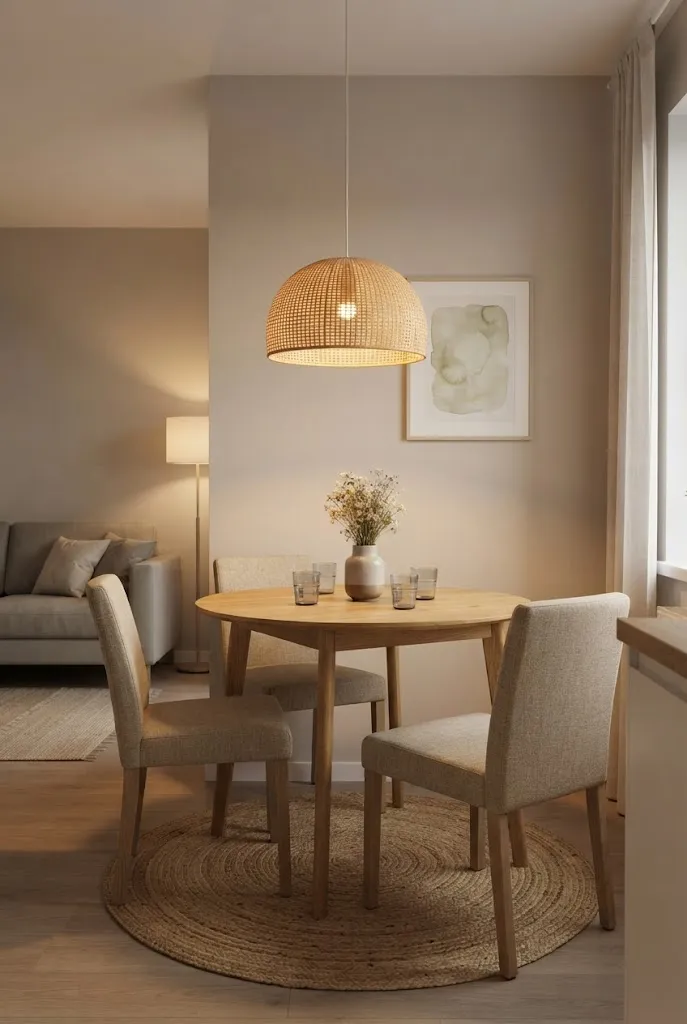
Sometimes the dining area does not need more furniture. It needs better definition.
A pendant light positioned above the table can visually establish the dining zone even when the table is located within the living room.
For rental apartments where ceiling fixtures cannot be changed, try a plug-in pendant, wall sconce, or carefully positioned floor lamp.
Use warm, comfortable lighting that makes the area inviting during evening meals.
A defined lighting zone can make a small table feel like a deliberate part of the apartment rather than furniture that was squeezed into leftover space.
How to Choose the Right Dining Table for a One Bedroom Apartment
Start with the number of people who regularly use the table.
If you usually eat alone, a two-person table may be enough. If you frequently host friends, choose an expandable design rather than permanently dedicating space to a large table.
Measure the available area before shopping.
Remember to account for the chairs and the space needed to pull them out. A table may fit perfectly on paper but become difficult to use once someone sits down.
Also consider how you use the apartment throughout the day. If the table needs to function as a workspace, breakfast station, or craft area, choose a surface that can handle multiple uses.
Dining Area Mistakes That Waste Space
One of the most common mistakes is choosing a table based only on its dimensions.
The chairs, walking clearance, and surrounding furniture matter just as much.
Another mistake is buying a large dining set because it looks attractive in a showroom. In a one-bedroom apartment, oversized furniture can quickly overwhelm the room.
Avoid filling the dining area with unnecessary décor. A small pendant, simple centerpiece, or one piece of wall art may be enough.
Finally, do not assume your dining area needs to occupy the center of the apartment. Corners, walls, kitchen edges, and transitional spaces can often work better.
Frequently Asked Questions
What is the best dining table for a small one bedroom apartment?
A compact round, drop-leaf, folding, extendable, or narrow rectangular table can work well. The right choice depends on the room’s shape and how many people regularly use the table.
How much space should I leave around a dining table?
You need enough room to pull out chairs and walk comfortably around the table. Measure the entire dining arrangement rather than only measuring the tabletop.
Can a dining table double as a desk?
Yes. A compact dining table can work well as a home office when you organize work supplies so the surface can be cleared at mealtime.
Is a round table better for a small apartment?
A round table can make movement around a compact dining area easier because it eliminates sharp corners. It is particularly useful in spaces where the table sits near a walkway.
How can I create a dining area without a dining room?
Use a kitchen peninsula, wall-mounted table, breakfast nook, narrow console, sofa-back table, unused corner, or small bar table. You only need enough space for the number of people who regularly eat there.
Final Thoughts
A one-bedroom apartment does not need a separate dining room to have a comfortable place to eat.
The most useful one bedroom apartment dining area ideas make the dining space adaptable. A table can fold against the wall, expand when guests arrive, double as a desk, or fit neatly into a corner that would otherwise remain unused.
Before buying anything, consider how you actually eat, how often you host, and how much space you need around the furniture.
Choose pieces that perform more than one job when possible, keep the dining footprint proportional to the room, and use lighting or placement to make the area feel intentional.
With the right setup, even a very compact apartment can have a dining space that feels comfortable, practical, and genuinely part of the home.
Community
Join the conversation
Add a useful idea, ask a specific question, or share what worked in your space. Every comment is reviewed before it appears.