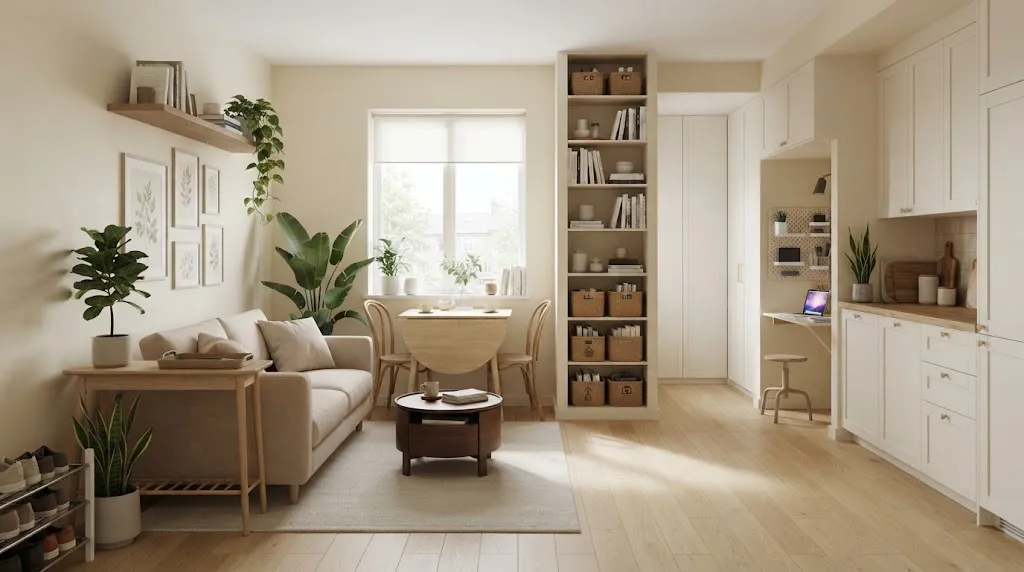
A one-bedroom apartment may have separate rooms, but that does not mean you have unlimited space. Between the bedroom, living room, kitchen, bathroom, entryway, and storage needs, every square foot has to work harder.
The challenge is not simply fitting more things into the apartment. It is creating a layout where the furniture, storage, lighting, and everyday belongings work together without making the home feel cramped.
The best one bedroom apartment ideas focus on using space that is often overlooked. A wall can become storage, an awkward corner can become a workspace, the area beneath the bed can hold seasonal items, and a small hallway can become useful organization space.
You also do not need to renovate the entire apartment. Many of these ideas can be introduced with affordable furniture, removable organizers, and simple layout changes.
Here are 25 practical ways to make the most of every inch.
1. Use the Space Behind the Bedroom Door
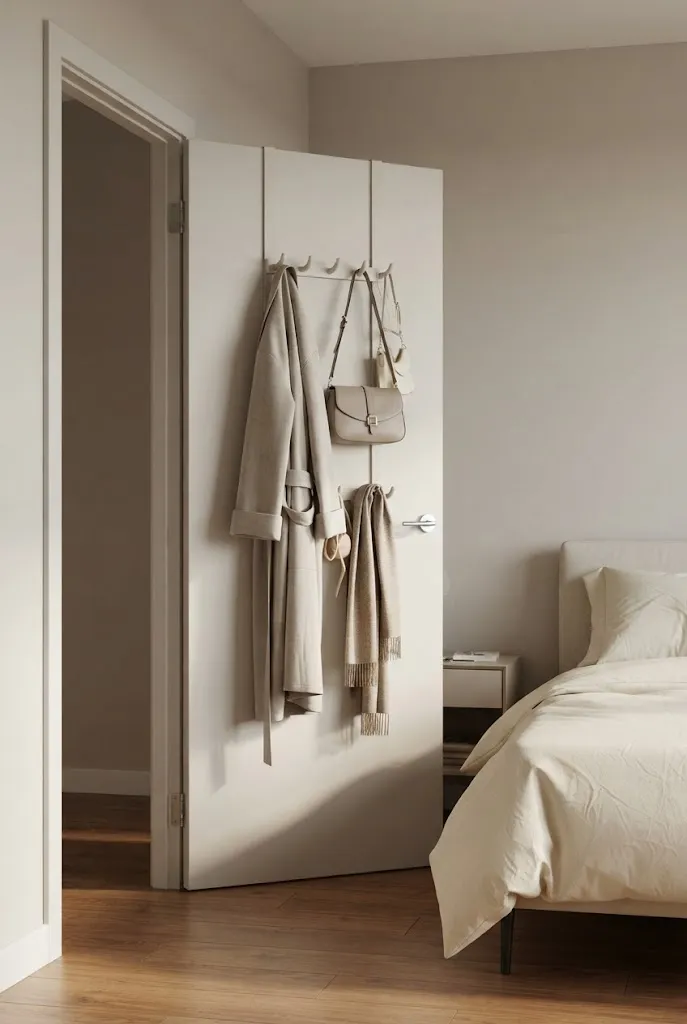
The area behind a bedroom door is easy to overlook because it disappears whenever the door is open.
Install slim hooks, an over-the-door organizer, or a narrow hanging rack to use this hidden surface.
It can hold robes, bags, scarves, accessories, or other lightweight items that would otherwise take up closet space.
Choose a shallow organizer so the door can still open and close normally.
This is one of the simplest ways to gain storage without sacrificing floor area.
2. Turn the Entryway Into a Functional Drop Zone
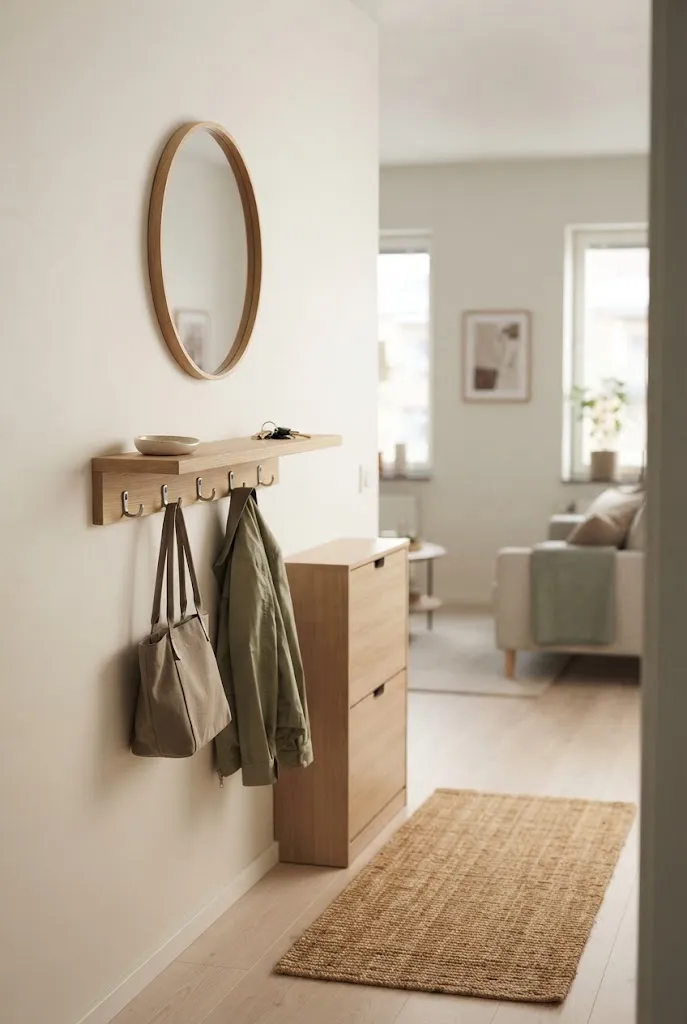
A small entryway can quickly become a pile of shoes, keys, bags, and jackets.
Instead of allowing this area to become cluttered, give each category a specific home.
A narrow wall-mounted shelf can hold keys and small accessories, while hooks underneath can accommodate bags or coats. Add a slim shoe cabinet if there is enough floor space.
A small mirror can make the entrance feel brighter while giving you a useful place for last-minute checks before leaving.
3. Choose Furniture With Built-In Storage
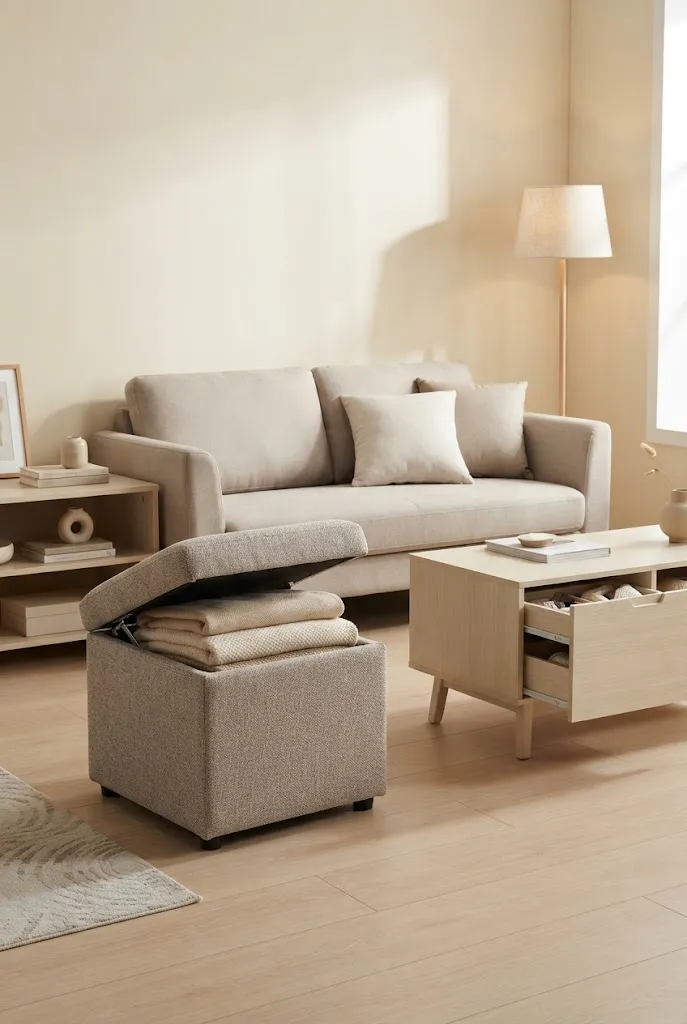
When floor space is limited, furniture that performs two jobs can be extremely useful.
Choose an ottoman with hidden storage, a bed with drawers, a coffee table with compartments, or a bench that opens for storage.
The goal is to reduce the number of separate storage pieces in the apartment.
Before buying multifunctional furniture, consider what you actually need to store. Hidden compartments are most useful when they are easy to access and sized for items you use regularly.
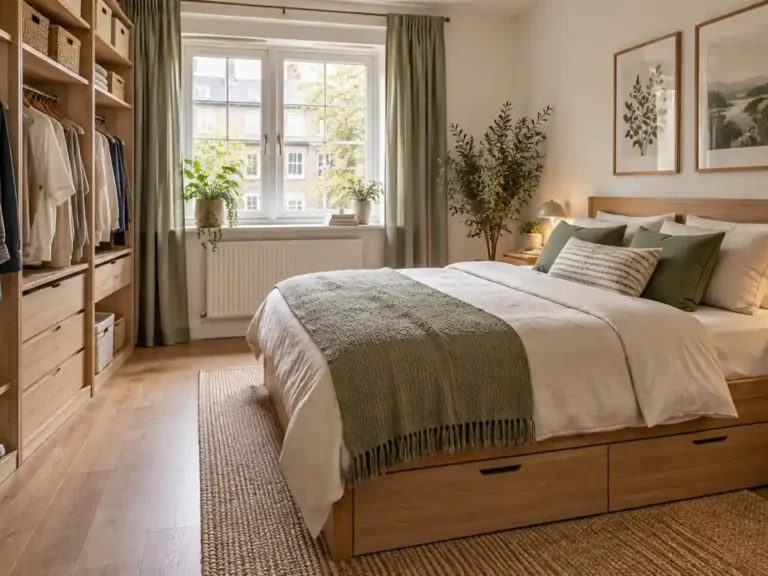
4. Make the Bed Work Harder
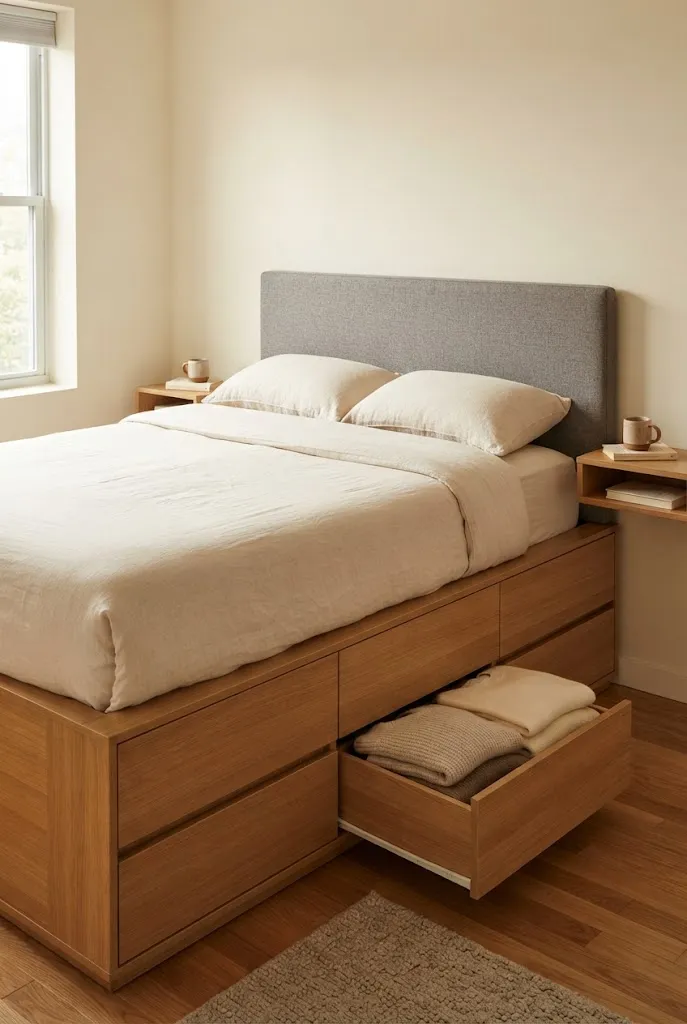
The bed occupies a significant portion of most bedrooms, so the space beneath it should not automatically go unused.
If your bed frame has clearance underneath, use low storage boxes for seasonal clothing, spare bedding, luggage, or rarely used belongings.
A bed with integrated drawers is another option.
Use containers with lids if you are storing items for long periods, and label them so you do not have to pull everything out to find one item.
5. Use Vertical Space in the Kitchen
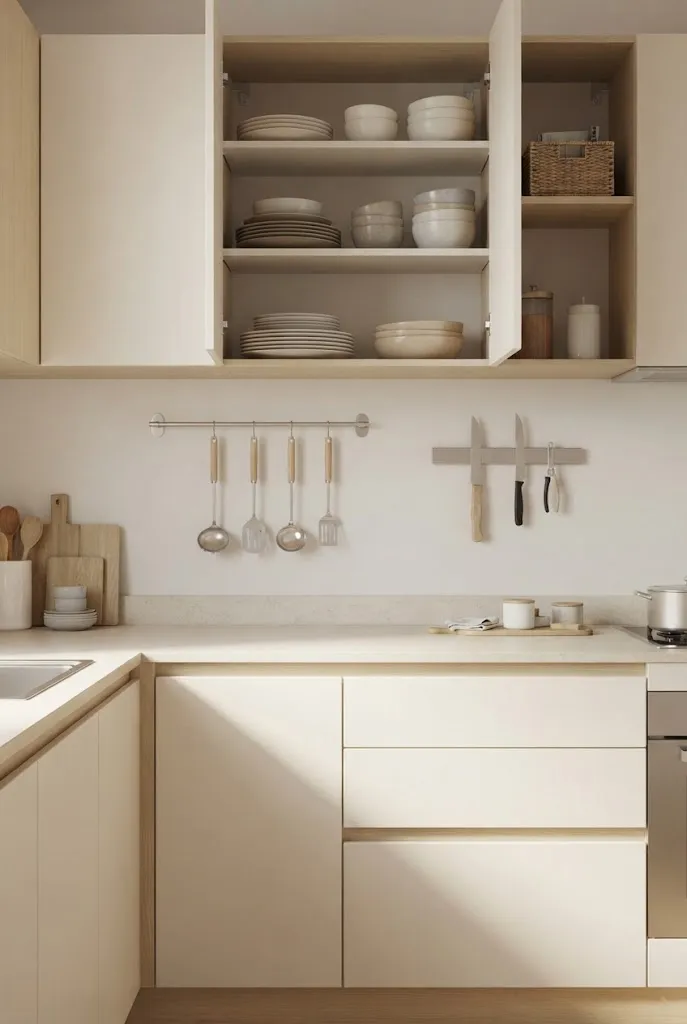
Kitchen cabinets often provide more vertical space than we actually use.
Add shelf risers inside cabinets to create additional levels for plates, bowls, mugs, or pantry items.
A narrow wall-mounted rail can hold cooking utensils, while magnetic storage can keep certain tools accessible without filling a drawer.
Look upward before deciding that you need another cabinet.
Vertical organization can make the same kitchen feel considerably more functional.
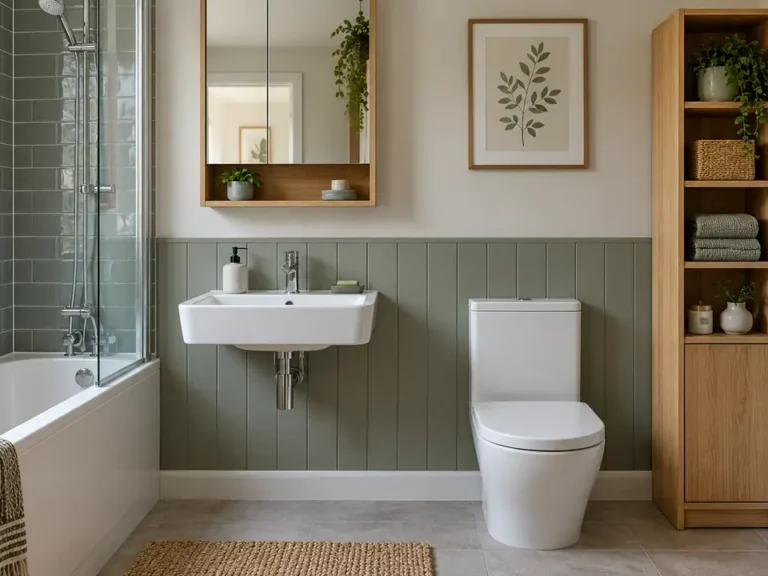
6. Install Shelves Above the Toilet
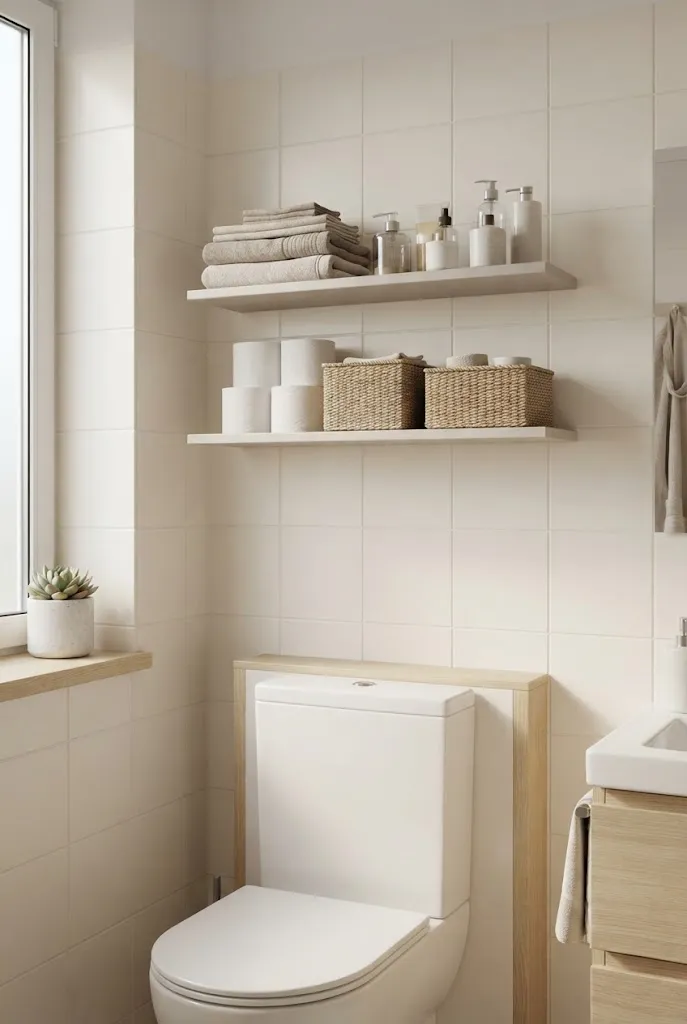
The wall above a toilet is another area that can provide useful storage.
A narrow shelving unit or wall-mounted shelves can hold spare toilet paper, towels, toiletries, and small baskets.
Use attractive containers rather than displaying every package.
Keep enough clearance around the toilet and make sure any wall-mounted installation is properly secured.
The result can look like intentional bathroom storage rather than an afterthought.
7. Create a Workspace Inside a Closet
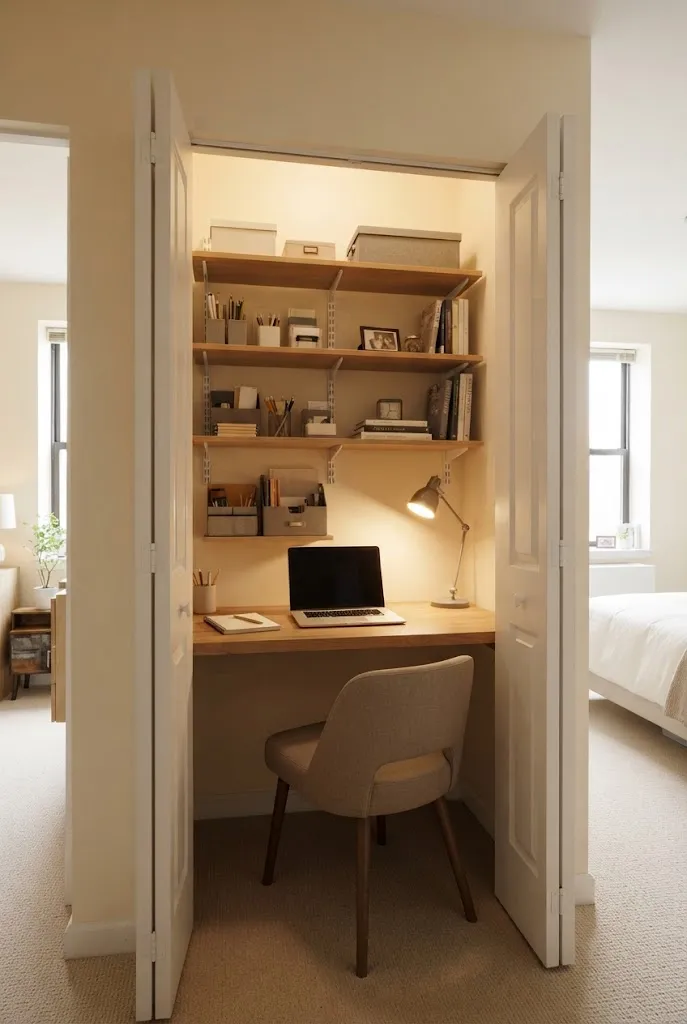
If you rarely use an entire closet for clothing, part of it may be converted into a compact workstation.
Install a small desk surface, add appropriate lighting, and use vertical organizers for office supplies.
When the workday is over, you can close the doors and visually hide the workspace.
This approach is particularly useful when the living room does not have enough room for a separate desk.
Make sure the closet has adequate ventilation and electrical access before turning it into a permanent workstation.
8. Use the Wall Above the Sofa
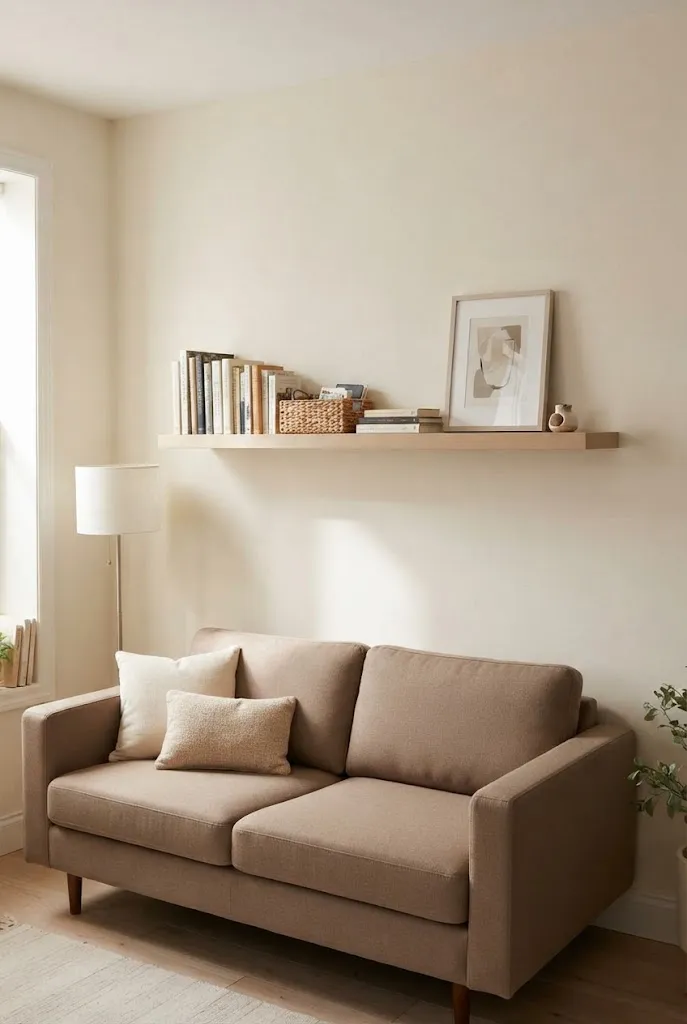
The wall above the sofa is often treated purely as a decorative area, but it can also provide useful vertical storage.
Install a shallow shelf for books, small baskets, framed artwork, or decorative objects.
Keep the shelf shallow enough that it does not interfere with people sitting below it.
You can combine practical storage with decoration so the wall serves both purposes.
9. Choose a Narrow Console for Awkward Spaces
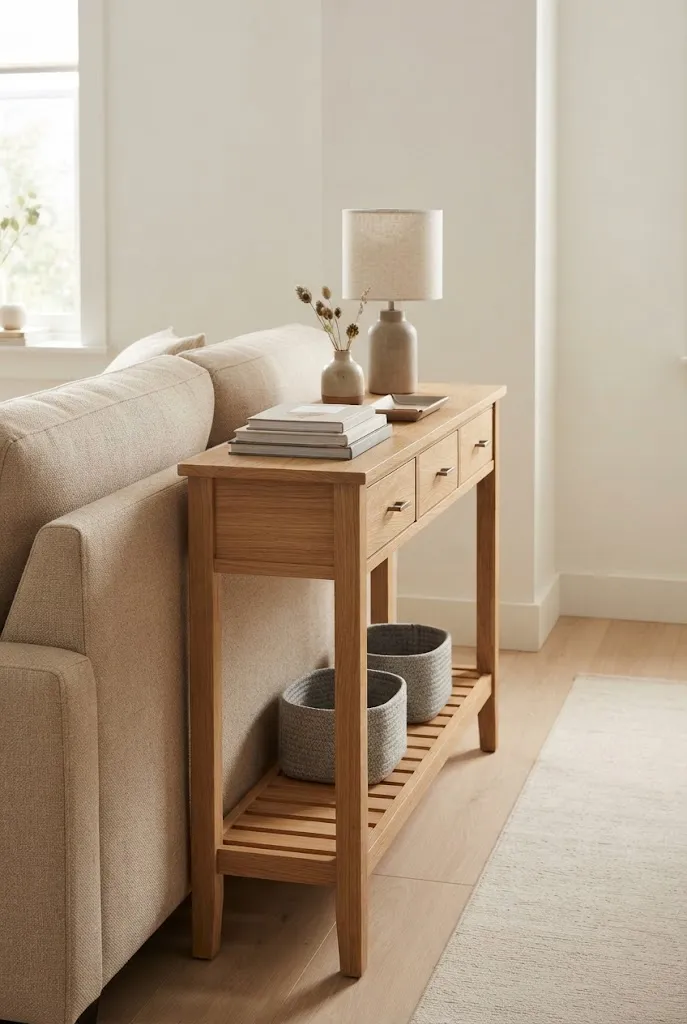
A narrow console can fit into spaces where a standard cabinet would be too deep.
Place one behind a sofa, along a hallway wall, or in an unused section near the entry.
Use the drawers or lower shelves for everyday items.
If you choose a console with a slim profile, it can provide storage without significantly narrowing the walkway.
10. Use the Space Above Kitchen Cabinets
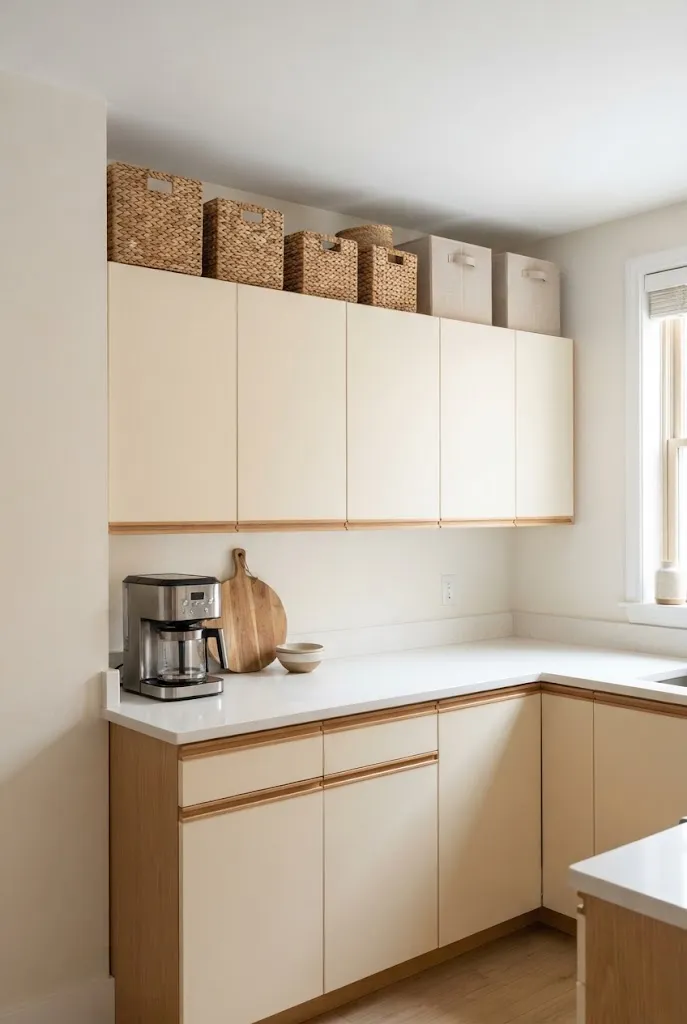
If there is a gap between your kitchen cabinets and ceiling, that vertical space can become useful for items you do not need every day.
Place attractive baskets or matching storage boxes there for seasonal kitchenware, serving pieces, or other occasional items.
Avoid storing heavy objects that are difficult to safely reach.
A small step stool can make access easier, but keep frequently used items at a more accessible height.
11. Replace Bulky Lamps With Wall Lighting
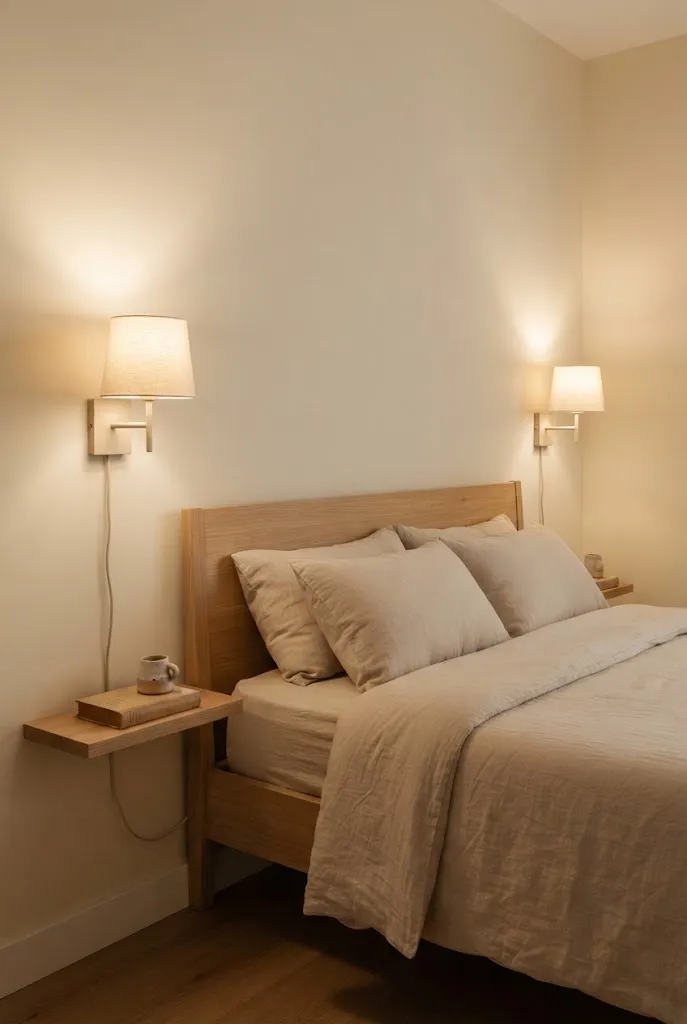
Floor and table lamps can consume valuable surface and floor space.
If your apartment allows it, use wall-mounted sconces to provide lighting without requiring a table or floor footprint.
Plug-in sconces can be useful in rental apartments because they may not require electrical rewiring.
Position them near the bed, sofa, or workspace where focused lighting is needed.
Good lighting can improve the room without adding another piece of furniture.
12. Use a Fold-Down Desk
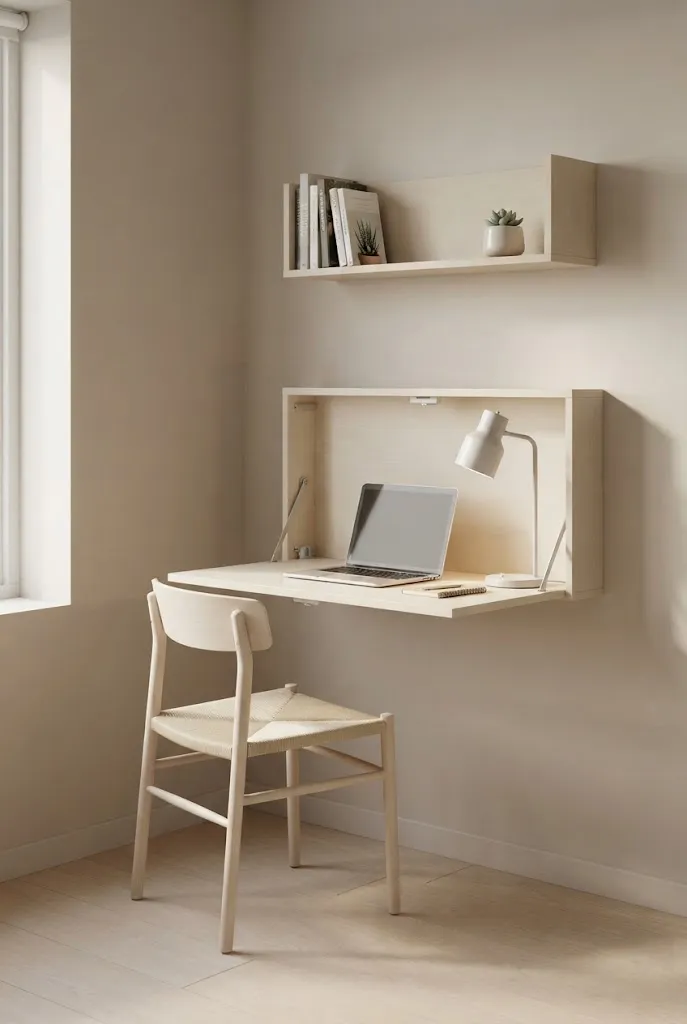
A fold-down desk can provide a proper workspace without permanently occupying the floor.
When closed, it becomes a relatively shallow wall feature. When opened, it creates enough surface for a laptop and basic office supplies.
Pair it with a lightweight chair that can be moved elsewhere when the desk is closed.
This is especially helpful if you work from home occasionally rather than every day.
13. Add a Storage Bench to the Bedroom
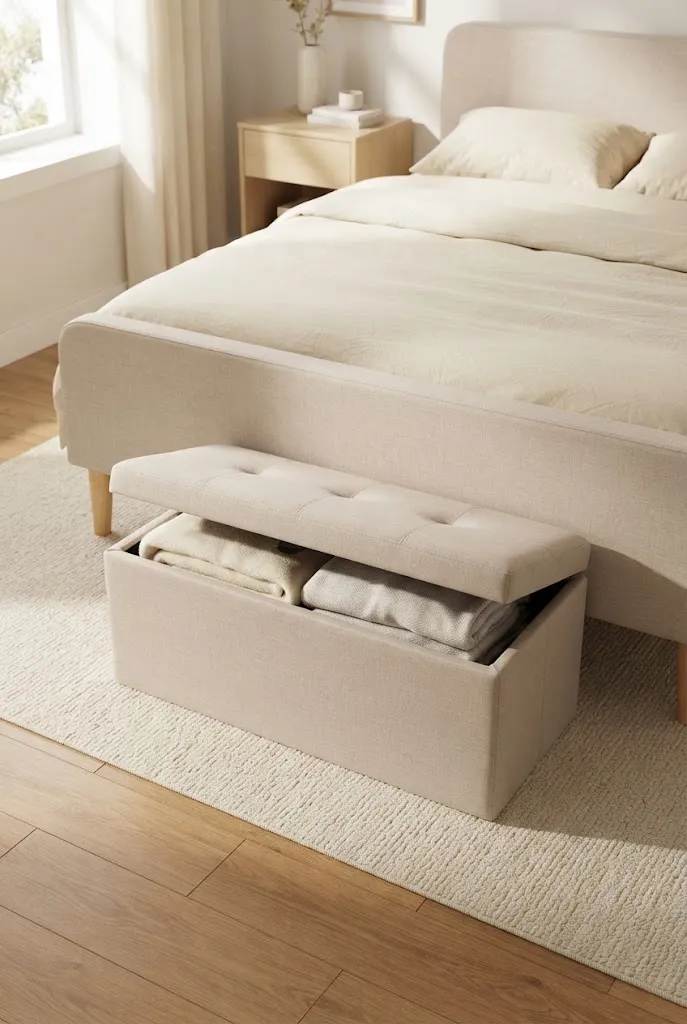
A storage bench at the end of the bed can provide seating and hidden storage at the same time.
Use it for spare blankets, pillows, seasonal clothing, or other soft items.
Choose a bench that does not extend so far into the room that it blocks movement around the bed.
A simple upholstered design can also make the bedroom feel more finished without requiring another bulky cabinet.
14. Make the Hallway Useful
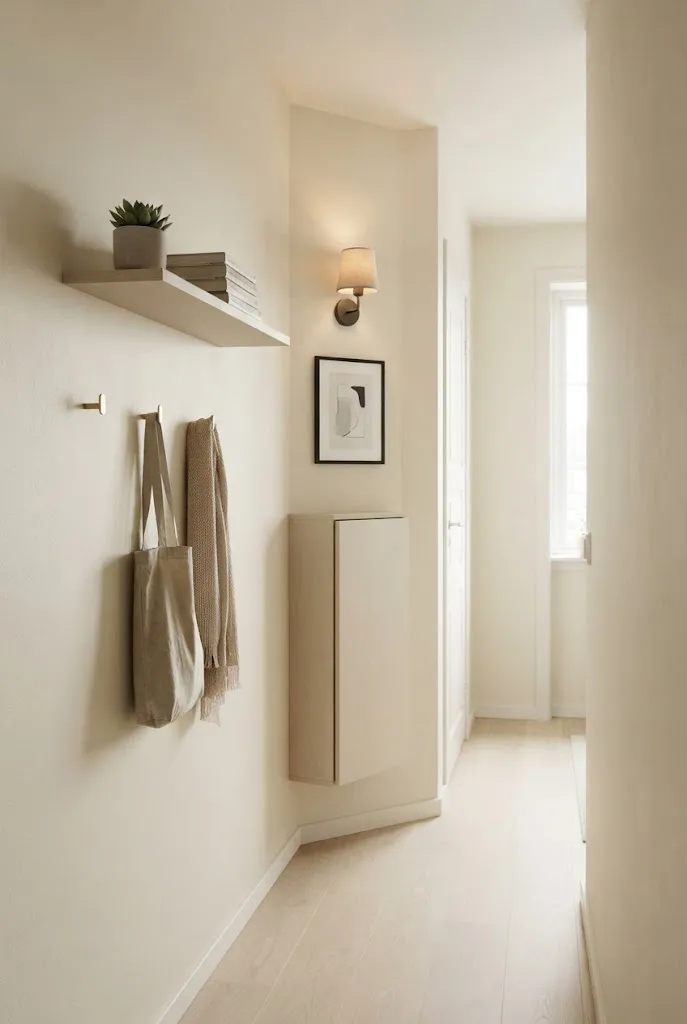
A hallway does not need to remain completely empty.
If the width allows, add a very shallow shelf, wall hooks, or a slim cabinet.
Use the area for keys, mail, bags, cleaning supplies, or other items that need a convenient home.
Keep the installation shallow and maintain a clear walking path.
The goal is to use the hallway without turning it into an obstacle course.
15. Use the Back of Kitchen Cabinet Doors
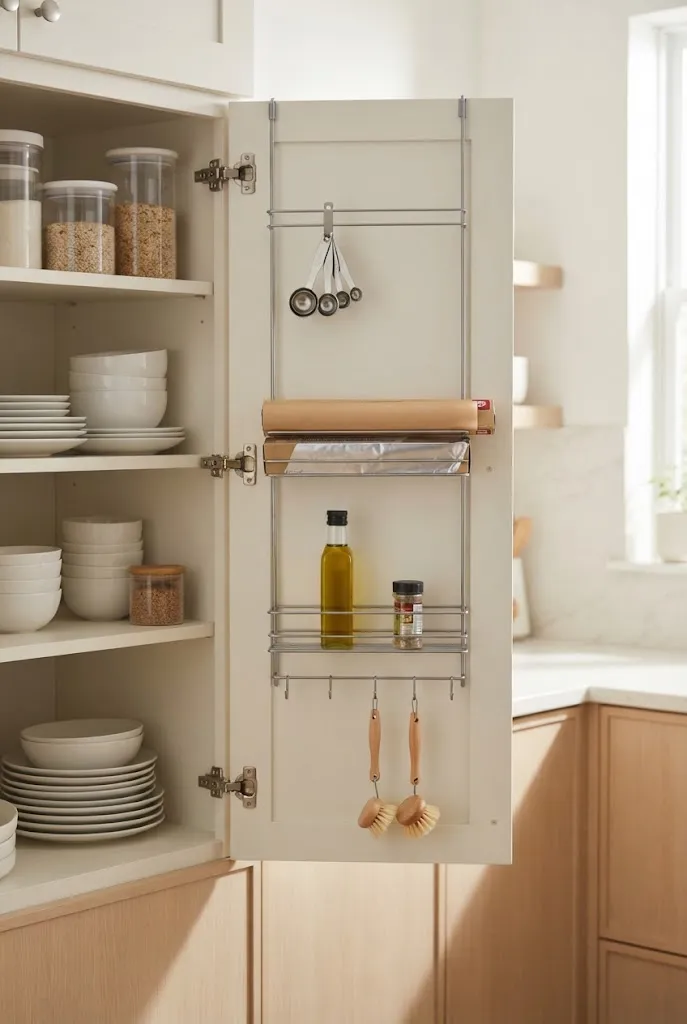
The inside of cabinet doors provides hidden storage that is particularly useful for small kitchen items.
Attach suitable organizers to hold measuring spoons, cleaning brushes, pot lids, wraps, or other lightweight items.
This allows you to free up drawer and shelf space without changing the overall kitchen layout.
Before installing anything, check that the organizer does not prevent the cabinet door from closing properly.
16. Choose a Drop-Leaf Dining Table
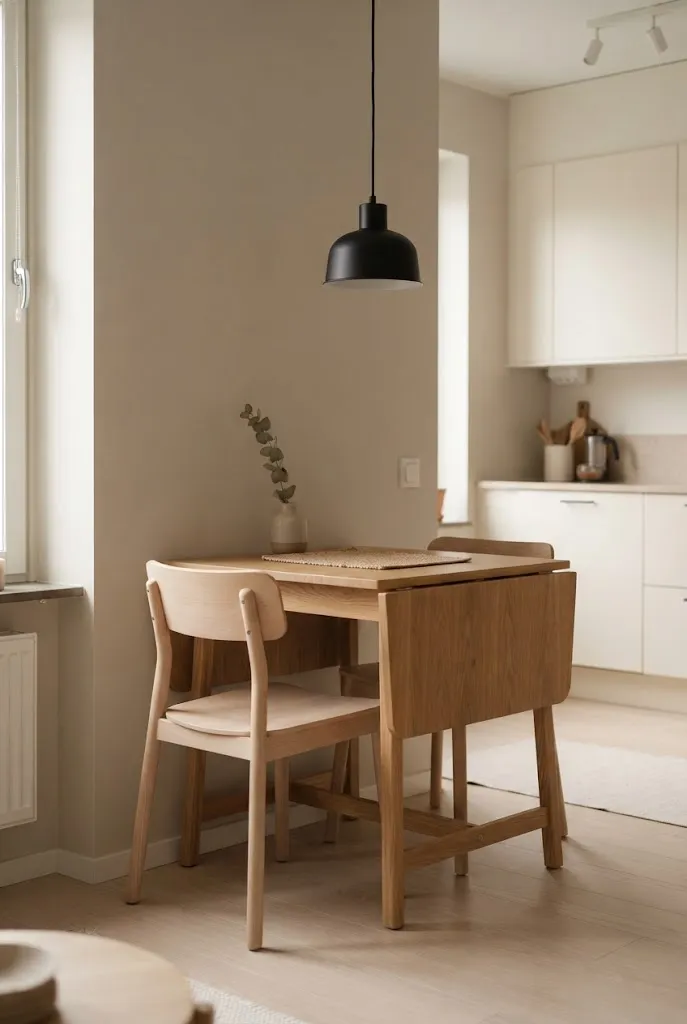
A full-size dining table can consume valuable floor space even when only one or two people are using it.
A drop-leaf table gives you a smaller everyday footprint and expands when additional surface area is needed.
Keep the leaves down during normal use and raise them when eating with guests.
Pair it with chairs that can slide completely underneath.
This allows the dining area to adapt to the rest of the apartment.
17. Use a Mirror to Improve the Sense of Space
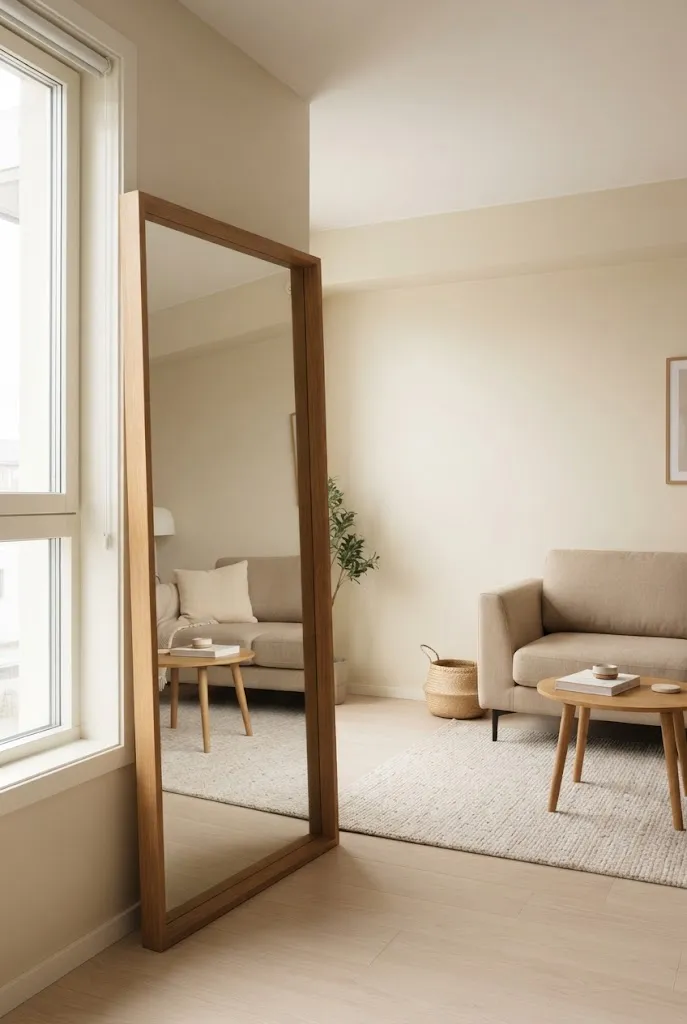
Mirrors cannot physically increase the size of an apartment, but they can change how the room feels.
Place a large mirror opposite or near a window so it reflects natural light and visually extends the room.
A full-height mirror can also be useful near the bedroom or entryway.
Choose a frame that works with your existing furniture so the mirror functions as both decoration and practical equipment.
18. Create a Reading Corner From an Unused Nook
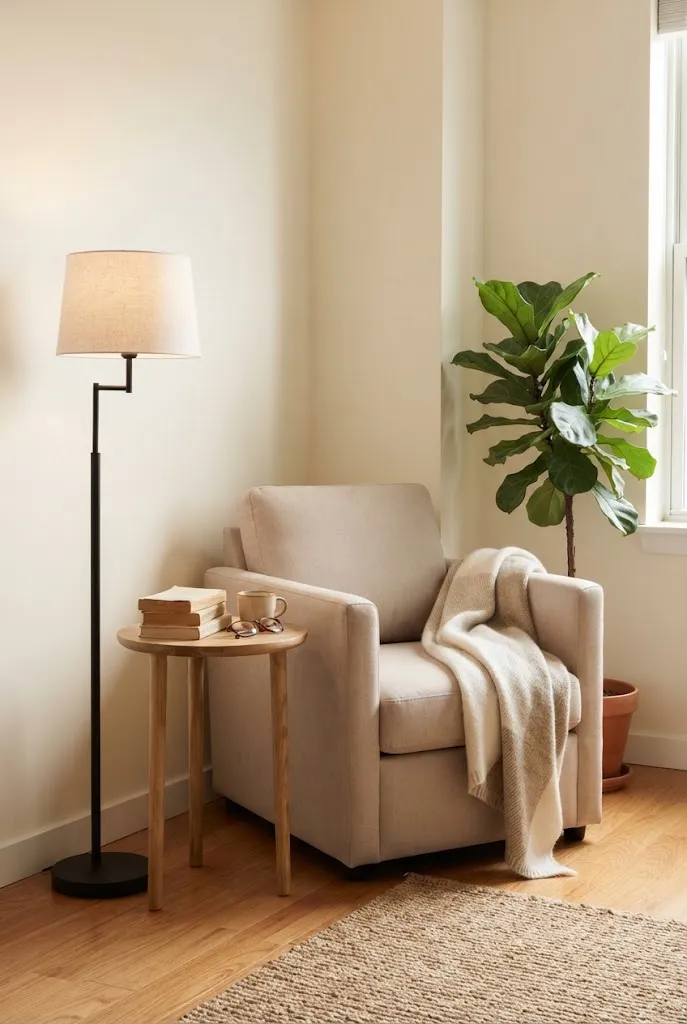
An awkward corner does not necessarily need to become storage.
If you have enough room, turn it into a compact reading area with a comfortable chair, small side table, and focused lamp.
Choose furniture with a small footprint and avoid adding unnecessary pieces.
A reading corner can give an unused section of the apartment a purpose without requiring major changes.
19. Use a Rolling Cart for Flexible Storage
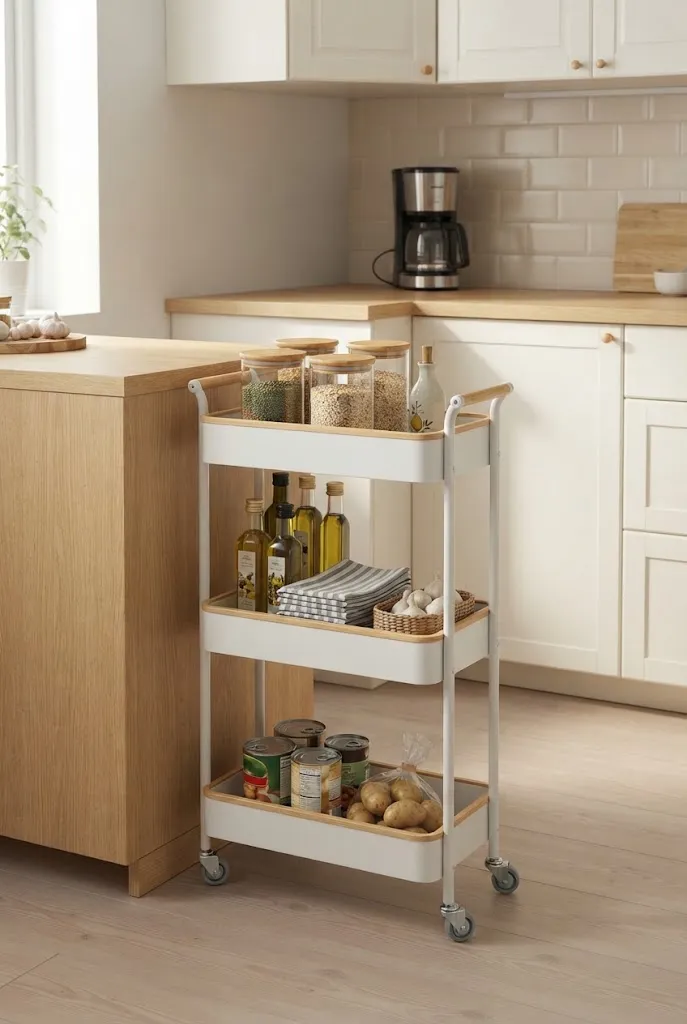
A narrow rolling cart can provide storage that moves wherever you need it.
Use one in the kitchen for pantry supplies, beside a desk for office materials, or in the bathroom for toiletries.
When you need more floor space, simply move it somewhere else.
Choose a cart that is narrow enough to fit beside existing furniture without blocking the main path.
20. Install a Pegboard in the Kitchen or Workspace
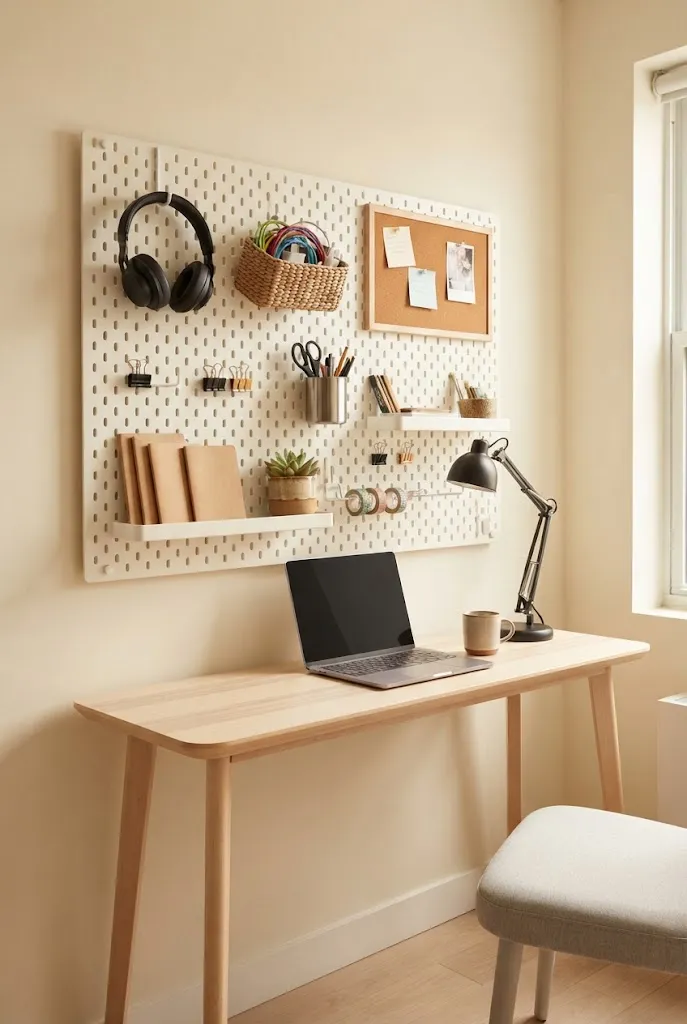
A pegboard turns an empty wall into flexible vertical organization.
In the kitchen, it can hold lightweight utensils and frequently used tools. In a workspace, it can organize stationery, cables, and small accessories.
The advantage is that the arrangement can change as your needs change.
Use a restrained layout rather than covering the entire wall with objects.
21. Use the Area Beside the Refrigerator
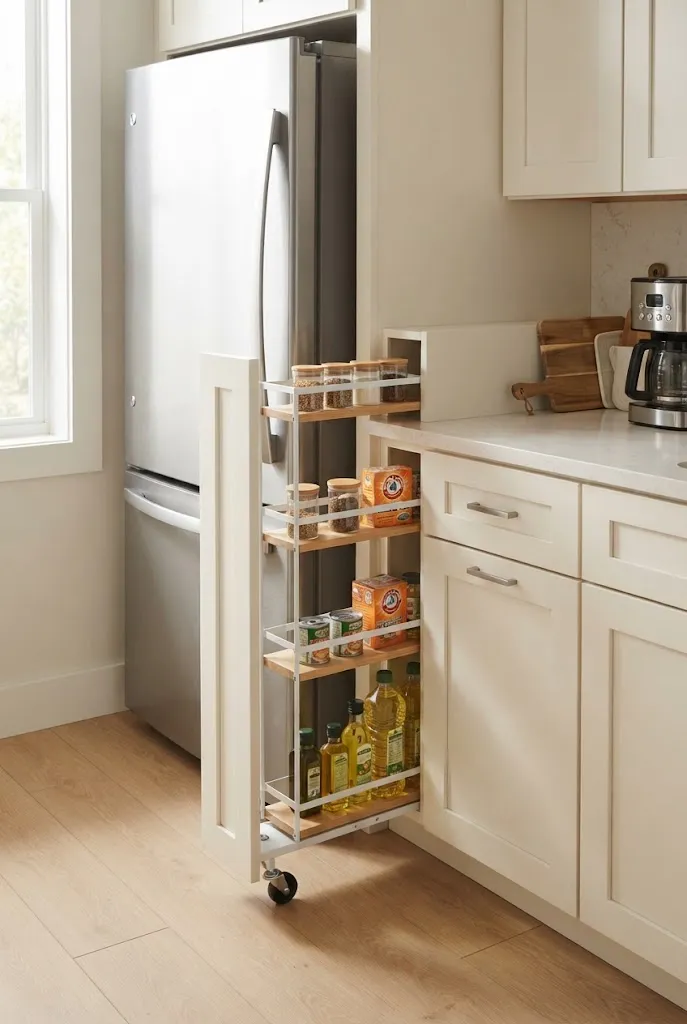
The narrow gap beside a refrigerator can sometimes become useful storage.
If there is enough clearance, use a slim rolling pantry or narrow shelving unit for spices, canned goods, baking supplies, or cleaning items.
Measure carefully before purchasing anything.
The organizer should slide easily without interfering with appliance doors or ventilation requirements.
22. Create a Laundry Storage Station
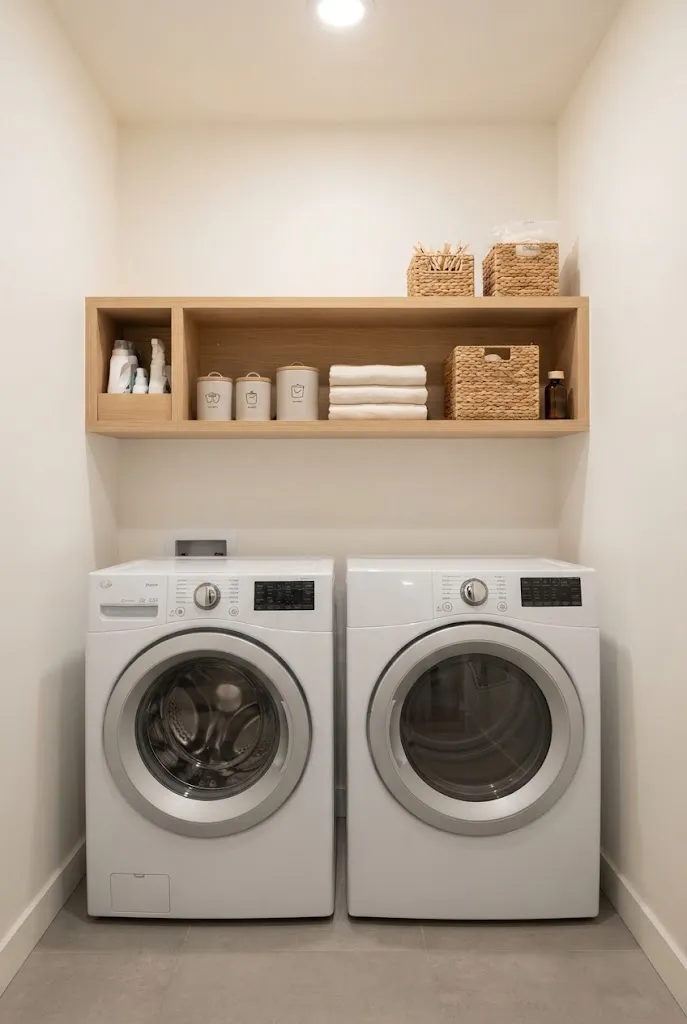
Even if your apartment has a washer and dryer, laundry supplies can easily spread across shelves and cabinets.
Create a dedicated station with a narrow basket, labeled containers, and a small shelf.
If the laundry appliances are in a closet, use the vertical space above them for lightweight supplies.
Keeping everything together makes the area easier to maintain and prevents laundry products from occupying unrelated storage spaces.
23. Use a Daybed in a Flexible Room
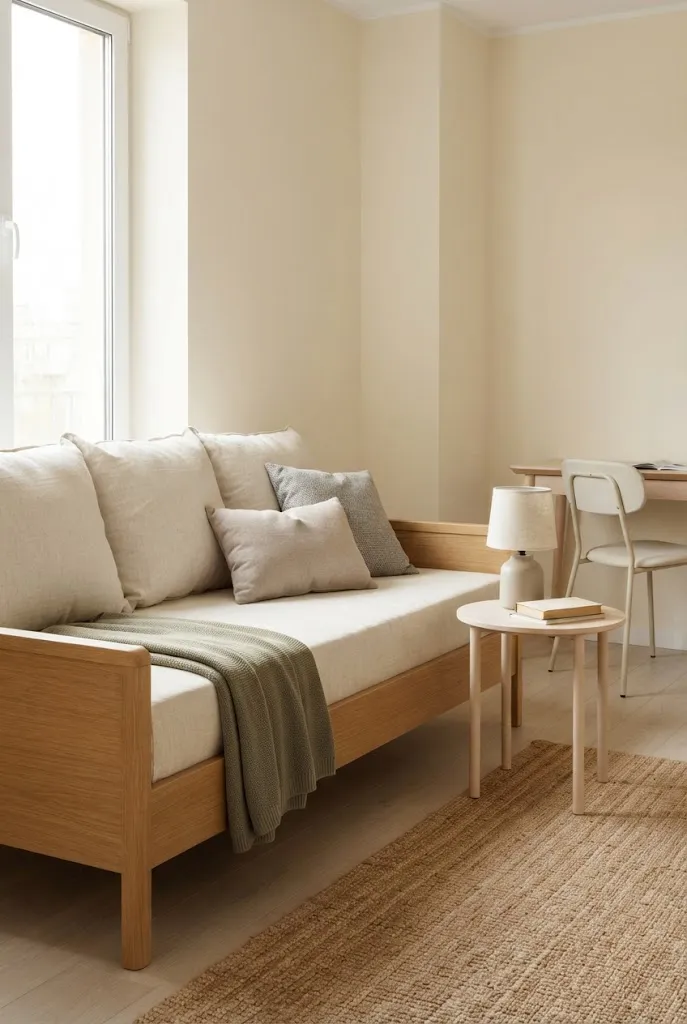
If one room needs to serve multiple purposes, a daybed can provide a useful alternative to a traditional bed or sofa.
During the day, it can function as a lounge area. At night, it becomes a sleeping surface.
This can work particularly well in a guest room, home office, or multipurpose space.
Add removable cushions during the day and keep bedding neatly stored when the room is being used for another purpose.
24. Organize With Matching Baskets
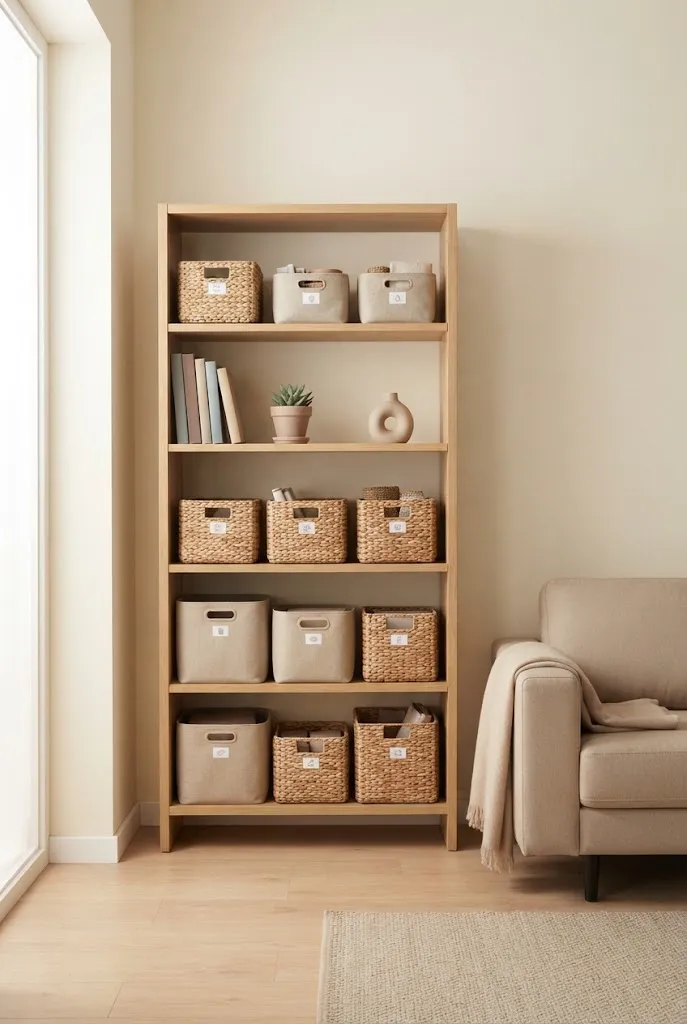
Open storage can quickly make an apartment look messy.
Matching baskets can solve this problem by grouping smaller belongings together.
Use them on shelves, inside cabinets, under consoles, or in closets.
Choose a limited range of colors and sizes so the storage looks cohesive rather than visually chaotic.
Label baskets when their contents are not obvious.
25. Give Every Frequently Used Item a Home
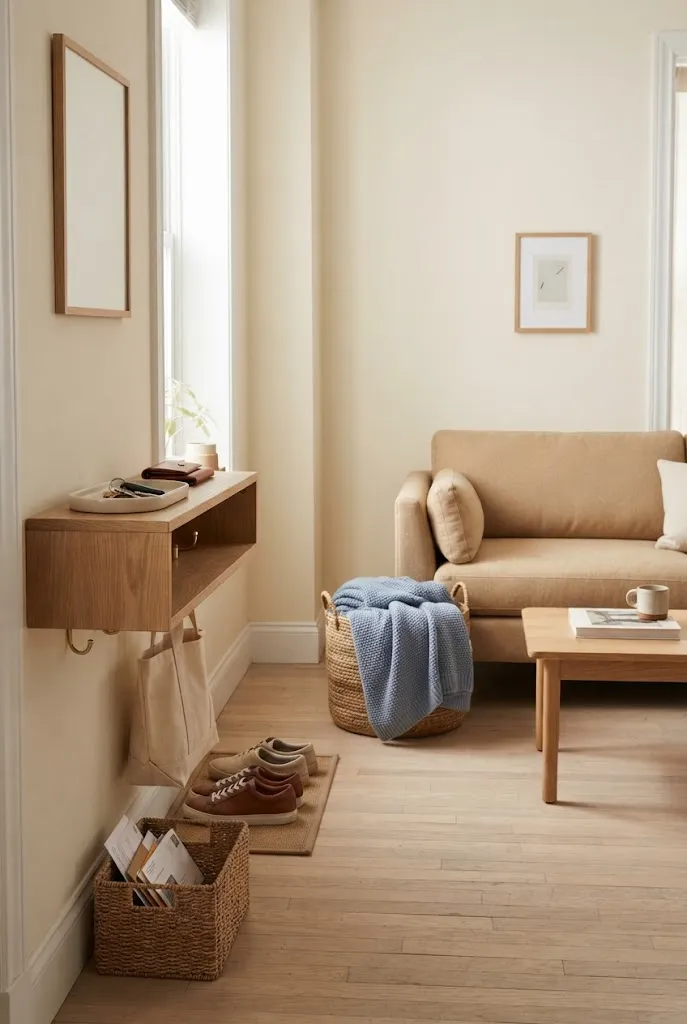
The most effective space-saving strategy is often organizational rather than architectural.
When everyday items have a specific place to return to, surfaces stay clearer and rooms feel larger.
Start with the items that repeatedly end up on counters, chairs, tables, and floors.
Ask where you naturally reach for each item and create storage close to that location.
The easier an item is to put away, the more likely you are to keep the system working.
How to Maximize a One Bedroom Apartment Without Making It Feel Crowded
Maximizing space does not mean filling every empty area with furniture or storage.
Start by identifying the things you actually use. Then look for opportunities to move them upward, underneath existing furniture, inside cabinets, or into multifunctional pieces.
Keep the center of each room as open as possible. Clear walking paths can make a home feel more spacious even when the apartment has plenty of furniture.
It also helps to repeat materials and colors. When storage pieces, furniture, and décor share a similar visual language, the apartment feels more cohesive.
Finally, leave some empty space.
An apartment needs breathing room. If every wall, shelf, and corner is occupied, the home can feel smaller regardless of how much storage you have added.
Common One Bedroom Apartment Layout Mistakes
One common mistake is buying furniture before measuring the room.
A piece that looks compact online can become surprisingly large once it arrives. Measure both the furniture footprint and the clearance required around it.
Another mistake is creating too many small storage zones. If you have baskets, shelves, cabinets, and organizers scattered everywhere, it can become difficult to remember where things belong.
Try to group similar items together.
Oversized furniture can also consume more visual space than necessary. Choose pieces that are proportional to the room rather than simply choosing the largest option that fits.
Finally, avoid sacrificing comfortable movement just to gain storage. A narrow walkway or blocked doorway can make a well-organized apartment frustrating to use.
Frequently Asked Questions
How can I maximize space in a one bedroom apartment?
Use vertical storage, multifunctional furniture, under-bed storage, wall-mounted solutions, narrow furniture, and flexible pieces such as folding tables or rolling carts. Keeping walkways clear is equally important.
What furniture saves the most space?
Furniture with more than one function can be particularly useful. Storage beds, ottomans with compartments, fold-down desks, expandable dining tables, and storage benches can reduce the need for separate pieces.
How do I make a one bedroom apartment feel bigger?
Keep furniture proportional, maintain open walking paths, use mirrors strategically, avoid excessive visual clutter, and use consistent colors and materials throughout the apartment.
How can I add storage without making my apartment look cluttered?
Use concealed storage whenever possible and group smaller items inside matching baskets or containers. Vertical and under-furniture storage can also keep belongings organized without taking over the room.
Should I fill every empty corner with furniture?
No. Some empty space is valuable. An uncluttered corner or open section of floor can make the entire apartment feel calmer and more spacious.
Final Thoughts
Maximizing a one-bedroom apartment is less about squeezing more furniture into every available space and more about making the space you already have work intelligently.
Look at overlooked areas such as the backs of doors, walls above furniture, the space beneath the bed, kitchen cabinet doors, and narrow gaps. Choose furniture that can serve multiple purposes, and create simple storage systems that match the way you actually live.
Most importantly, do not confuse an organized apartment with a completely filled apartment. Leaving enough open space for movement and light can make a bigger difference than adding another storage unit.
With a thoughtful layout and a few flexible solutions, even a modest one-bedroom apartment can feel comfortable, organized, and surprisingly spacious.
Community
Join the conversation
Add a useful idea, ask a specific question, or share what worked in your space. Every comment is reviewed before it appears.