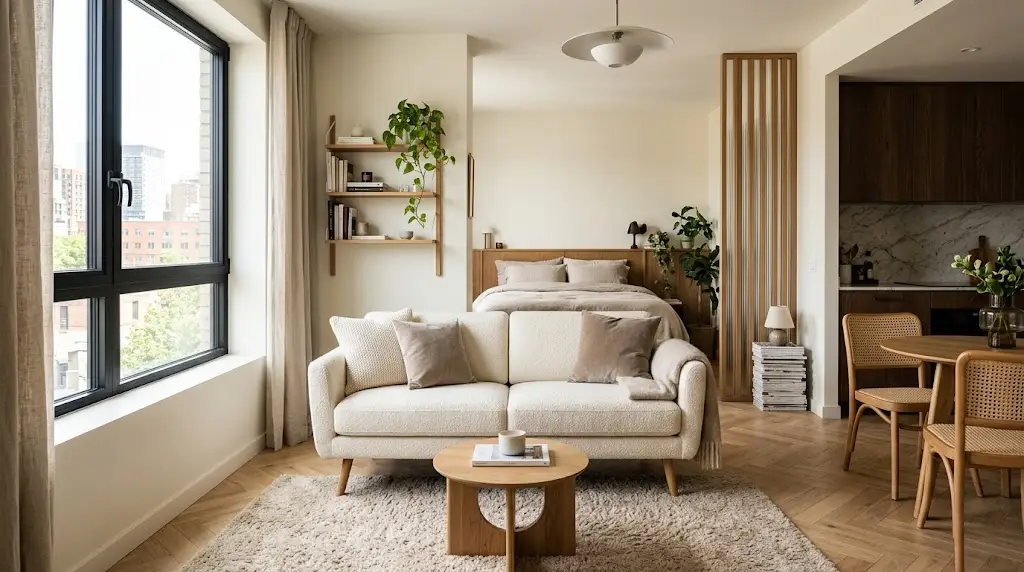
A couch can take up a surprising amount of space in a studio apartment.
Choose the wrong one, and your living area can feel crowded almost overnight. Choose the right one, and the same small room can feel open, comfortable, and beautifully organized. These studio apartment couch ideas will help you choose couches for studio apartments that fit both your space and your routine.
The trick is to think beyond the traditional large sofa.
A compact loveseat, armless sofa, sectional, sleeper couch, or even a cleverly positioned modular design can give you comfortable seating while leaving room for everything else you need.
Whether you have a tiny studio, a narrow apartment, or one open room that needs to serve several purposes, these couch ideas for studio apartments can help you make better use of every square foot.
1. Choose a Compact Loveseat for a Cozy Seating Area
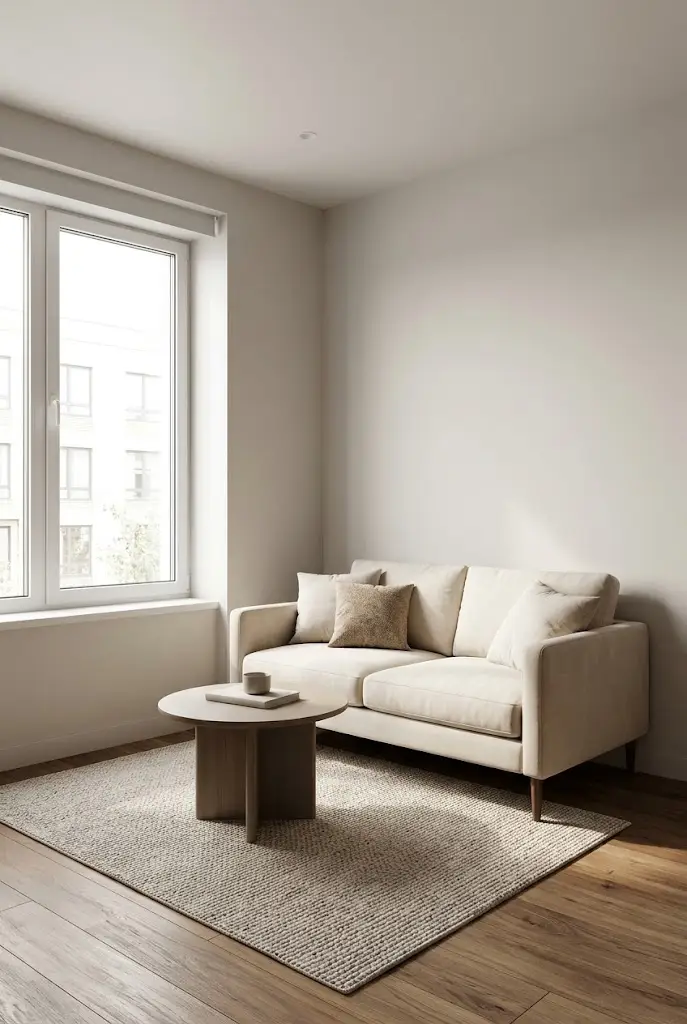
A loveseat can give you the comfort of a traditional couch without taking over the room.
Look for a design that seats two people comfortably while keeping the arms and overall frame slim.
Place it against a wall or beneath a window if the layout allows. Pair it with a small round coffee table and a narrow rug to create a complete living area.
A loveseat is especially useful when your studio needs to accommodate a bed, dining area, and workspace too.
In my experience, a smaller couch often makes a studio feel larger because it leaves more visible floor around the furniture.
2. Try an Armless Sofa to Make the Room Feel Wider
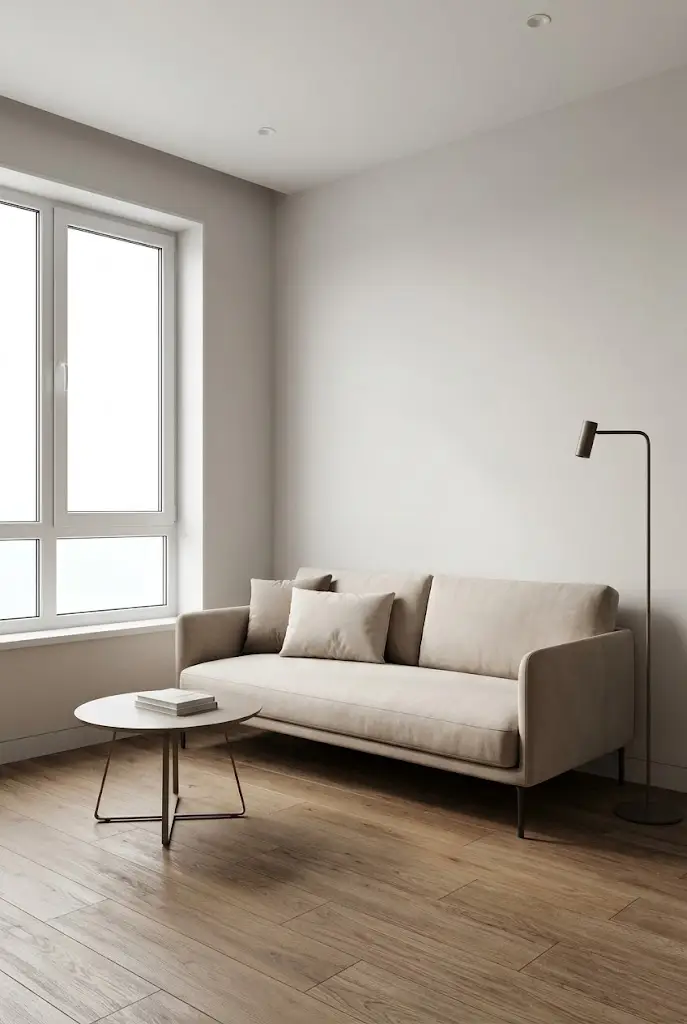
Bulky sofa arms can visually eat into a small living area.
An armless sofa removes that extra visual weight and creates a cleaner silhouette.
Choose a soft neutral fabric and add a few cushions for comfort. You can also place a slim side table next to it without making the area feel crowded.
This option works particularly well in narrow studios where every inch between the couch and other furniture matters.
3. Put a Small Sectional in an Empty Corner
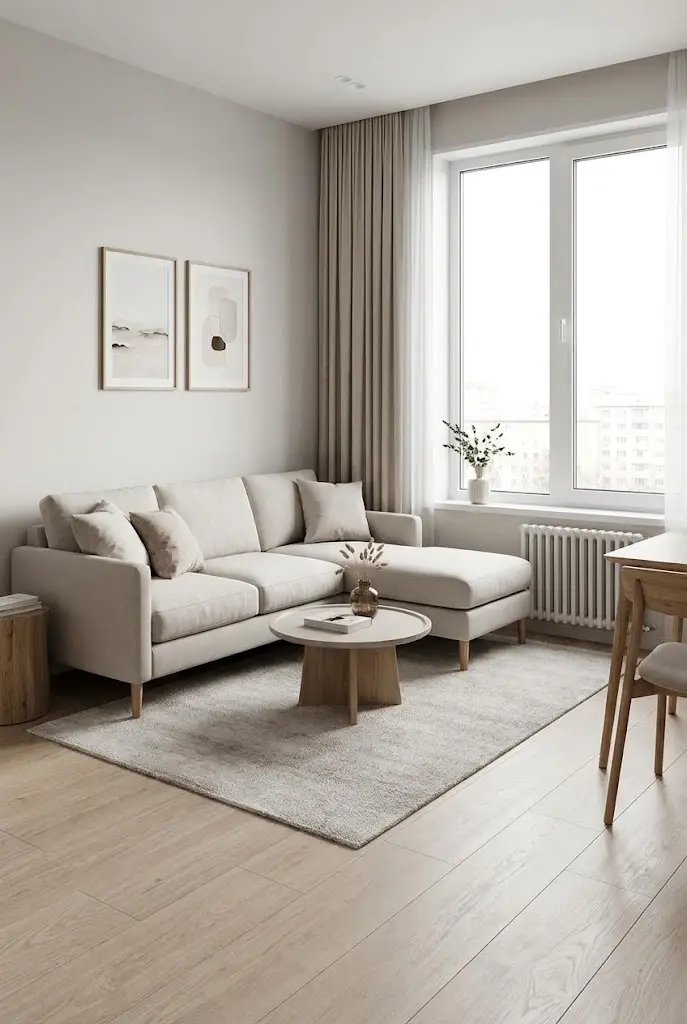
A sectional does not always have to be huge.
A compact L shaped sectional can make excellent use of an awkward corner that might otherwise remain unused.
Place the longer section along one wall and let the shorter section extend into the room.
This creates a defined living zone without requiring several separate chairs.
Choose a sectional with a low profile and clean lines so the room still feels open.
4. Pick a Sofa With Raised Legs
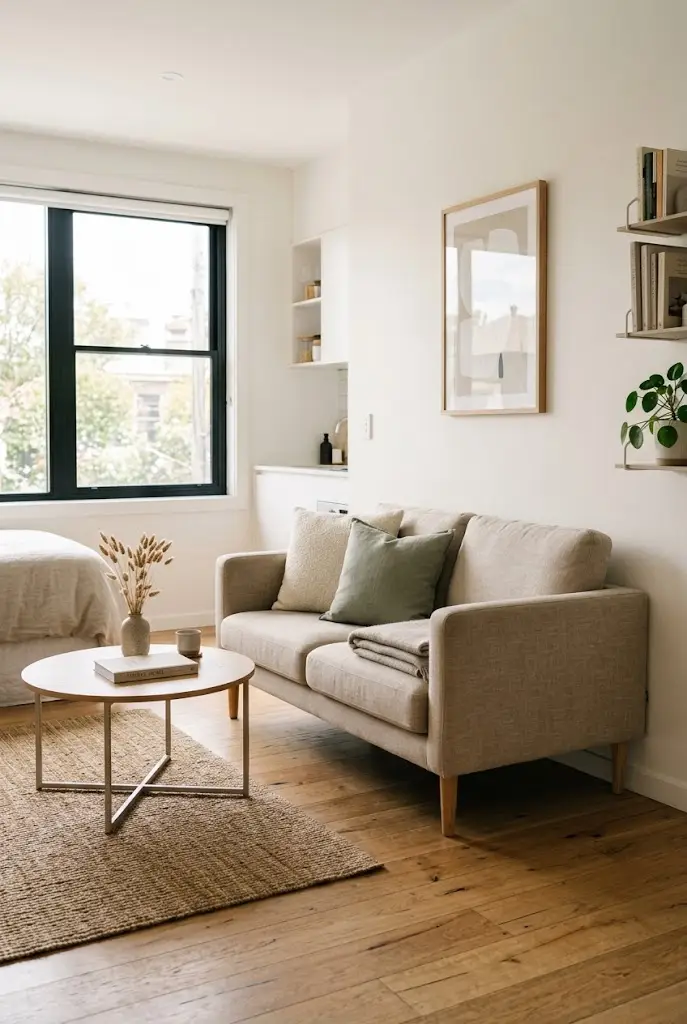
Here is a small detail that can make a surprisingly big difference.
A couch with visible legs allows you to see more of the floor underneath it.
That extra visibility creates a lighter appearance and can make the room feel less crowded.
Choose a sofa with slim wooden or metal legs rather than a heavy base that sits directly on the floor.
This trick works especially well when combined with a light colored rug and simple furniture.
5. Use a Sleeper Sofa for Two Purposes
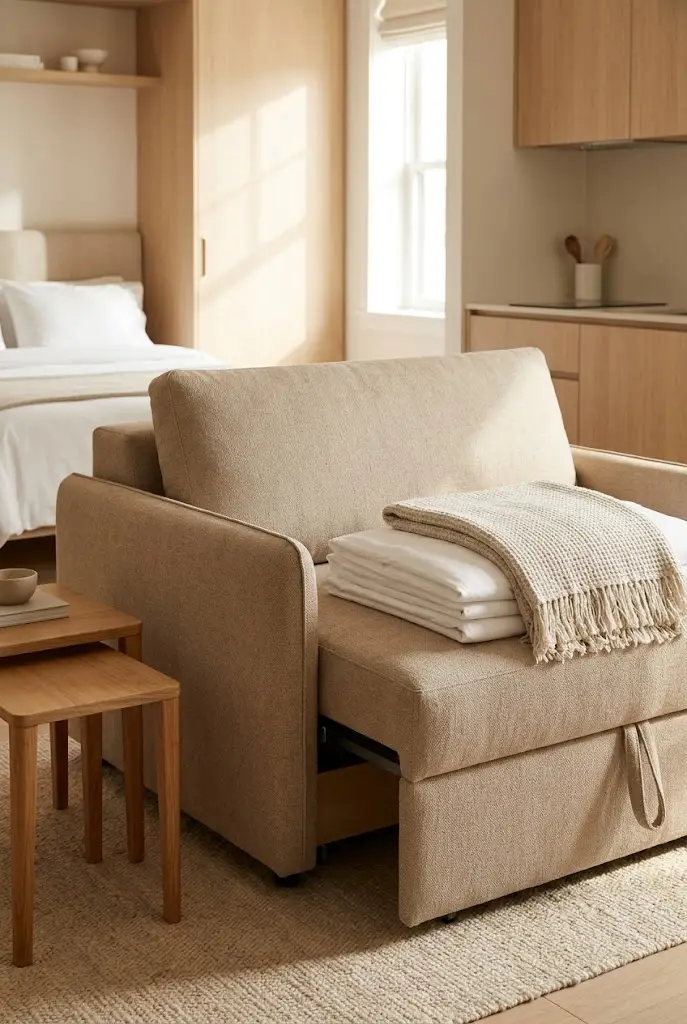
If your studio does not have a separate guest room, a sleeper sofa can solve two problems at once.
During the day, it works as your main couch. At night, it can become an extra sleeping space.
This can be particularly helpful if friends or family occasionally stay with you.
Choose a model that is easy to open and close. Before buying, measure the sofa in both positions.
You do not want a sleeper couch that looks perfect when folded but blocks your entire walking area when opened.
6. Try a Modular Sofa You Can Rearrange
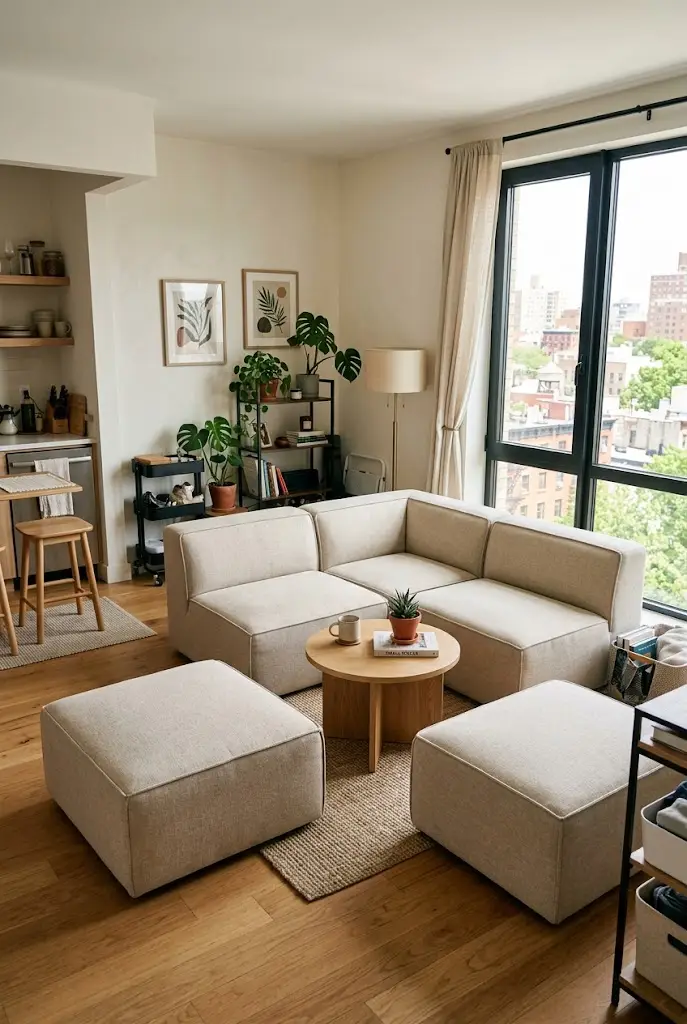
A modular couch gives you flexibility when your needs change.
You can arrange the pieces as a traditional sofa, separate them into individual seats, or adjust the layout when you want to create more open floor space.
This can be useful in a studio apartment because the room often has to serve several purposes.
A modular design can also move with you if you change apartments later.
Look for lightweight sections that are easy to move without requiring several people.
7. Choose a Storage Couch for Hidden Organization
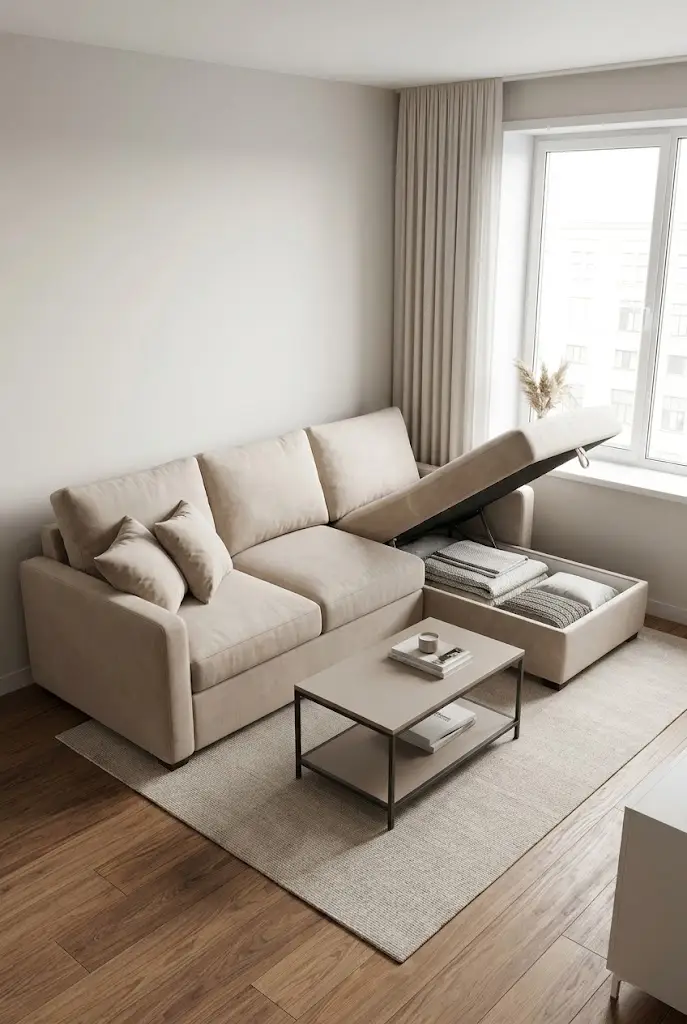
A storage sofa can give you seating and hidden storage in one piece of furniture.
Some designs have storage compartments beneath the cushions. Others include a chaise section that lifts to reveal a large storage area.
Use it for blankets, pillows, books, seasonal items, or things you do not need every day.
This can reduce the need for additional cabinets and shelves.
For a small studio, that can mean more open floor space and fewer pieces of furniture competing for attention.
8. Place the Couch Against the Longest Wall
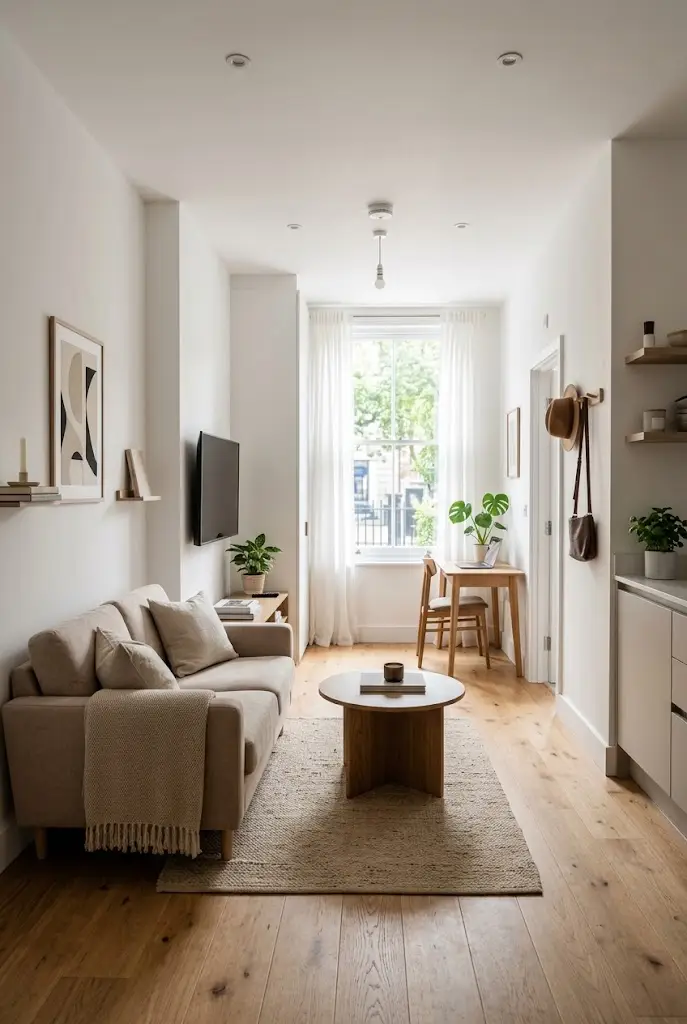
Sometimes the best couch is simply the one placed correctly.
If your studio has a long empty wall, consider positioning the sofa along it.
This keeps the center of the room open and creates a natural living zone.
You can then place a compact coffee table in front and a slim television stand or wall mounted television opposite it.
This arrangement works particularly well in rectangular studios.
Just leave enough space for comfortable walking between the living area and the rest of the apartment.
9. Float the Couch to Separate the Living Area
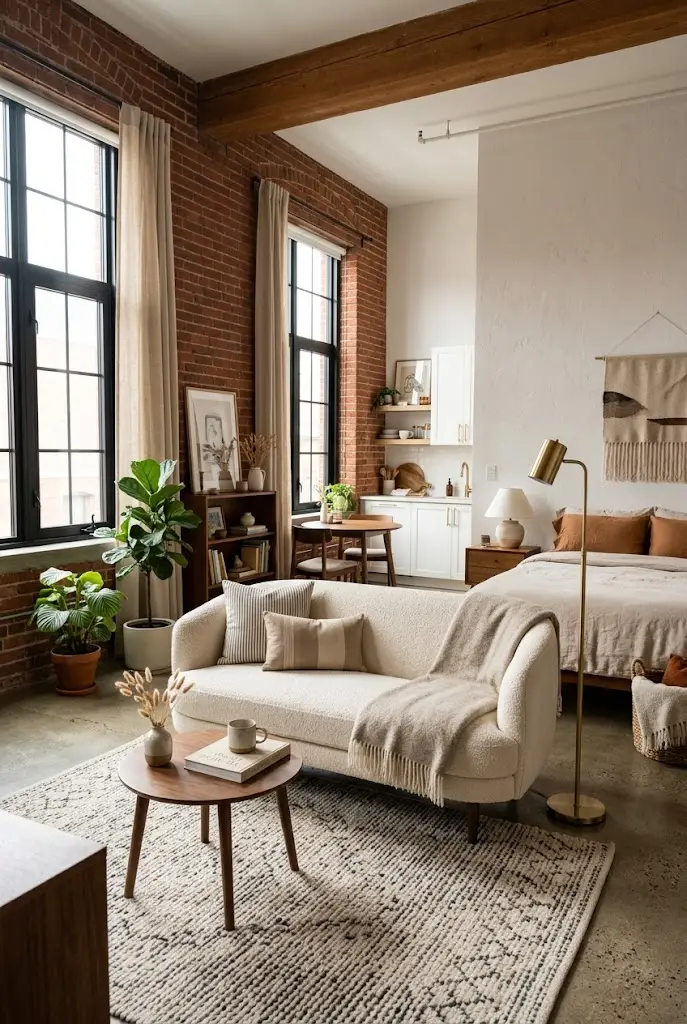
Your couch does not always need to touch a wall.
Placing it slightly away from the wall can create a visual boundary between the living area and another part of the studio.
For example, the back of the couch can face your bed while the front faces a small coffee table and television.
This creates two distinct zones without adding a physical wall.
Keep the gap behind the couch clear enough for easy movement.
10. Choose a Curved Sofa for Awkward Layouts
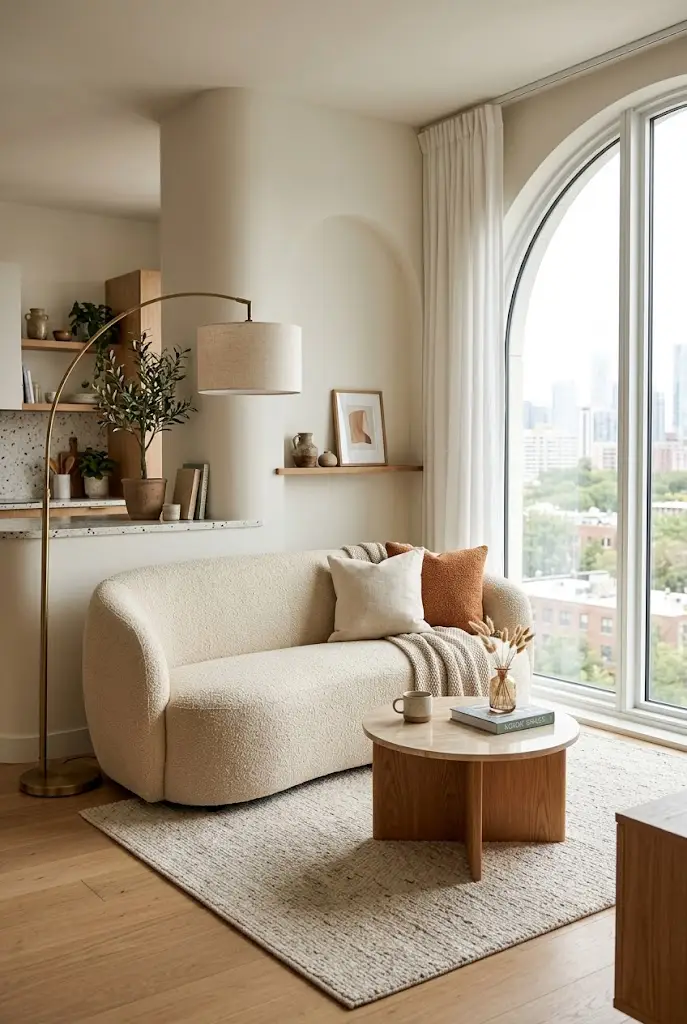
A curved couch can work beautifully in a studio with unusual angles.
Its rounded shape can soften the room while avoiding the sharp corners of a traditional rectangular sofa.
A small curved sofa can also become a visual focal point.
Pair it with a round coffee table to create a cohesive seating area.
This idea works best when you have enough open space around the couch. Avoid oversized curved sofas in extremely narrow studios.
11. Use a Futon for a Simple Flexible Setup
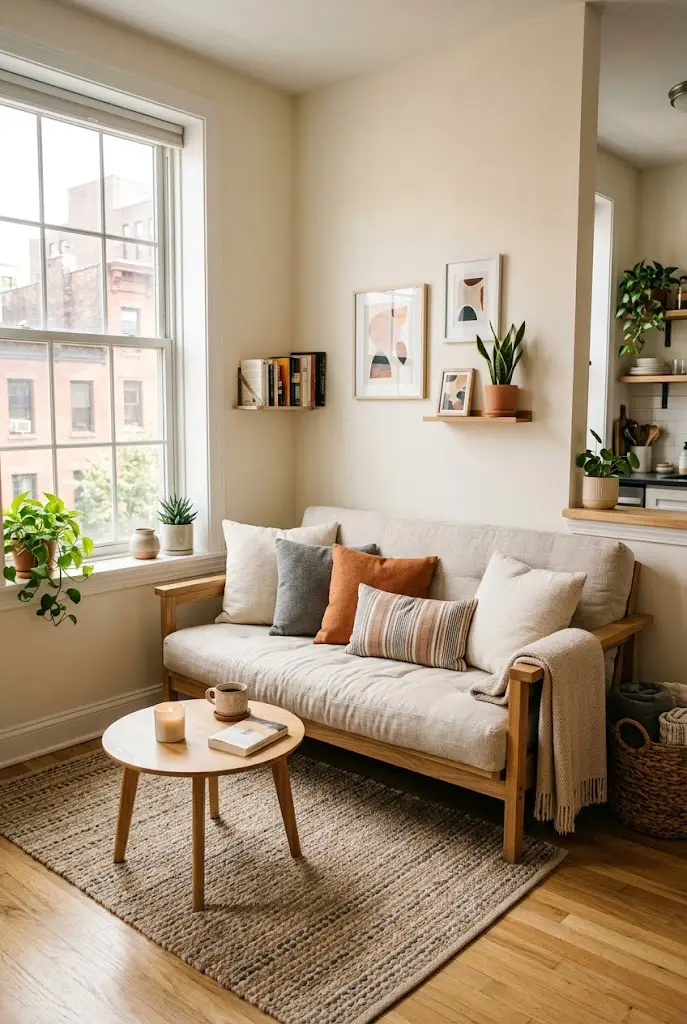
A modern futon can be a practical option when your budget and floor space are limited.
During the day, use it as a sofa. At night, it can become a sleeping surface.
Look for a clean, modern frame rather than an overly bulky design.
A futon can work particularly well for students, renters, or anyone who wants furniture that can serve several purposes.
Add a comfortable throw and a few cushions so it feels more like a living room sofa during the day.
12. Try a Small Sofa With a Chaise
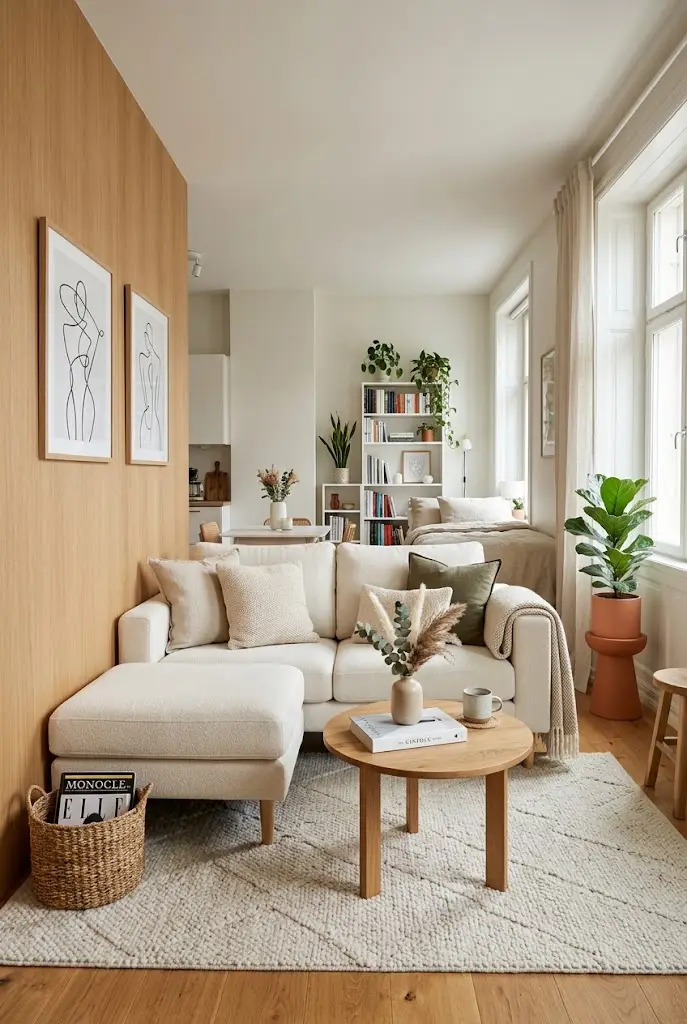
If you love stretching out but do not have room for a large sectional, consider a compact sofa with a chaise.
The chaise gives you a comfortable place to put your feet up without requiring a separate ottoman or recliner.
Choose a reversible chaise if possible. This gives you more flexibility if you change your studio layout later.
Before purchasing, measure the chaise length carefully so it does not interfere with your main walkway.
13. Pair a Small Couch With an Ottoman
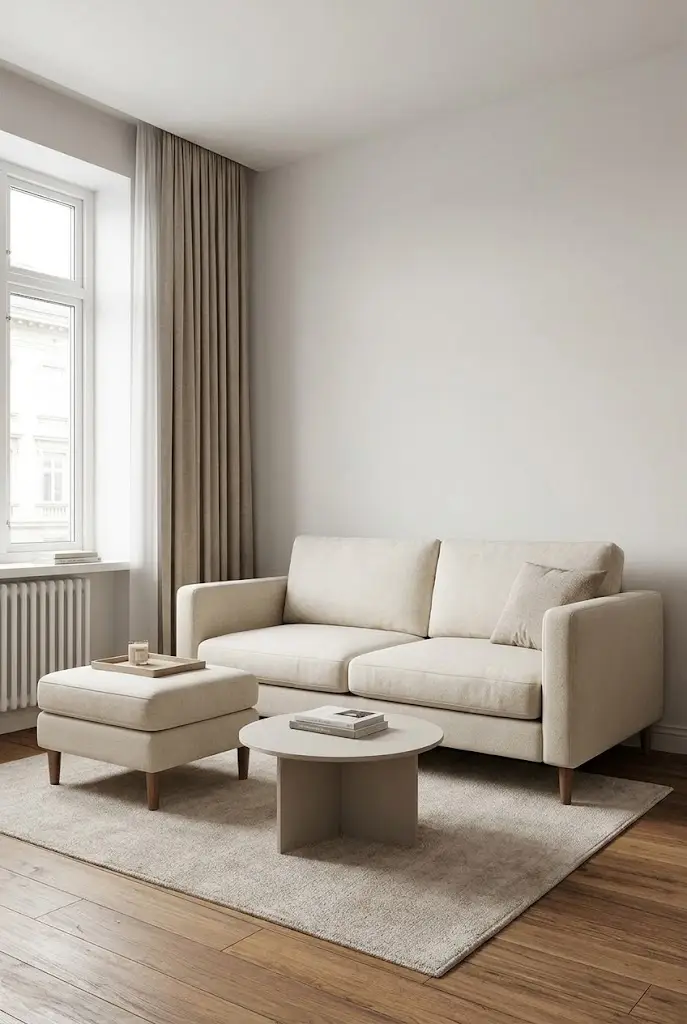
Instead of buying a huge sectional, use a compact sofa with a small ottoman.
The ottoman can serve as a footrest, extra seating, or even a coffee table when you add a tray.
You can move it when you need more floor space.
This makes the arrangement much more flexible than a large fixed sectional.
A storage ottoman is even better because it gives you another hidden place for blankets and everyday items.
14. Choose a Light Colored Couch to Open Up the Room
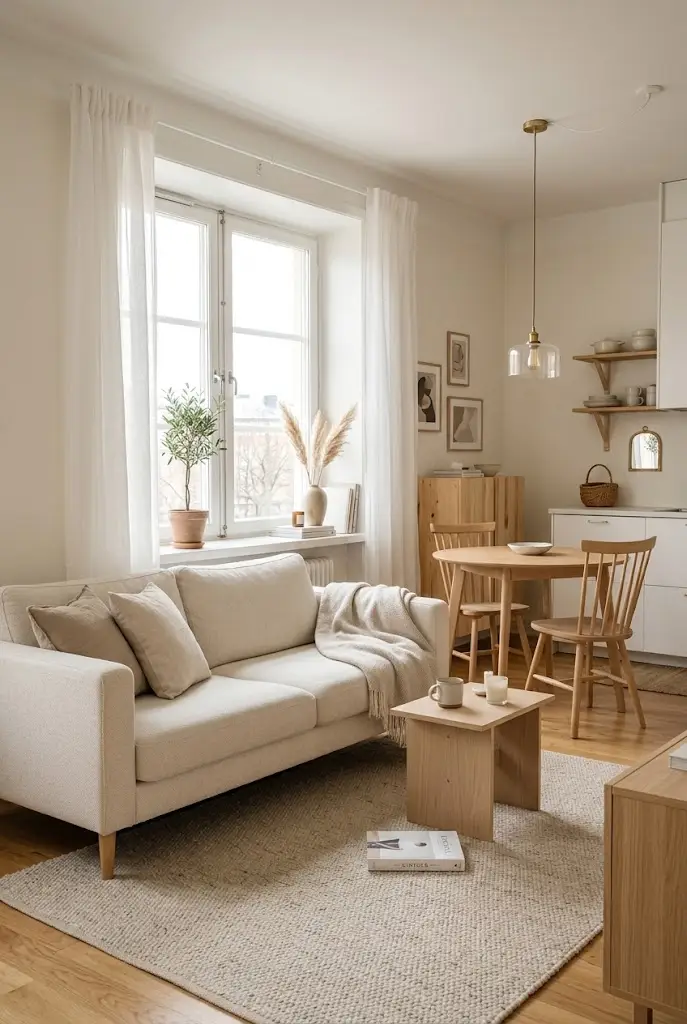
Furniture color can influence how spacious your studio feels.
Cream, beige, light gray, soft taupe, and other gentle shades can create an airy appearance.
If your apartment already receives plenty of natural light, a light sofa can help maintain that bright feeling.
You do not have to avoid color completely.
Add personality through cushions, artwork, curtains, and a small rug while keeping the largest piece of furniture visually simple.
15. Use a Low Profile Sofa Under a Window
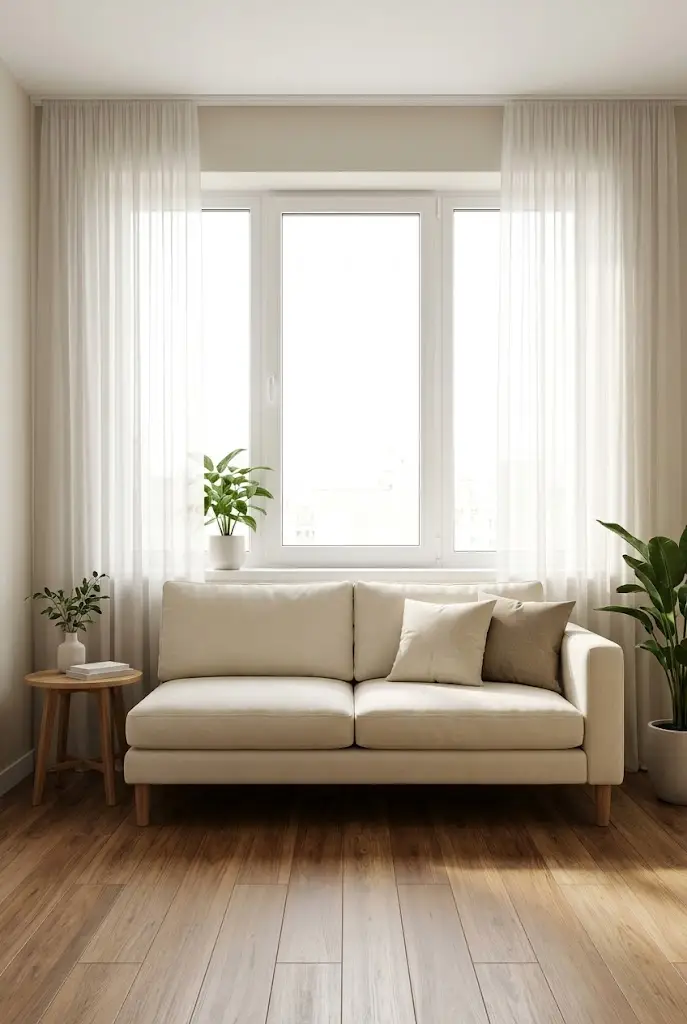
A low sofa can fit beautifully beneath a large window.
This keeps the area in front of the window open and allows natural light to move through the apartment.
Avoid blocking the lower part of the window with a tall sofa back.
A low profile design can also make the ceiling appear taller because more wall space remains visible above the couch.
Add a small side table and a floor lamp to complete the seating area without adding bulky furniture.
16. Try a Wall Hugger Reclining Sofa
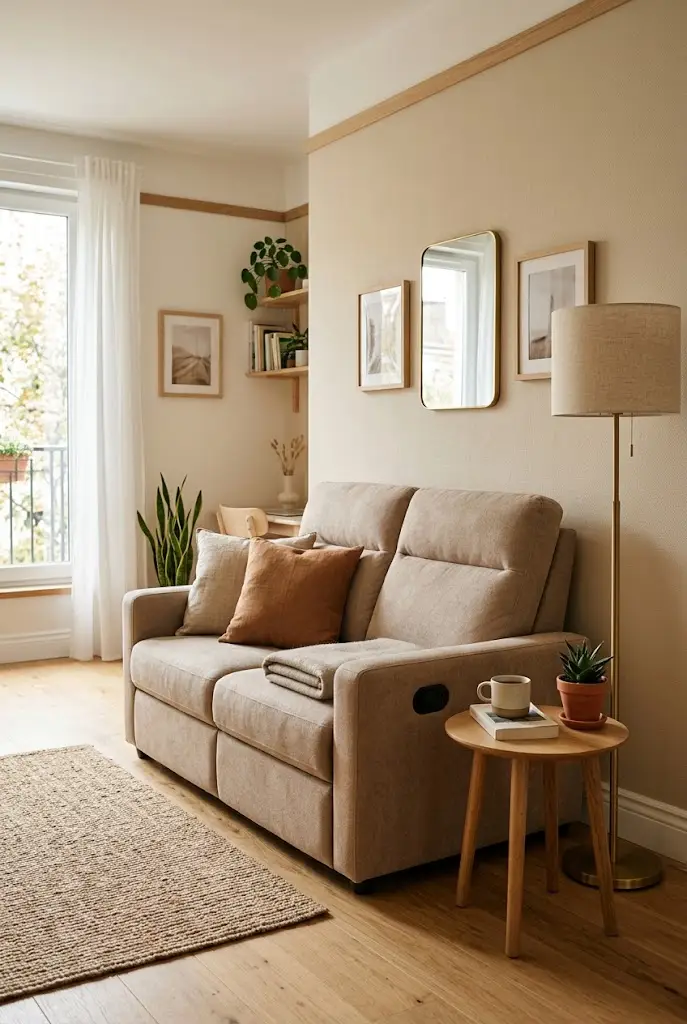
If you love reclining furniture, you do not necessarily have to give it up because you live in a studio.
A wall hugger reclining sofa is designed to recline with less space behind the couch than traditional reclining furniture.
This can be useful when your sofa needs to sit close to a wall.
Always check the manufacturer’s required clearance before buying. Reclining furniture needs enough room to operate safely and comfortably.
17. Pick a Couch That Fits Your Actual Lifestyle
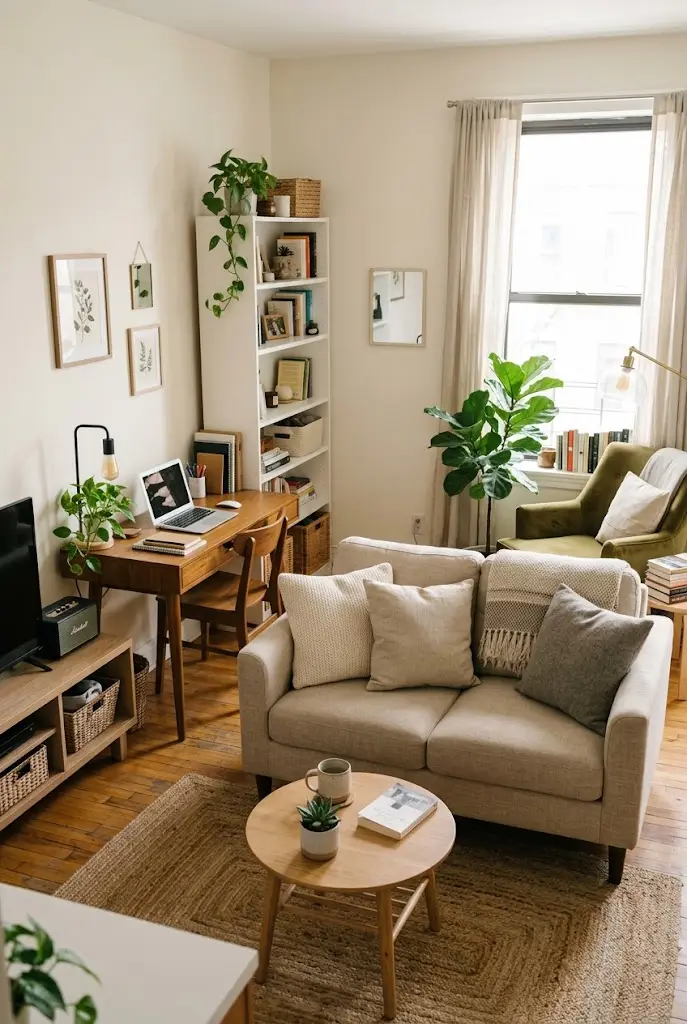
The most useful couch is the one that fits the way you live.
Do you work from the sofa?
Choose something comfortable enough for longer sitting.
Do you host friends?
Prioritize seating capacity.
Do you have overnight guests?
A sleeper sofa may make more sense.
Do you move apartments often?
A lightweight modular design may be easier to transport.
Do you struggle with storage?
Look for hidden compartments.
There is no universal best sofa for a studio. The right choice depends on your daily routine, available space, budget, and storage needs.
How to Choose the Right Couch for a Studio Apartment
Before buying anything, measure the space carefully.
Measure the wall where the sofa will sit. Then measure the width of doors, hallways, elevators, and stairways if the furniture needs to be carried into the apartment.
Do not forget the depth.
A sofa can technically fit against a wall but still make the room uncomfortable if it extends too far into the walking area.
I’ve seen small rooms look much better simply because the furniture was chosen according to the room’s actual dimensions instead of buying the biggest piece that would fit.
Think about these five things before making your decision:
Size: Will it leave enough space for walking?
Function: Do you need sleeping space, storage, or flexible seating?
Shape: Would a straight sofa, sectional, or curved design work best?
Color: Will the couch complement the light and colors already in the apartment?
Movement: Can you easily rearrange or move it if your needs change?
How to Make a Small Living Area Feel Bigger
Your couch is only one part of the visual effect.
Leave some open space around the furniture whenever possible. Too many pieces packed together can make even a good layout feel cramped.
Use a rug to define the seating area, but make sure it is large enough to connect the main furniture.
A mirror placed where it can reflect natural light can also make the apartment feel brighter.
Keep the coffee table small. Round tables are particularly useful in tight spaces because they have no sharp corners sticking into walking paths.
Wall mounted lighting can save valuable table space.
And keep everyday clutter hidden. A beautiful sofa can still look crowded when surrounded by bags, boxes, cables, and miscellaneous items.
Best Couch Layouts for Different Studio Shapes
For a Long, Narrow Studio
Place the couch along the longest wall and keep the center walkway open.
A compact straight sofa usually works better than a deep sectional.
For a Square Studio
A small L shaped sectional can define one corner and create a clear living zone.
Keep the remaining furniture compact.
For a Studio With Large Windows
Avoid placing tall furniture directly in front of the windows.
A low sofa can help preserve natural light.
For an Open Studio With a Separate Bed Area
Float the sofa so its back faces the sleeping area.
This can create a visual boundary between the living and sleeping zones.
For a Very Tiny Studio
Choose furniture that performs more than one job.
A sleeper sofa, storage ottoman, or modular couch can be much more useful than a large traditional sofa.
Mistakes to Avoid When Choosing a Studio Couch
The biggest mistake is buying based on appearance alone.
A sofa can look beautiful online but feel completely wrong once it arrives.
Always check the dimensions before ordering.
Pay attention to sofa depth, arm width, seat height, and the space needed around it.
Another common mistake is choosing too much furniture.
You may think a couch needs two matching chairs and a large coffee table to look complete. In a studio, that can quickly consume the available floor space.
Sometimes a small couch, one side table, and a simple rug are enough.
The goal is to create a living area that feels comfortable without making the rest of your apartment difficult to use.
Final Thoughts
The right couch can completely change a studio apartment.
A compact loveseat can create a cozy seating area. A storage sofa can reduce clutter. A sleeper couch can give you an extra bed. A modular design can adapt when your layout changes.
The best choice is not necessarily the smallest couch you can find.
It is the one that gives you the function you need while leaving enough room for the rest of your life.
Before buying, measure your space, think about how you use your apartment, and choose furniture that earns its place.
With the right size and layout, even a tiny living area can feel comfortable, stylish, and surprisingly spacious.
Read More:
19 Best Studio Apartment Organization Ideas That Actually Work
14 Modern Studio Apartment Designs for Small Spaces
Community
Join the conversation
Add a useful idea, ask a specific question, or share what worked in your space. Every comment is reviewed before it appears.