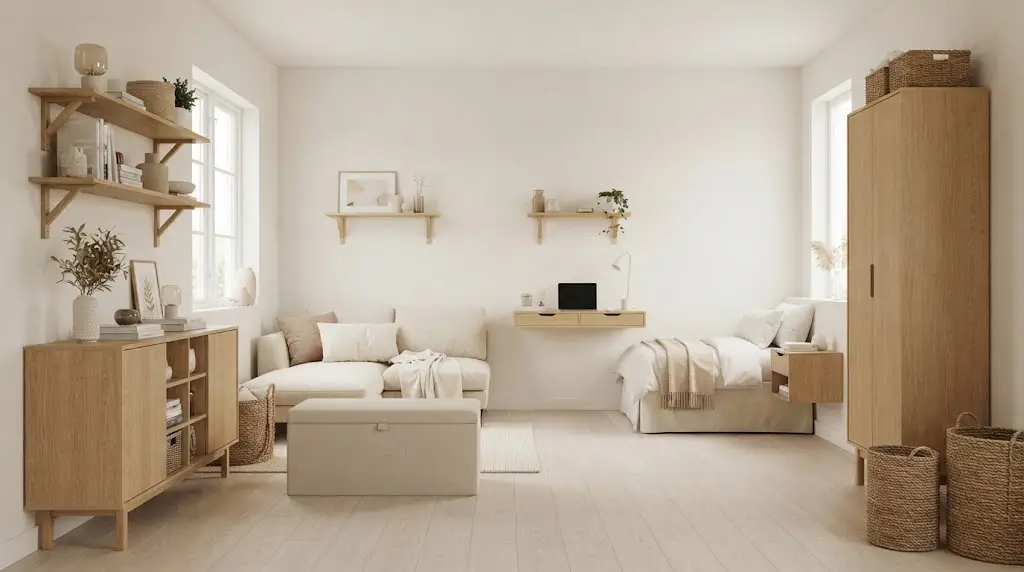
Small spaces can feel beautifully open when every piece has a purpose and every clutter spot has a smart solution. Clutter-free studio apartment ideas can help turn a cramped layout into a calm, functional home without sacrificing style. From hidden storage and flexible furniture to simple ways of using empty walls, these ideas focus on changes that make a noticeable difference in everyday life.
The goal is not to remove everything you love, but to give belongings better places to live while keeping your most important spaces open. In my experience, even one well planned storage upgrade can make a studio feel dramatically easier to maintain. These practical ideas bring together warmth, organization, and visual simplicity so your home feels inviting from every angle.
1. Slim Storage Console
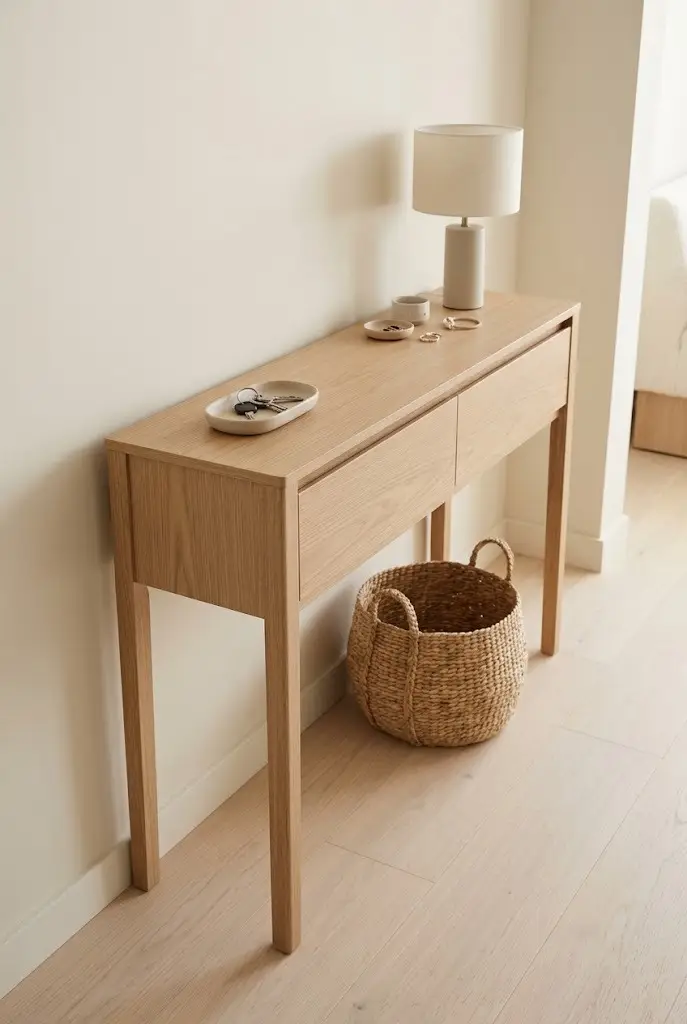
• Keeps entryway essentials contained without using much floor space.
• Closed drawers hide keys, mail, chargers, and everyday accessories.
• A light finish helps the studio maintain an airy appearance.
• The surface can hold just a few useful decorative pieces.
A clear floor can change a small studio faster than expensive furniture ever could. A slim console keeps everyday items contained while leaving valuable walking space open. Choose one with drawers or closed doors so keys, mail, chargers, and small accessories disappear from sight. Place it against the longest open wall, preferably near the entry area, where clutter usually collects first. A light oak or warm white finish keeps the room visually airy. In my experience, closed storage makes a studio feel calmer because fewer objects compete for attention when you walk through the room.
The best console setup combines storage with a clean visual line, making it especially useful in compact homes. Keep the surface intentionally simple with one tray, a small lamp, and perhaps a single ceramic vase. Store shoes, documents, cables, and miscellaneous items inside the drawers instead of leaving them scattered across tables. Choose a piece with a shallow depth so circulation remains comfortable. For a softer Pinterest friendly look, pair warm wood with cream walls, woven baskets, and soft neutral textiles. This small change can make the entire studio appear more organized without sacrificing personality or useful storage.
2. Open Wall Shelves
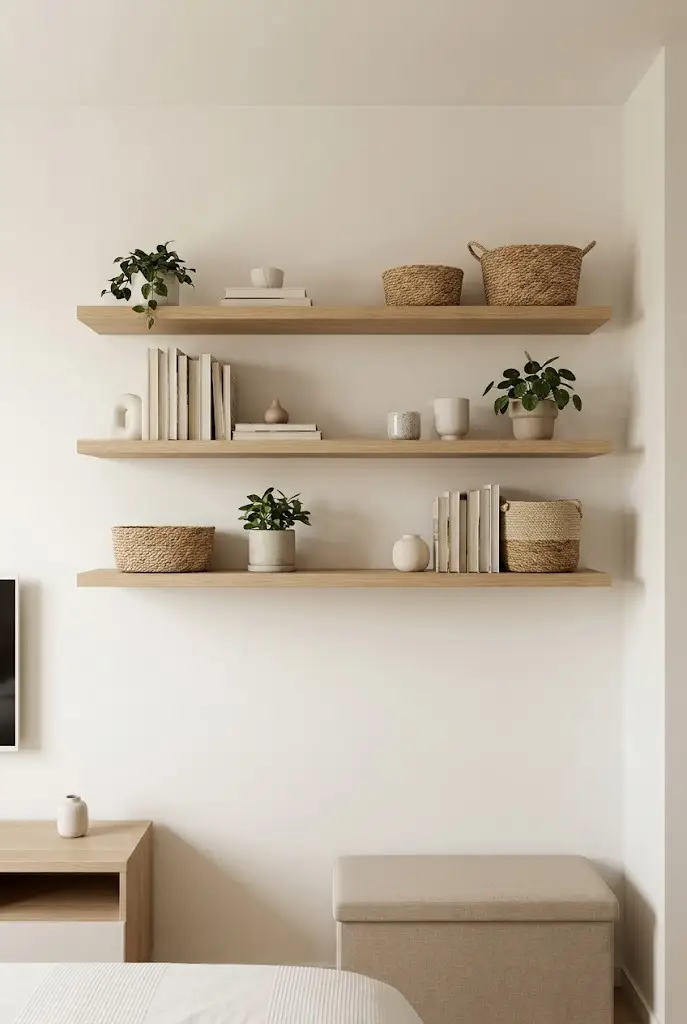
• Adds vertical storage while keeping valuable floor space clear.
• Matching baskets conceal small belongings without looking messy.
• Open gaps prevent shelves from feeling overloaded or crowded.
• Light wood adds warmth without making the room visually heavy.
Open shelving can make a tiny room feel lighter while giving useful storage a deliberate place. The key is keeping the display selective instead of filling every shelf. Use two or three shelves above a desk, kitchen counter, or narrow cabinet, then arrange books, baskets, plants, and a few favorite objects with generous gaps. In my experience, matching baskets are especially helpful because they hide small items while keeping the overall arrangement cohesive. Light wood shelves against warm white walls also add texture without making the studio feel crowded or visually heavy.
A simple shelf arrangement works best when each level has a clear purpose. Place frequently used items within easy reach and reserve higher shelves for seasonal pieces or decorative objects. Vary heights by combining upright books, low bowls, small plants, and woven containers. Keep roughly one third of the shelf space open so the display can breathe. This approach gives compact storage a polished appearance while reducing loose objects on counters and tables. Soft daylight from a nearby window will highlight the wood grain and neutral textures, creating a bright, calm backdrop that photographs beautifully for Pinterest.
3. Hidden Storage Ottoman
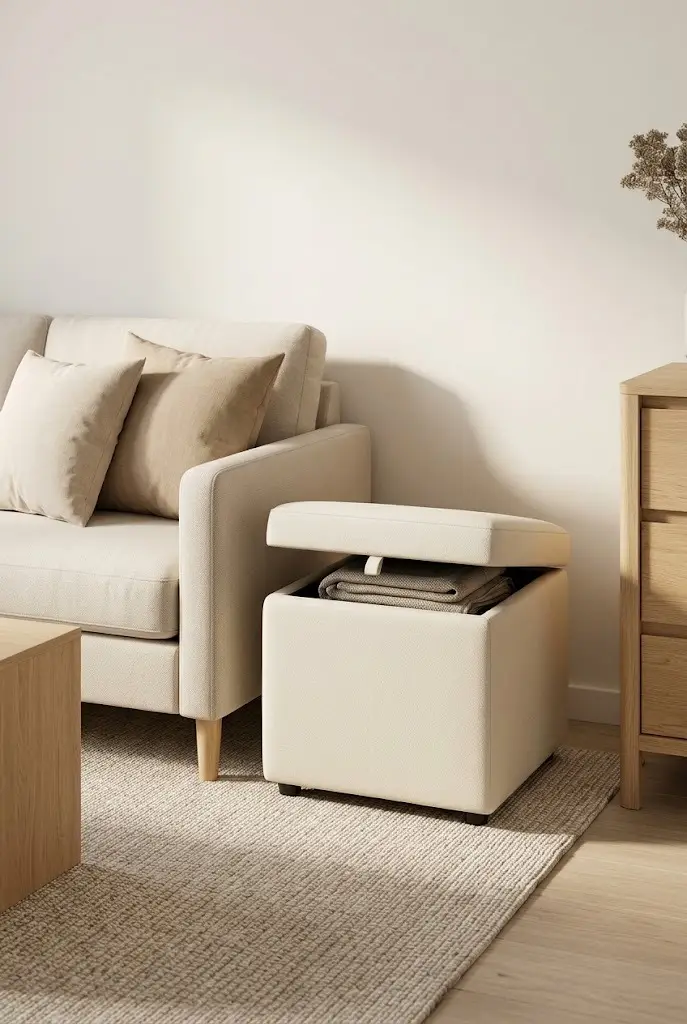
• Provides seating without requiring another bulky piece of furniture.
• Hidden storage keeps blankets, pillows, and books out of sight.
• A soft neutral fabric blends easily with small studio interiors.
• The same piece can work as seating, a footrest, or table.
A storage ottoman earns its place twice by providing a comfortable seat and a hidden spot for everyday belongings. Choose a compact rectangular or round design that fits beside the sofa without blocking the main walkway. Lift top storage is useful for blankets, extra pillows, books, or items that need quick access. A cream, beige, or muted taupe fabric keeps the piece visually soft. I’ve seen this work well in small studios because the room gains flexible seating without adding another bulky cabinet, while loose essentials can disappear inside within seconds.
Place the ottoman where it can serve the most functions throughout the day. In front of a sofa, it can act as a footrest, extra seat, or temporary table when paired with a small tray. Choose durable upholstery and a firm lid if the piece will receive frequent use. Keep the surrounding floor open so its practical shape remains easy to appreciate. For a cohesive look, repeat its fabric tone in cushions or curtains and add a textured rug underneath. The result is a flexible setup that reduces visible clutter while keeping useful items close at hand.
4. Wall Mounted Desk
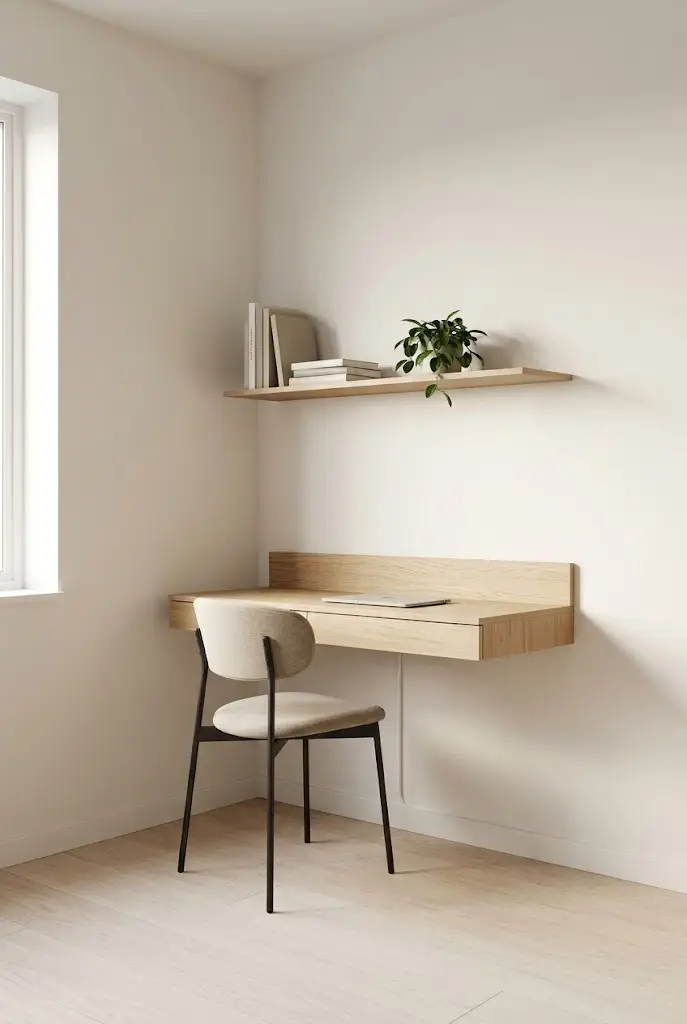
• Creates a dedicated work area without consuming valuable floor space.
• A slim surface keeps the studio open and easy to move through.
• Hidden cable storage prevents chargers from becoming visual clutter.
• The chair can slide underneath when the workspace is finished.
A wall mounted desk creates a useful work zone without taking up the floor area needed for daily movement. Choose a slim surface in light wood or white and install it against an underused wall near natural light. Add one compact chair that can slide fully underneath when work is finished. Keep stationery inside a small drawer or wall organizer rather than across the desktop. That simple habit makes the room look instantly cleaner. For compact homes, this setup supports work, study, or planning while preserving a flexible floor plan for relaxing, dining, and entertaining.
The visual advantage comes from giving work supplies one defined location instead of allowing them to spread across the studio. Mount a narrow shelf above the desk for a small plant, a lamp, and a few neatly arranged books. Use a cable management box beneath the surface to keep chargers hidden and prevent tangled cords. Warm white walls, pale flooring, and natural wood create a soft Scandinavian inspired palette that keeps the workspace feeling fresh. I’ve noticed that a dedicated work zone also makes tidying easier because every item has a clear place to return after use.
5. Under Bed Bins
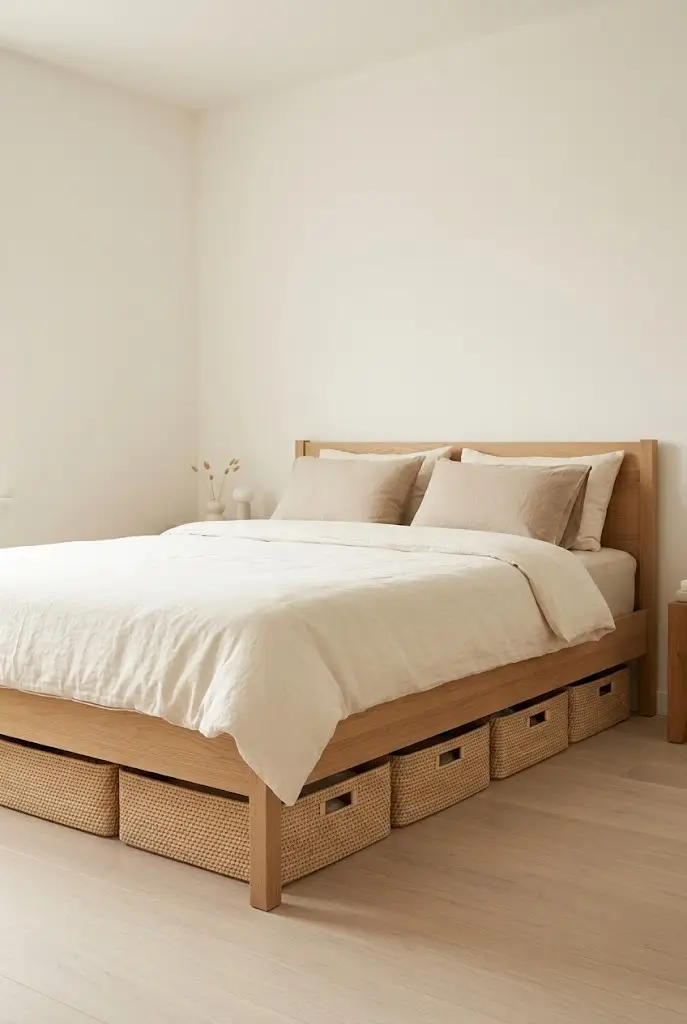
• Turns unused space beneath the bed into practical hidden storage.
• Low profile bins keep clothing and bedding organized and accessible.
• Matching containers create a cleaner, more intentional bedroom area.
• Labels make seasonal items easier to find when needed.
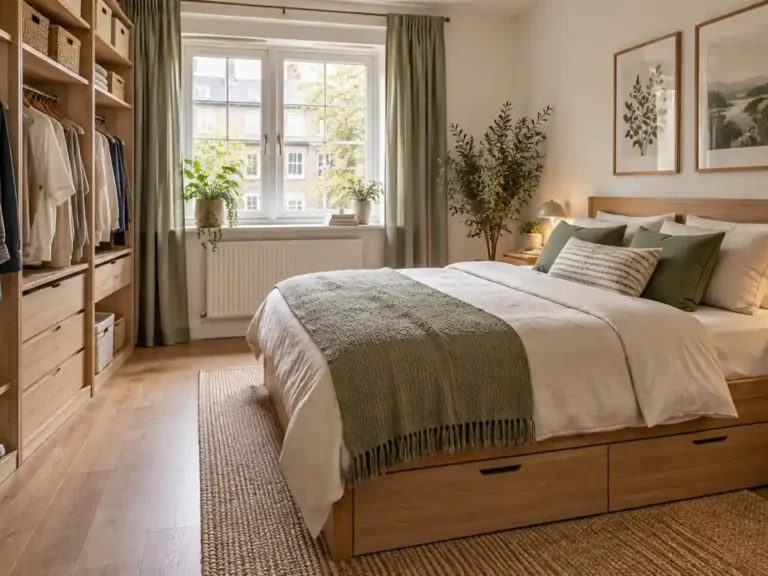
The space beneath a bed is often one of the easiest storage areas to overlook. Low profile bins can turn that unused area into a practical place for spare bedding, seasonal clothing, shoes, or accessories. Choose containers that slide smoothly and fit the full depth of the bed frame. Neutral fabric or woven bins blend naturally with a calm studio interior. In my experience, this approach works especially well when closet space is limited because belongings stay close without occupying shelves, counters, or valuable walking areas.
Keep the system simple by assigning each container one category rather than mixing everything together. For example, one bin can hold winter clothing while another stores extra linens and blankets. Use matching containers when possible because consistency makes hidden storage feel more intentional. Clear labels can also save time when something is needed quickly. Keep the area around the bed open and avoid storing loose bags or boxes beside it. With bedding, flooring, and storage containers kept within a similar neutral palette, the sleeping zone can look tidy while quietly holding a surprising amount of everyday clutter.
6. Tall Linen Cabinet
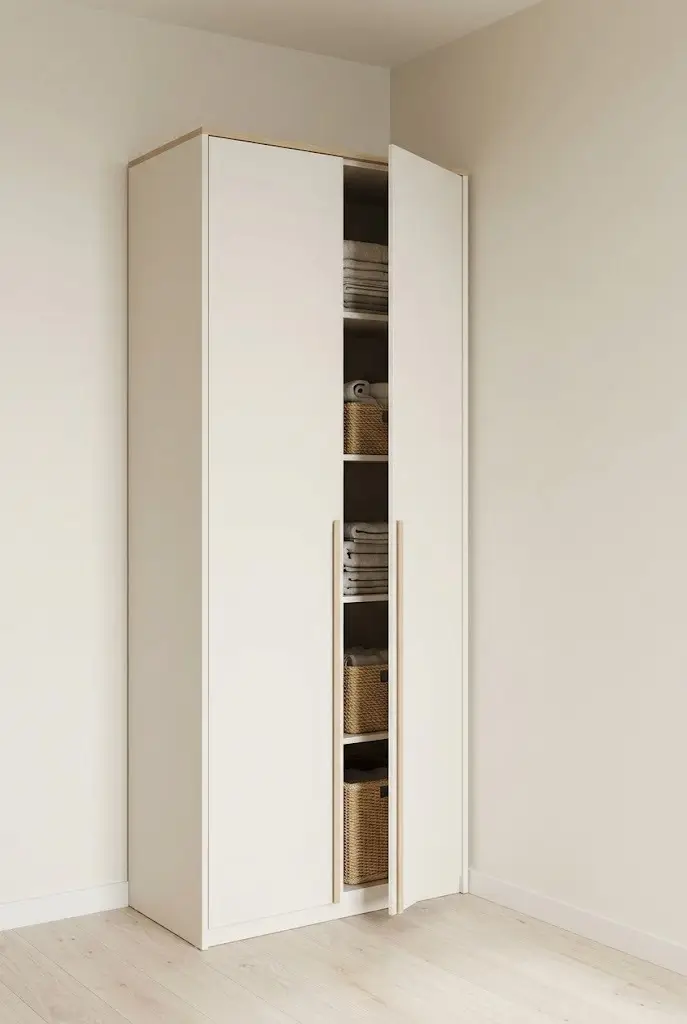
• Uses vertical space instead of spreading storage across the floor.
• Narrow cabinets fit beside beds, kitchens, or unused wall sections.
• Adjustable shelves make it easier to organize different belongings.
• Closed doors keep the studio looking visually calm.
Tall cabinets make smart use of vertical space when a studio has very little room for additional furniture. A narrow linen cabinet can fit beside a bed, near the bathroom, or along an unused wall without taking over the floor plan. Choose adjustable shelves so towels, bedding, clothing accessories, and household supplies can fit comfortably. Closed doors are especially useful because they hide visual noise. A white or light oak finish keeps the cabinet from feeling bulky. That balance makes vertical storage practical while maintaining the open appearance that small apartments need.
Think of the cabinet as a small storage station rather than a place to push miscellaneous items. Reserve each shelf for one category and place the items used most often at comfortable reach. Fold towels and linens into consistent stacks, while smaller accessories can go inside fabric baskets. Leave a little breathing room between shelves so items remain easy to remove. Designers often recommend vertical storage for compact rooms because it increases capacity without expanding the furniture footprint. This setup also keeps frequently used household items together, reducing the scattered piles that can quickly make a studio feel crowded.
7. Foldable Dining Table
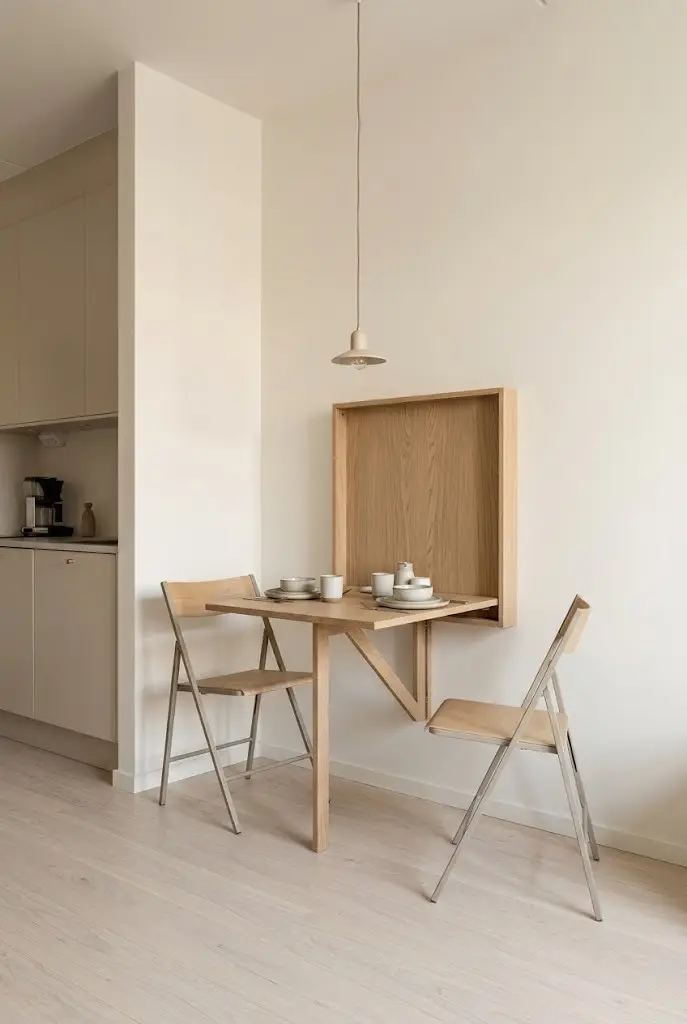
• Creates a proper dining area without permanently using floor space.
• The table can close when the room needs more circulation.
• Light wood surfaces add warmth while keeping the setup airy.
• Folding chairs can be stored nearby when not needed.
A foldable dining table gives a studio a dedicated eating area without requiring a permanent large table. Mount a compact version against the wall or choose a drop leaf model that can close when the surface is no longer needed. Pair it with two slim chairs that can be folded and stored beside a cabinet. Light oak works beautifully with cream walls and pale flooring because it adds warmth without making the area feel dense. This setup is especially helpful when the same floor space needs to serve several purposes throughout the day.
Keep the tabletop mostly clear between meals so the room can shift easily from dining to another activity. A small pendant light above the table can visually define the dining zone without adding bulky furniture. Store placemats, napkins, and dishes in a nearby drawer or cabinet to avoid creating another clutter point. In my experience, flexible furniture works best when it is easy to open, close, and store without effort. A dining table that takes seconds to fold away can preserve valuable circulation while still making everyday meals feel intentional.
8. Closed Shoe Cabinet
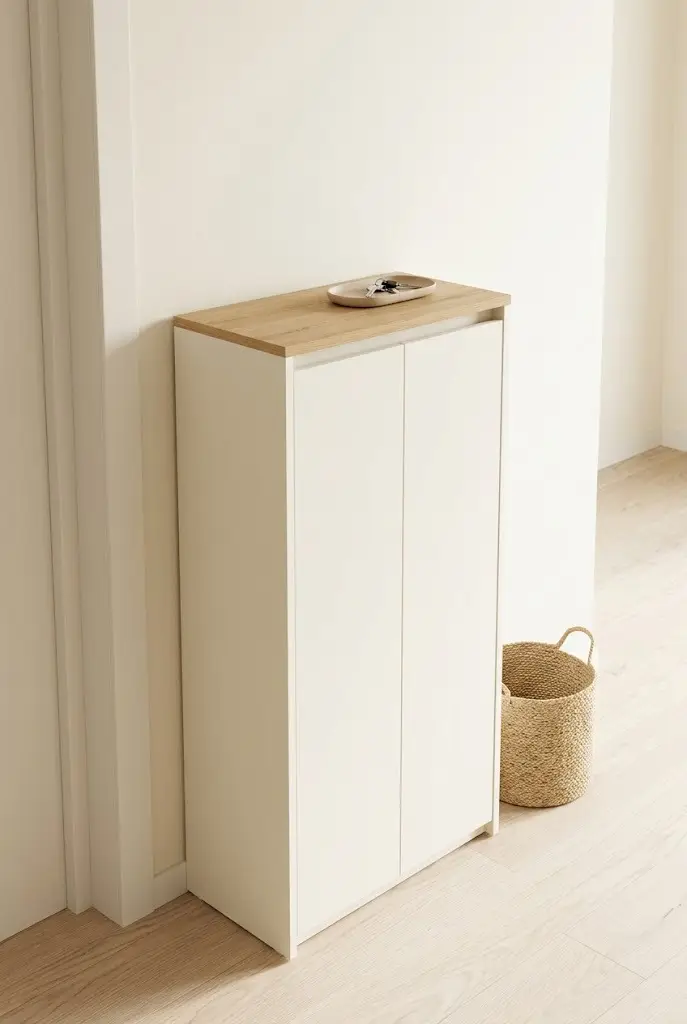
• Keeps footwear contained near the entrance instead of scattered around.
• A slim vertical cabinet uses minimal floor space.
• Ventilated doors can help maintain fresher storage conditions.
• The top can hold a small tray or simple decorative accent.
A closed shoe cabinet can make an immediate difference in a studio because footwear often becomes one of the first visible sources of mess. Choose a slim vertical design that fits against a wall near the entrance and provides enough compartments for the shoes used regularly. Closed fronts keep the collection visually contained, while ventilation openings can improve airflow. A warm white cabinet with a light oak top works well with neutral interiors. Keeping the floor clear around the entrance also creates a smoother transition into the main living space.
Avoid treating the cabinet as general storage for every small item that lacks a home. Give it one clear purpose and keep seasonal footwear elsewhere when possible. A small tray on top can collect keys or sunglasses, while a nearby basket can hold reusable shopping bags. If the cabinet has adjustable compartments, arrange them according to the shoes you actually wear rather than the manufacturer’s default layout. This kind of focused organization is one of the simplest small apartment solutions because it addresses a common daily mess at the exact place where it begins.
9. Floating Nightstand
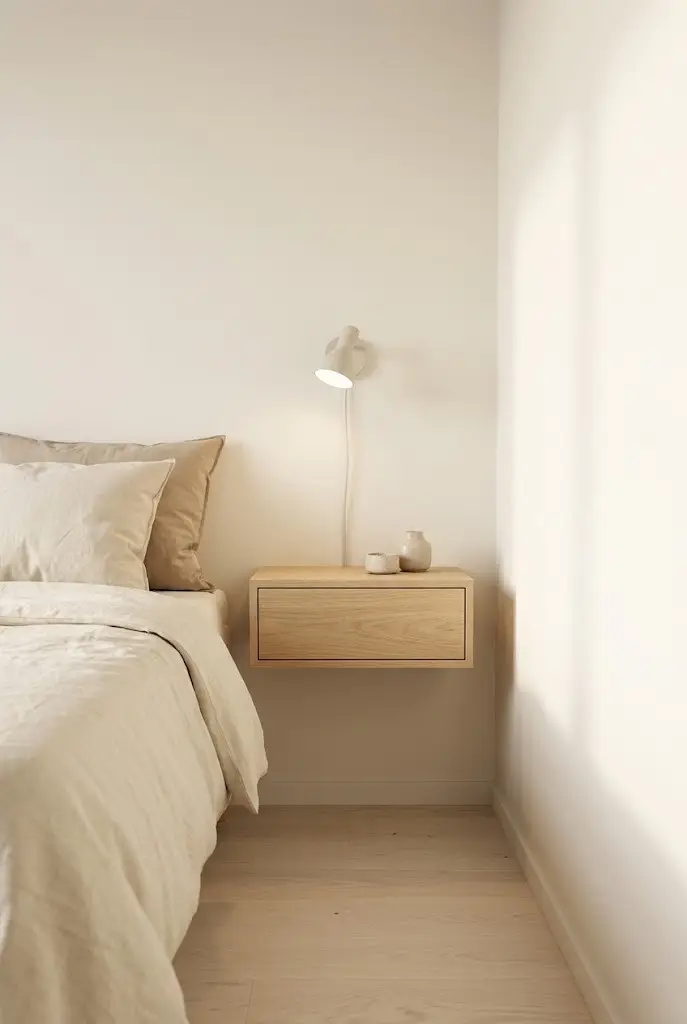
• Frees floor space beside the bed for easier movement.
• A drawer keeps glasses, chargers, and small items concealed.
• The floating design makes the sleeping zone feel more open.
• Light wood adds warmth without creating visual heaviness.
A floating nightstand keeps essential bedside items within reach while leaving the floor completely open underneath. Choose a compact model with one drawer for chargers, glasses, books, or other small belongings that tend to gather beside the bed. Mount it at a comfortable height and keep its surface limited to one lamp and perhaps a small decorative object. This simple arrangement makes the sleeping area feel lighter and easier to clean. In a studio, freeing even a small patch of floor can improve circulation and make furniture placement feel considerably less cramped.
Look for a nightstand with clean lines and a finish that relates to other furniture in the room. Light oak works especially well with cream bedding, warm white walls, and pale flooring. Keep cables tucked behind the unit or routed through a small cable opening so the bedside area stays visually quiet. A drawer is more useful than an open shelf when the goal is reducing visible clutter. I’ve noticed that small storage pieces often have the biggest effect when they remove several little objects from sight at once, particularly in sleeping areas that are visible from the main living space.
10. Curtain Room Divider
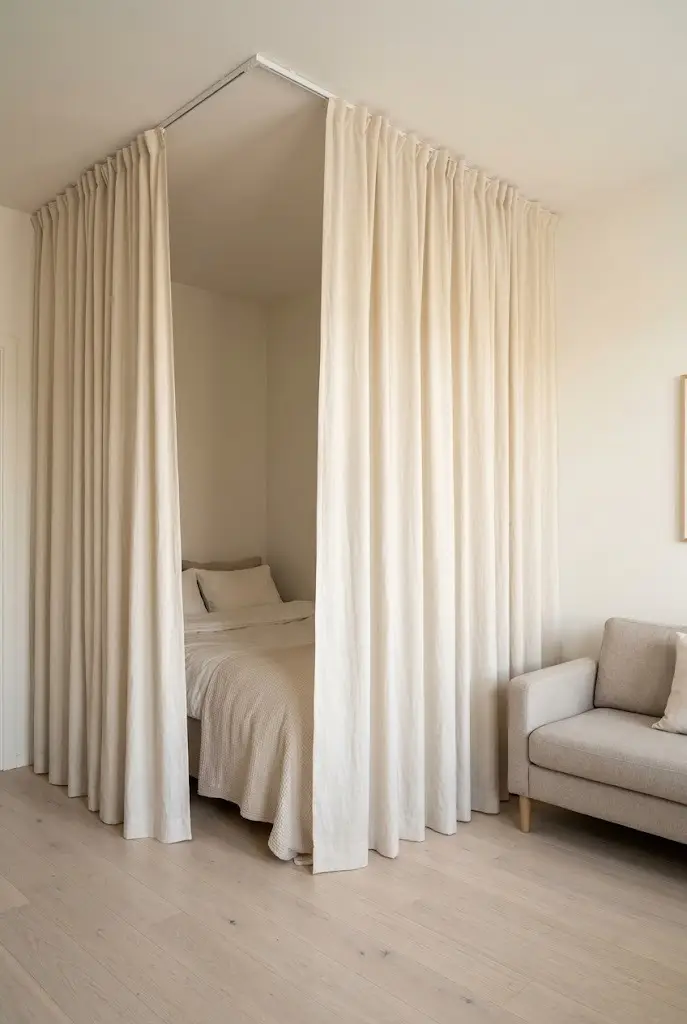
• Separates sleeping space without adding a permanent wall.
• Soft fabric creates privacy while keeping the studio flexible.
• Ceiling mounted tracks preserve valuable floor space.
• Neutral curtains blend naturally with the rest of the room.
A curtain divider can create a clear sleeping zone without making a studio feel smaller. Install a ceiling mounted track and use full length linen or cotton curtains in cream, beige, or soft taupe. When closed, the fabric provides privacy and visually separates the bed from the living area. When open, it disappears toward the wall and restores the full sense of space. This flexibility makes curtains especially practical for renters or anyone who wants to change the layout later without committing to permanent construction.
Choose fabric with enough weight to hang smoothly but avoid overly thick material that blocks all natural light. A subtle weave adds texture and helps the divider feel like part of the decor rather than a temporary screen. Keep furniture on each side arranged with clear pathways so the curtain can move freely. For a cohesive studio, repeat the curtain tone in bedding, cushions, or a rug. That small connection makes the separate zones feel intentional while helping the entire room maintain one calm visual palette.
11. Corner Wardrobe
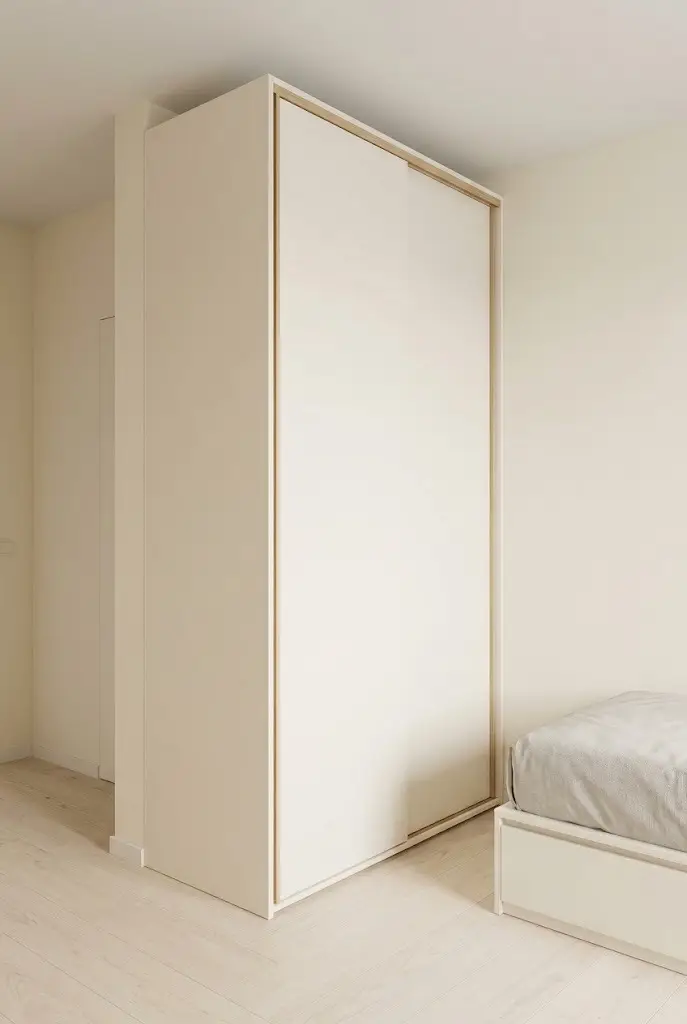
• Turns an overlooked corner into valuable clothing storage.
• Tall doors keep clothing visually hidden and organized.
• Sliding doors reduce the clearance needed in tight layouts.
• Built in shelves improve storage for folded garments and accessories.
An unused corner can become one of the most valuable storage locations in a compact apartment. A tall wardrobe fitted neatly into that space provides substantial clothing capacity without spreading furniture across the room. Sliding doors are especially useful when floor clearance is limited because they do not swing into the walkway. Choose a simple cream or warm white finish so the wardrobe blends with the walls instead of becoming a dominant visual block. This approach keeps clothing contained while giving the studio a more balanced and purposeful layout.
Inside the wardrobe, use shelves, hanging rails, and small baskets according to your actual clothing habits. Keep everyday pieces at eye level and reserve upper shelves for seasonal items or luggage. Avoid packing the cabinet so tightly that removing one sweater creates a pile. A little empty space makes daily organization easier. In my experience, a tall storage solution often works better than several short cabinets because it concentrates belongings in one defined area. The result is a cleaner floor, fewer scattered clothing piles, and a stronger sense of order throughout the studio.
12. Multi Use Bench
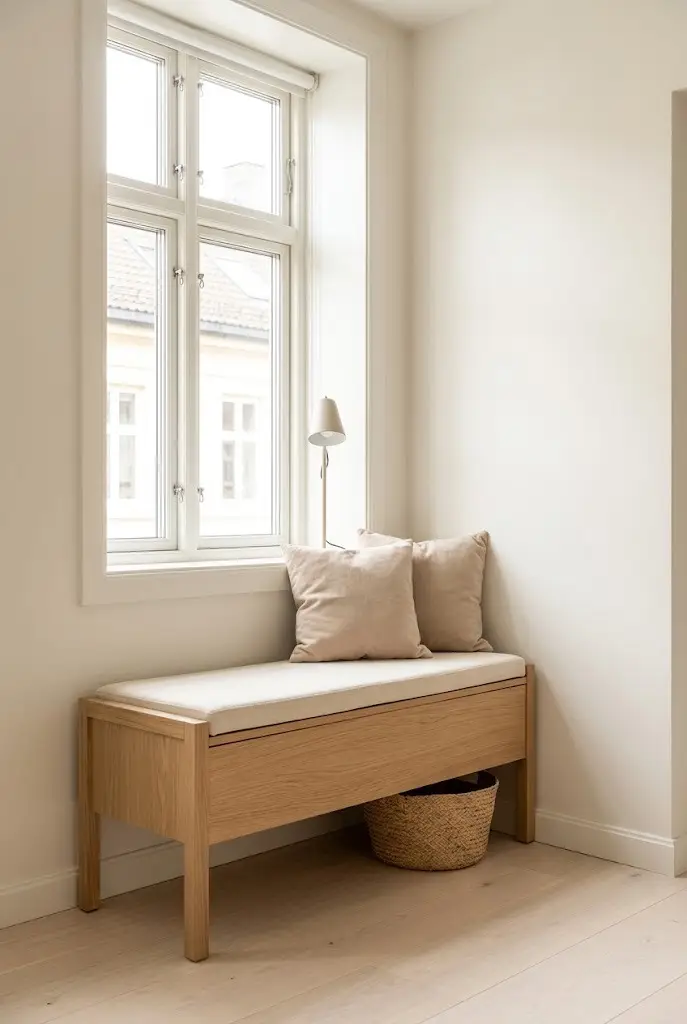
• Provides seating while adding useful hidden storage.
• Works well beneath windows or along unused walls.
• Can serve as a dining seat, reading spot, or entry bench.
• A lift up seat keeps blankets and accessories concealed.
A multi use bench can fill an awkward empty stretch of wall while providing both seating and useful storage. Place one beneath a window, beside the entry, or along a dining area where an additional chair might otherwise take up space. Choose a lift up seat or built in drawers so blankets, bags, shoes, or seasonal accessories stay hidden. A cream cushion with a light oak base keeps the piece visually soft. In a small studio, combining functions in one compact piece can make the room easier to arrange without making it feel crowded.
Give the bench a specific role based on where it sits. Near a window, it can become a reading seat, while an entry bench can provide a place to put on shoes and store everyday accessories underneath. Avoid turning its storage compartment into a catch all area because that can quickly recreate the mess it was meant to prevent. Add one or two cushions for comfort and keep the surrounding floor clear. This approach creates a defined functional zone while giving the studio another practical storage location that does not require a separate cabinet.
13. Pegboard Organizer
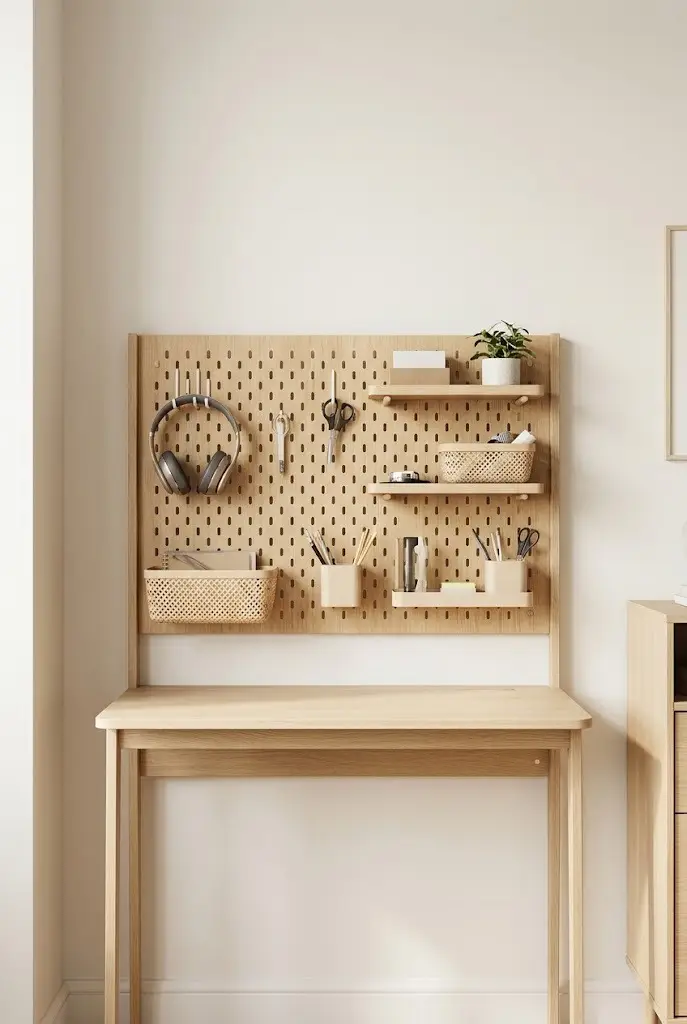
• Turns an unused wall into flexible vertical organization.
• Keeps small supplies visible without covering countertops.
• Hooks and shelves can be rearranged as needs change.
• A simple wood finish adds useful texture to the room.
A pegboard can turn a blank wall into flexible storage without taking up valuable floor space. Install one above a desk, beside a kitchen station, or near the entry where small belongings tend to accumulate. Add hooks, narrow shelves, and small containers for items such as headphones, stationery, keys, or craft supplies. Because the accessories can be moved, the arrangement can change as your storage needs change. A natural wood board also adds warmth and texture, helping a practical organization feature look like an intentional part of the studio decor.
Keep the arrangement visually balanced by grouping similar items together and leaving some sections open. Avoid placing every available hook or shelf onto the board because empty space helps the display feel cleaner. Use small baskets for loose accessories and reserve hooks for frequently used items. If the board sits above a desk, keep the desktop mostly clear and let the wall carry the organizational load. I’ve noticed that vertical systems work particularly well in studios because they create storage capacity without competing with furniture, rugs, or walking paths on the floor.
14. Nested Side Tables
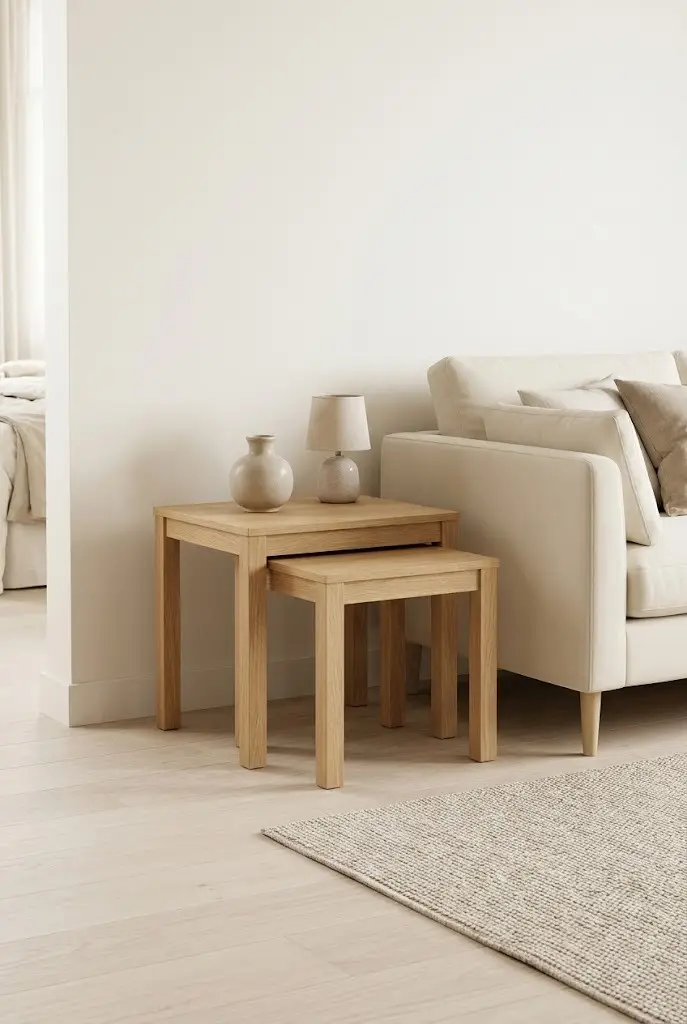
• Provides flexible surfaces without permanently adding bulky furniture.
• Smaller tables can slide underneath the larger one when unused.
• Different heights create useful surfaces beside sofas and beds.
• Light materials help maintain an airy studio appearance.
Nested side tables offer the convenience of multiple surfaces while using the footprint of one when extra space is unnecessary. Place them beside a sofa or lounge chair and pull the smaller table out whenever guests arrive or additional surface space is needed. Choose rounded or softly edged designs if circulation is tight because they make movement around furniture easier. Light oak, cream, or natural wood finishes keep the arrangement visually light. This flexible furniture choice can reduce the need for several separate tables that would otherwise make a compact room feel crowded.
Use the larger table for everyday essentials such as a lamp or book and keep the smaller one available for drinks, snacks, or temporary items. When the second surface is no longer needed, slide it back underneath to restore a cleaner floor plan. Avoid covering both tables with decorative objects because their usefulness depends on keeping the surfaces accessible. In my experience, furniture that can change size or position is particularly valuable in studio apartments. It supports different activities throughout the day while keeping the room adaptable and visually organized.
15. Over Door Organizer
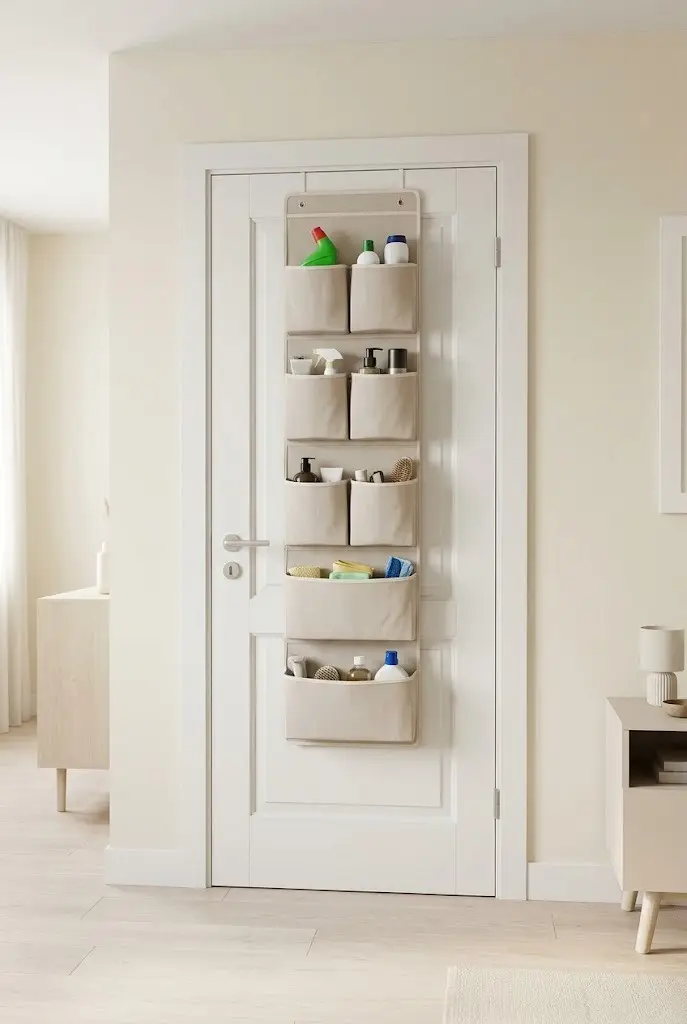
• Uses overlooked space behind doors for compact storage.
• Multiple pockets keep small accessories separated and easy to find.
• Works well for toiletries, cleaning supplies, or everyday essentials.
• Keeps storage off counters and other frequently used surfaces.
The back of a door can provide surprisingly useful storage when floor and wall space are already limited. An over door organizer with slim pockets can hold cleaning supplies, toiletries, hair accessories, cables, or other small belongings that usually end up scattered across drawers. Choose a neutral fabric or simple wire design that blends into the room. Before installing one, check that the door closes properly and that the organizer does not interfere with handles or nearby furniture. Used carefully, this hidden storage spot can remove many small sources of everyday visual clutter.
Assign each row or pocket a specific category so finding things remains quick. For example, cleaning items can stay together, while personal accessories can occupy another section. Avoid stuffing the pockets beyond their capacity because bulging fabric can make the door difficult to close and create a messy appearance. A slim organizer works best when it handles lightweight items that are used regularly. This is one of those small apartment solutions that may go unnoticed when everything is tidy, yet its hidden capacity can make a noticeable difference when countertops and drawers are already full.
16. Rolling Kitchen Cart
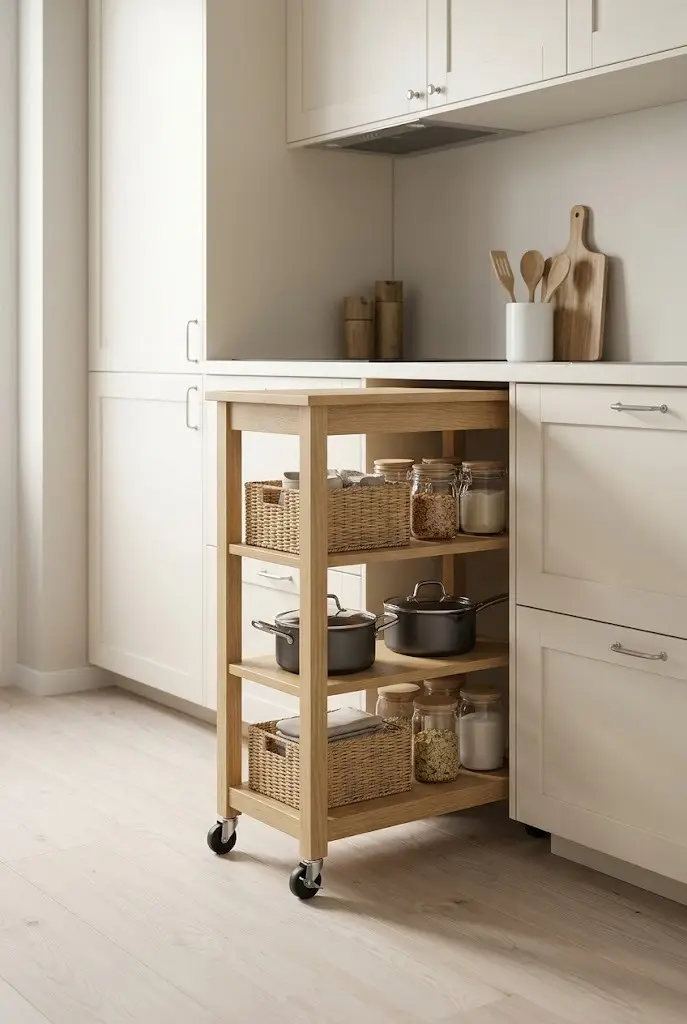
• Adds movable storage without permanently blocking a walkway.
• Shelves provide space for cookware, pantry items, or appliances.
• Wheels make it easy to reposition during cooking or cleaning.
• A compact profile keeps the kitchen area visually open.
A rolling kitchen cart adds storage where you need it while keeping the layout flexible. Choose a narrow model with wheels that can sit beside the kitchenette, against a wall, or beneath a counter when not needed. Open shelves can hold cookware, baskets, or pantry supplies, while the top can provide extra preparation space. Light oak or white finishes blend easily with compact kitchens and maintain an airy appearance. The mobility is especially helpful when you need to clear a walkway, clean the floor, or create more room while preparing meals.
Use baskets on the lower shelves to contain smaller packages and kitchen accessories so the cart does not become visually busy. Keep the countertop limited to appliances or tools that are used frequently. A cart with locking wheels is preferable because it remains stable while cooking but can still be repositioned when necessary. In my experience, movable storage is valuable when a studio serves several purposes because furniture can adapt to the activity instead of permanently occupying one location. This makes the kitchen more practical without making the entire apartment feel crowded.
17. Storage Headboard
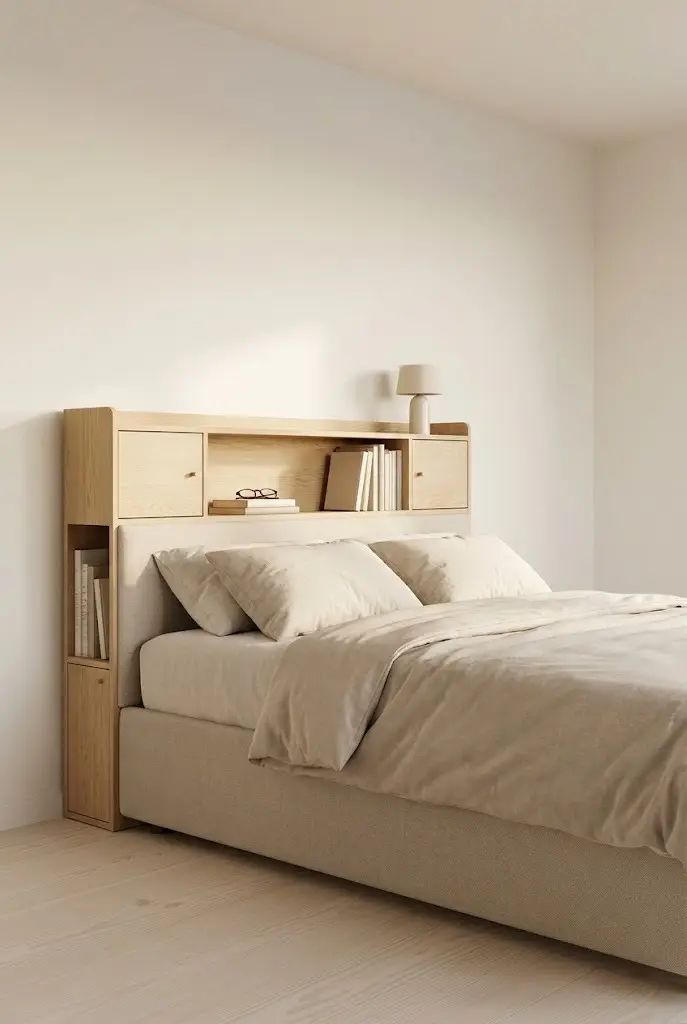
• Uses the bed wall for practical storage without adding another cabinet.
• Built in shelves keep books and bedtime essentials within reach.
• Closed compartments can hide items that create visual mess.
• A soft upholstered finish can make the sleeping area feel warmer.
A storage headboard can turn the wall behind the bed into a useful organization zone. Instead of adding separate bedside cabinets, choose a headboard with integrated shelves, drawers, or narrow compartments. It can hold books, reading glasses, chargers, and small personal items while keeping the surrounding floor clear. Light oak paired with cream upholstery creates warmth without making the sleeping area feel heavy. This solution works particularly well when the bed occupies a central position in the studio because the storage stays attached to furniture that is already taking up floor space.
Keep the open shelves lightly styled and use closed compartments for items that are less attractive or rarely needed. A small reading lamp can sit within an integrated shelf, while charging cables can pass through discreet openings behind the headboard. Avoid filling every compartment simply because storage is available. Leaving some areas open creates a more spacious appearance. I’ve seen this approach work especially well in compact bedrooms because it combines several functions in one piece, reducing the number of individual furniture items needed around the bed.
18. Mirror Storage Door
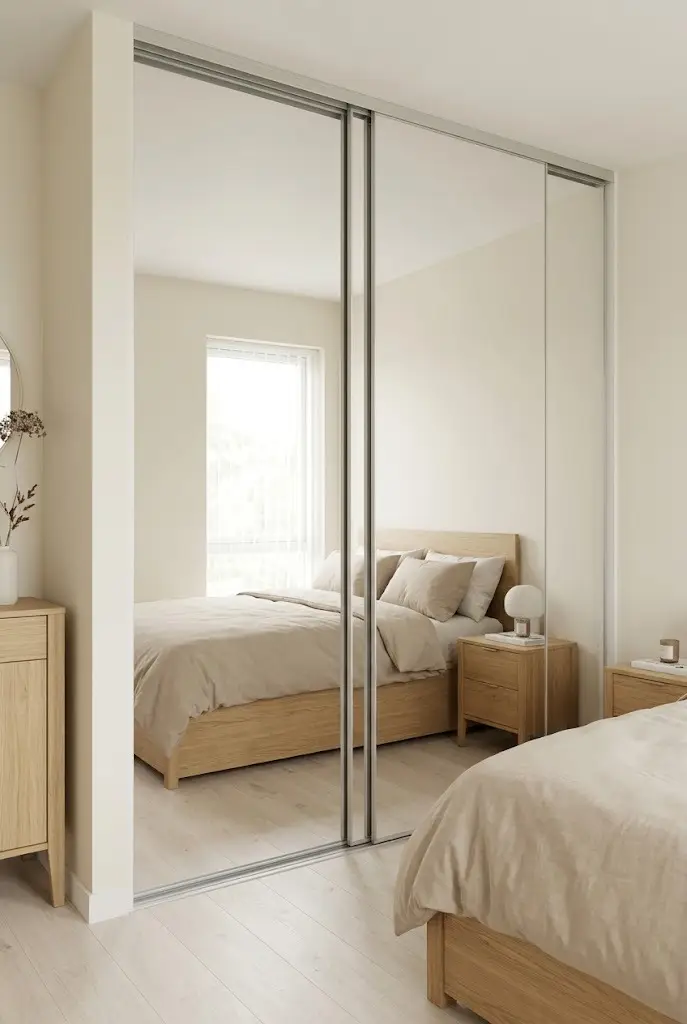
• Combines full length reflection with concealed storage.
• Reflective surfaces can make a compact room feel visually larger.
• Sliding doors save space compared with traditional swinging doors.
• A simple frame keeps the design clean and contemporary.
A mirrored storage door can perform two useful jobs while taking up the space of one wardrobe. Full length mirrors reflect daylight and nearby furniture, helping a compact studio feel brighter and more open. Sliding doors are especially practical because they need no additional clearance when opened. Choose a simple framed design in cream, white, or light oak so the wardrobe blends with the rest of the interior. The storage remains hidden behind the reflective surface, keeping clothing and accessories out of sight while adding a functional dressing area.
Position the mirrored wardrobe where it can reflect natural light rather than a crowded corner or messy storage area. Keep the view opposite the mirror relatively simple because reflections can visually double whatever appears in front of them. Inside, organize clothing with a combination of hanging rails, shelves, and baskets. A full length mirror also makes getting dressed easier when there is no room for a separate dressing mirror. For compact homes, combining storage and reflection can reduce furniture needs while creating a brighter, more spacious visual effect.
19. Drawer Dividers
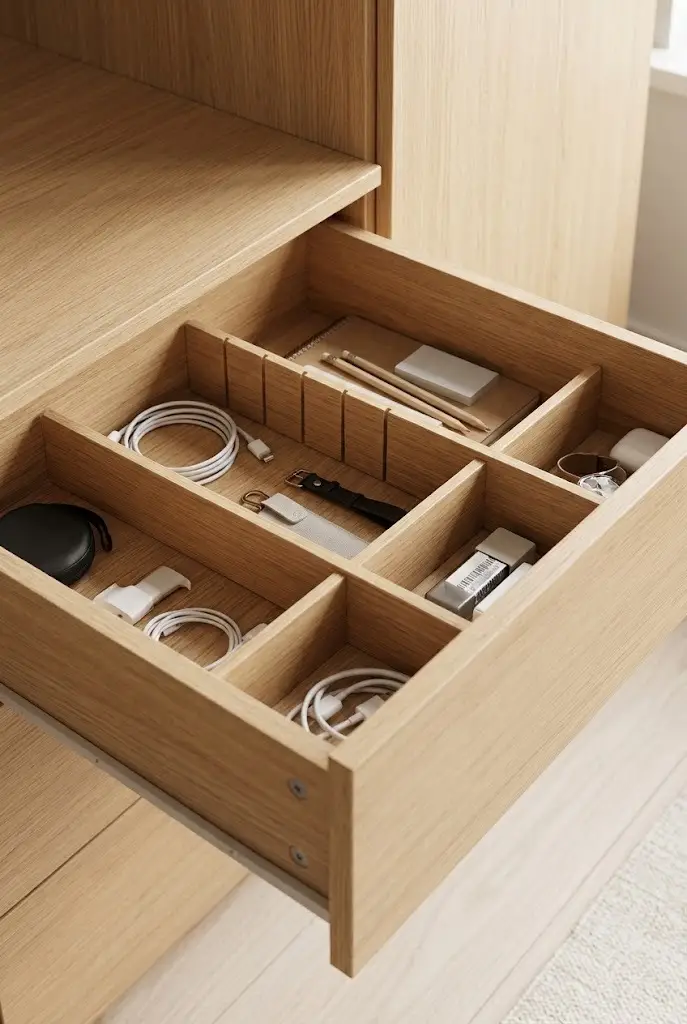
• Prevents small belongings from becoming mixed together inside drawers.
• Creates dedicated spaces for accessories, stationery, and everyday essentials.
• Adjustable dividers can adapt as storage needs change.
• Organized drawers make daily routines quicker and less frustrating.
A drawer can hide clutter from view while still becoming frustratingly disorganized inside. Simple dividers solve that problem by giving small belongings a dedicated position. Use adjustable bamboo, wood, or clear organizers for accessories, stationery, charging cables, cosmetics, or kitchen tools. Instead of creating one large pile, divide the drawer according to how often each item is used. This makes everyday routines quicker because everything has an obvious location. In a compact studio, organized hidden storage matters just as much as tidy surfaces because it prevents small messes from returning when drawers are opened.
Measure the drawer before buying organizers and choose pieces that use its available width efficiently. Keep categories broad enough to remain practical, such as chargers together or writing supplies together, rather than creating too many tiny compartments. Remove duplicate items before arranging everything because dividers cannot solve an overcrowded drawer. I’ve noticed that the easiest organization systems are those requiring almost no thought after setup. When every small item has a consistent home, putting things away becomes automatic, helping the rest of the apartment stay orderly with much less daily effort.
20. Folding Wall Hooks
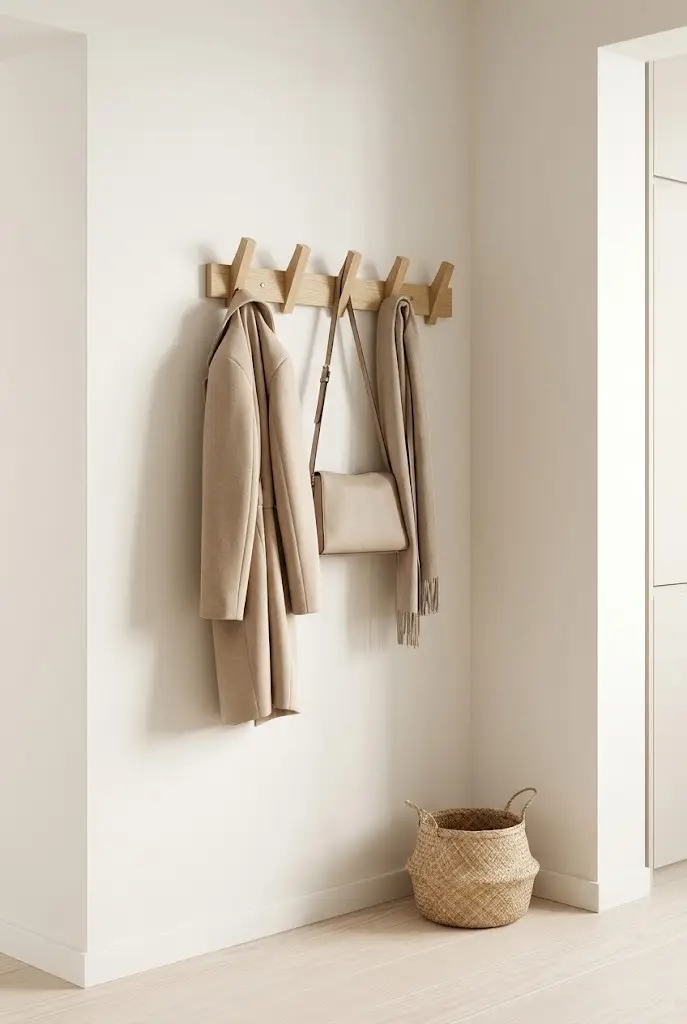
• Provides instant hanging space without adding a floor standing rack.
• Foldable hooks stay nearly flat when they are not needed.
• Useful for coats, bags, towels, and frequently worn clothing.
• A small row can organize several daily essentials efficiently.
Folding wall hooks provide convenient hanging space without requiring a bulky coat rack or standing organizer. Mount a short row near the entrance, beside the wardrobe, or behind an unused section of wall. Choose hooks that fold flat when empty so they maintain a clean profile when nothing is hanging. Light oak, white, or matte neutral finishes work well with most studio interiors. They are especially useful for everyday bags, jackets, scarves, towels, or frequently worn clothing that would otherwise land on a chair or sofa.
Keep the number of hooks appropriate for the amount of clothing you actually use. Too many items hanging in one place can create the same visual clutter you are trying to remove. Give each hook a simple purpose and rotate seasonal items rather than keeping everything visible. A small basket underneath can collect accessories that do not belong on hooks. This creates a compact entry system that is easy to maintain. The biggest benefit is convenience because belongings are much more likely to return to their place when storage is located exactly where you need it.
21. Basket Storage
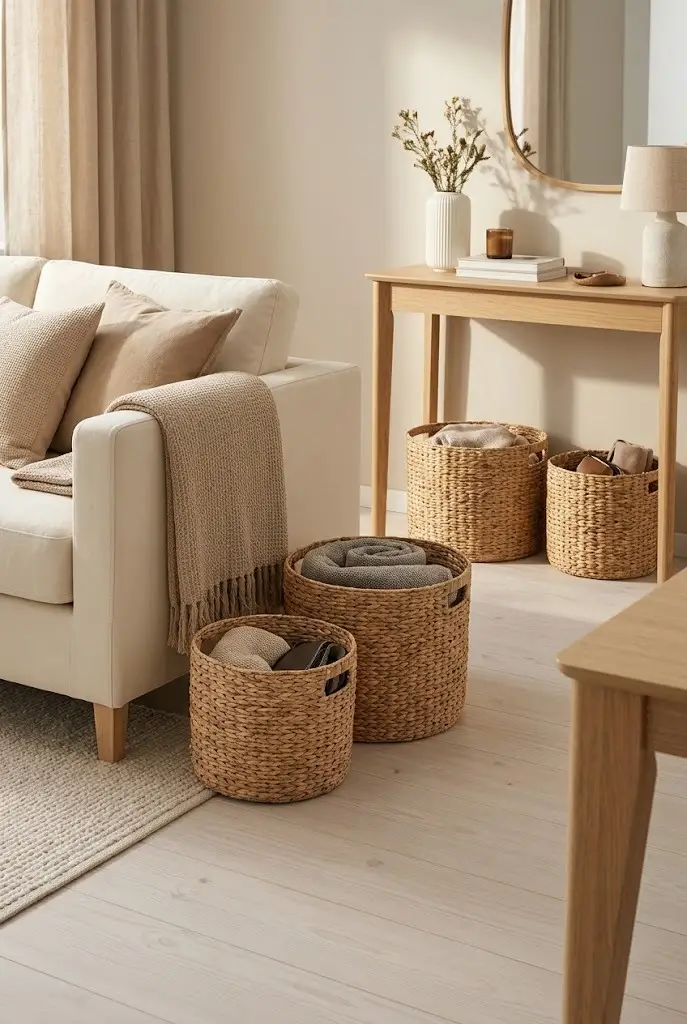
• Keeps blankets, throws, and loose accessories neatly contained.
• Woven texture adds warmth to a simple neutral interior.
• Open baskets make frequently used items quick to grab.
• Matching sizes create a cleaner and more coordinated appearance.
Basket storage is a simple way to gather loose belongings without making a small studio feel overly organized or sterile. Place one beside the sofa for blankets, another beneath a console for accessories, or several inside open shelving for smaller possessions. Natural seagrass, rattan, or woven cotton brings texture into neutral interiors while keeping everyday items contained. Choose baskets with sturdy handles when you expect to move them often. These simple containers can make a visible difference because they collect the things that usually end up on chairs, floors, or countertops.
Use baskets selectively and give each one a clear purpose so they do not become catch all containers. A large basket beside the sofa can hold throws, while a smaller version near the entrance can collect reusable bags or scarves. Keep similar materials and neutral tones together to create a cohesive look. In my experience, basket storage works best when the contents can be put away in seconds. That ease encourages consistent tidying, helping maintain the clean appearance created by other storage solutions throughout the studio.
Conclusion
A tidy studio does not require expensive furniture or a complete makeover. The right combination of hidden storage, flexible pieces, vertical organization, and thoughtful layouts can make a small home feel more spacious and comfortable. These clutter-free studio apartment ideas offer simple ways to reduce visual mess while keeping everyday essentials within reach. Start with one area that causes the most frustration, then build from there as each solution proves useful. I’ve seen how small changes can completely transform the way a compact space feels and functions.
Read More:
Room Dividers With Storage for Studio Apartments That Make One Room Feel Like Two
21 Studio Apartment Bedroom Divider Ideas That Add Privacy Without Walls
Community
Join the conversation
Add a useful idea, ask a specific question, or share what worked in your space. Every comment is reviewed before it appears.