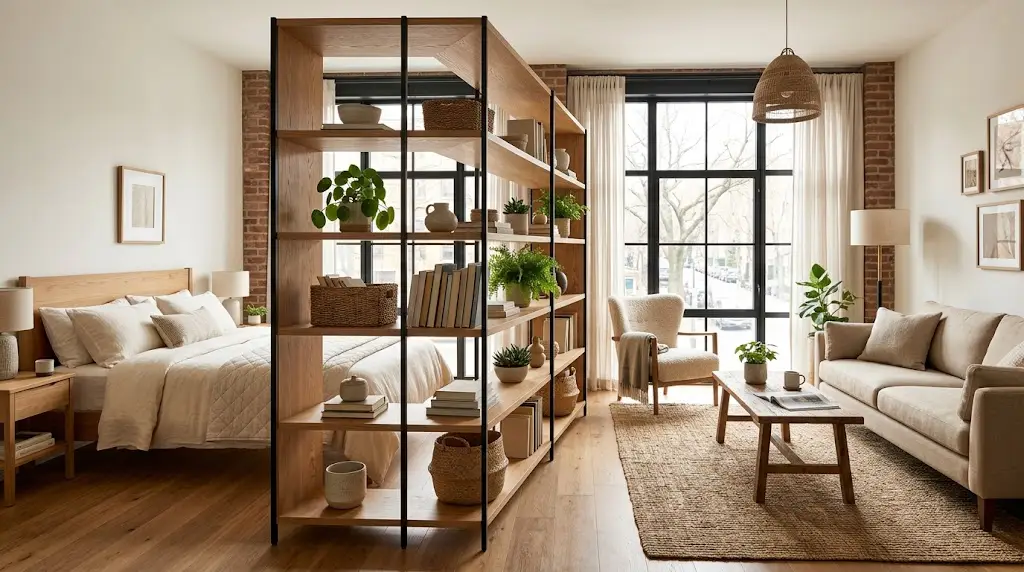
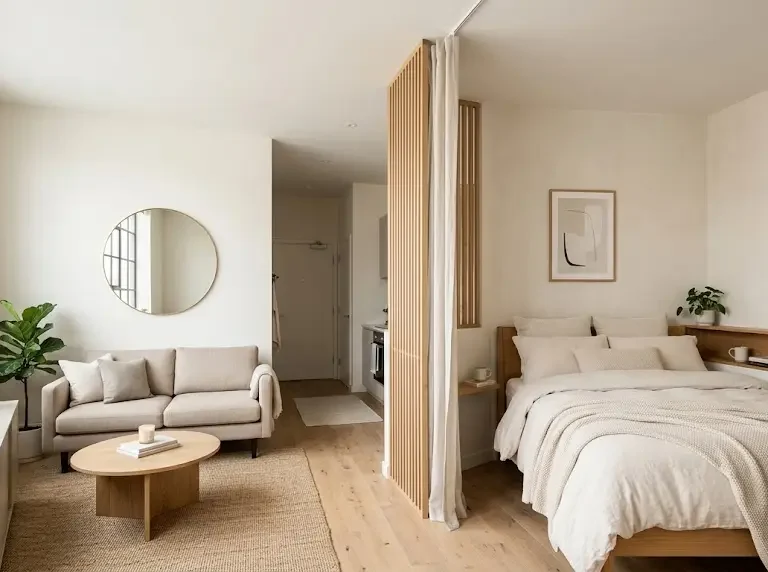
A studio can feel completely different once the bed stops competing with the sofa for attention. Studio apartment layout ideas with bookshelf dividers give you privacy, storage, and clearly defined zones without building a permanent wall.
A bookshelf can separate your bedroom from the living area, create a tiny entryway, hide a workspace, or give an awkward corner a real purpose. The best part is that every shelf can earn its place with books, baskets, plants, lighting, and everyday storage.
The key is choosing the right position. A bookshelf should divide the room while still allowing light, movement, and visual breathing space.
1. Bedside Bookcase
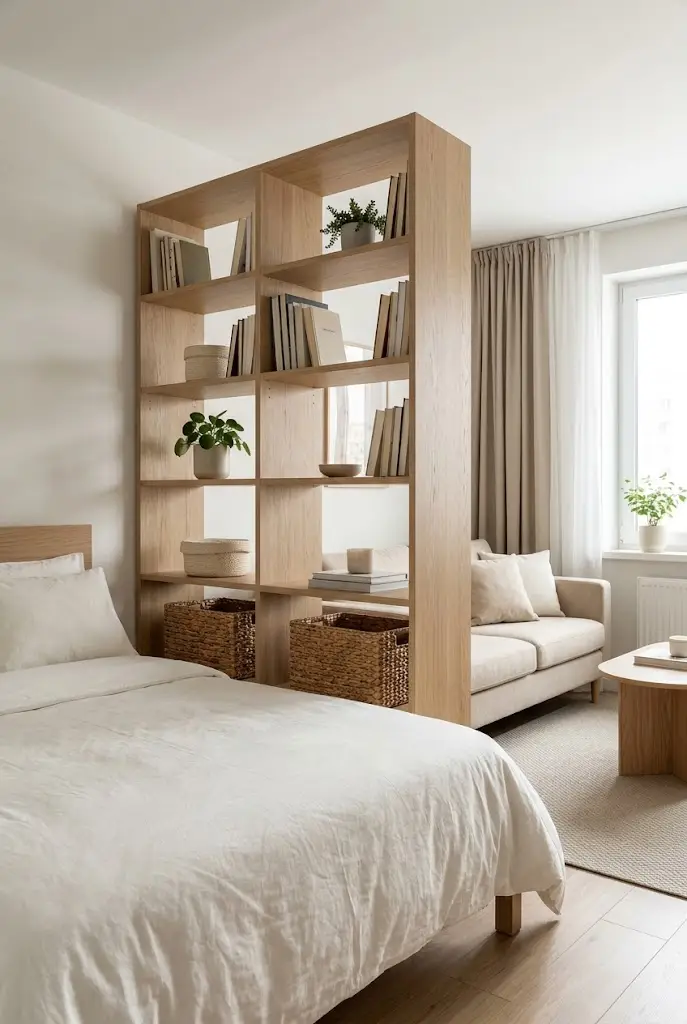
Place an open bookshelf beside the bed instead of directly at the foot.
This creates a clear edge around the sleeping zone while keeping the rest of the apartment connected.
A tall shelf works especially well when the bed sits in a corner. Use the lower shelves for baskets and practical storage, then keep the upper shelves lighter with books, plants, and a few decorative pieces.
Leaving some empty space between objects helps natural light move through the unit.
I have noticed that partially filled shelves usually make a tiny studio feel more spacious than shelves packed from top to bottom.
2. Footboard Divider
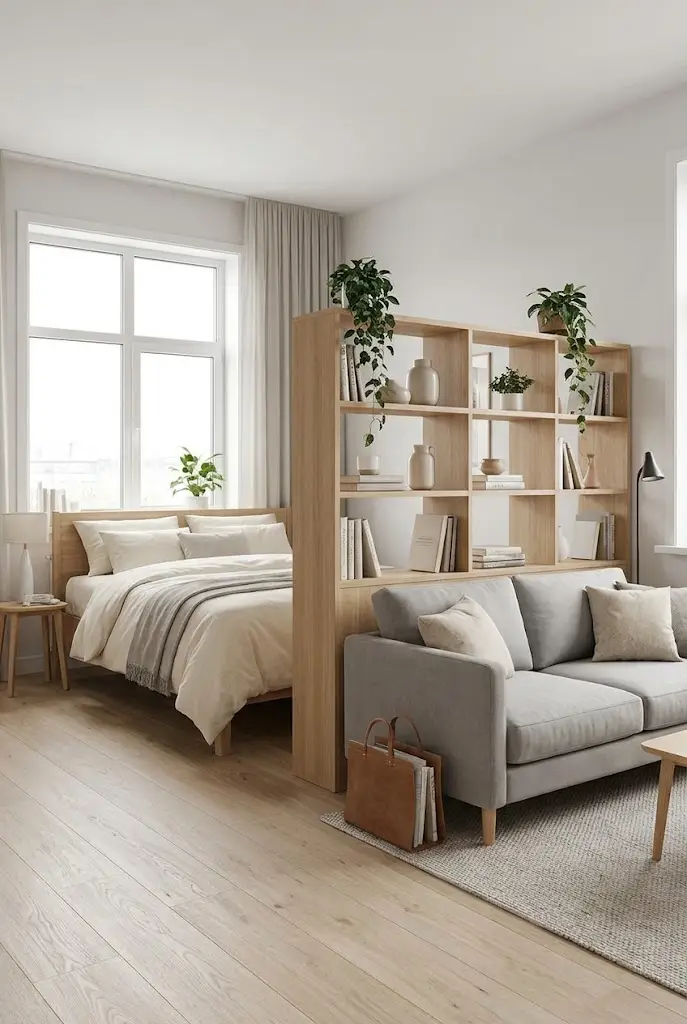
Position a bookshelf at the foot of the bed to create an instant bedroom boundary.
From the living area, the shelf becomes the first thing you see instead of the bed itself.
This layout works beautifully when the bed and sofa need to share one long room.
Keep the bookshelf slightly wider than the bed if you want stronger separation. A narrower unit feels softer and works better when preserving an open look matters more than complete privacy.
Style the living room side with books and decor while using the bedroom side for baskets, chargers, and bedtime essentials.
3. Sofa Back Shelf
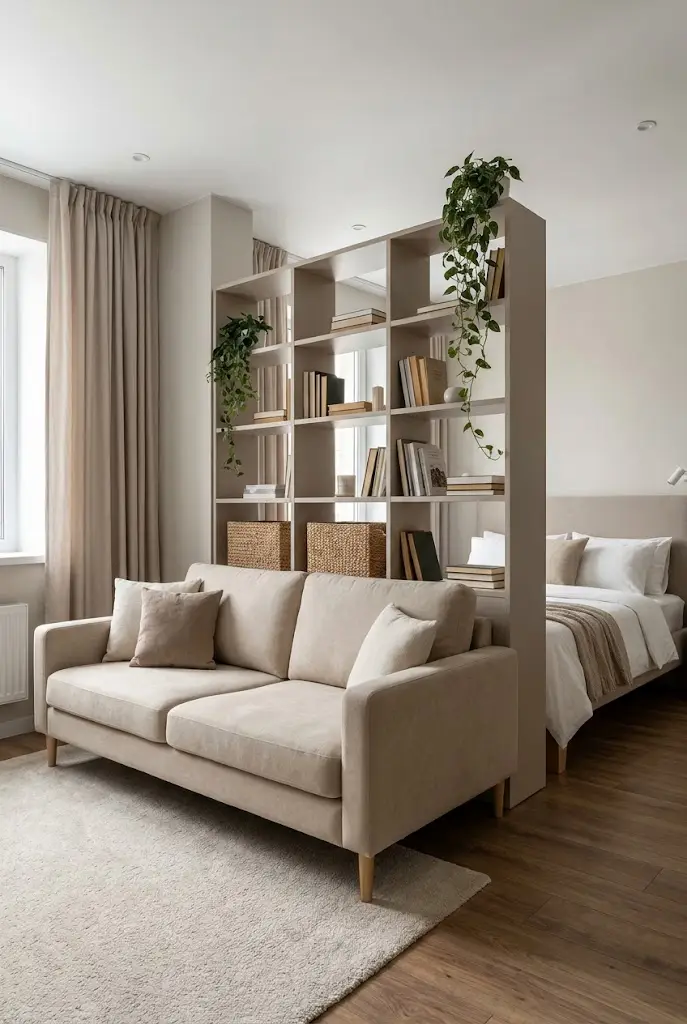
A bookshelf placed behind the sofa can create a strong living room zone.
Turn the sofa away from the sleeping area and position an open shelf directly behind it.
The sofa creates the first boundary while the bookshelf adds height and storage.
This setup makes the living room feel intentional because the seating area has a clear beginning and end.
Choose a shelf close to the height of the sofa if you want subtle zoning. Use a taller unit when you need more privacy between the living and sleeping areas.
4. Floating Bed Nook
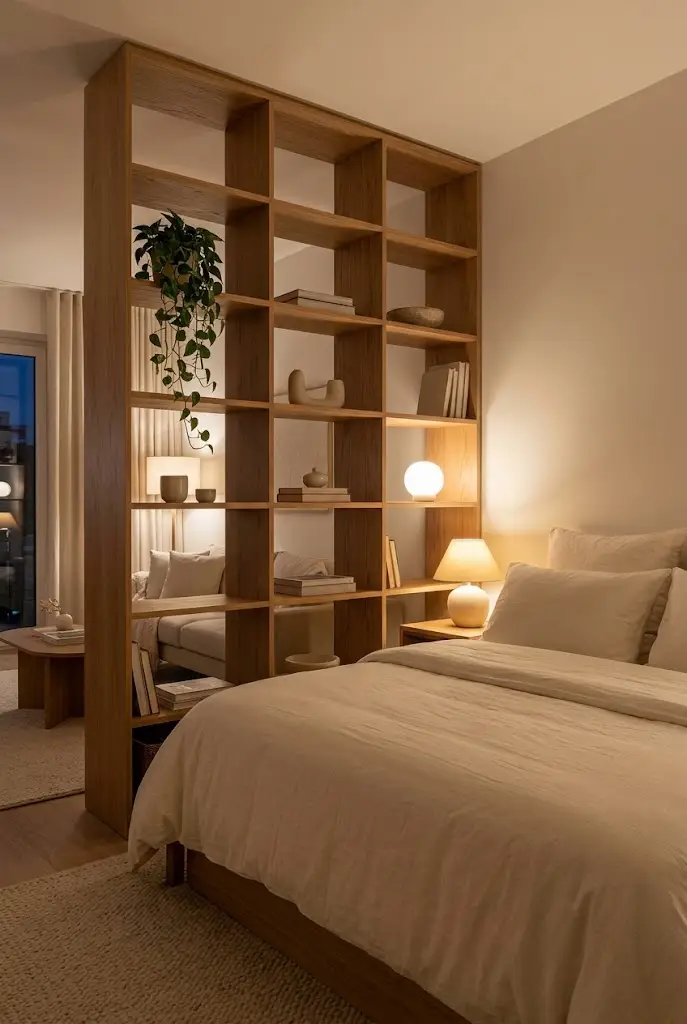
Create a bedroom that feels almost like a separate little room by placing shelving along one side of the bed.
Instead of pushing every piece of furniture against the walls, allow the shelf to sit farther into the room.
That small change can create a much stronger bedroom zone.
Use an open back design so the divider does not block light completely.
Add soft bedding, a small bedside lamp, and one trailing plant on the shelf. The sleeping corner will immediately feel warmer and more finished.
5. Entryway Divider
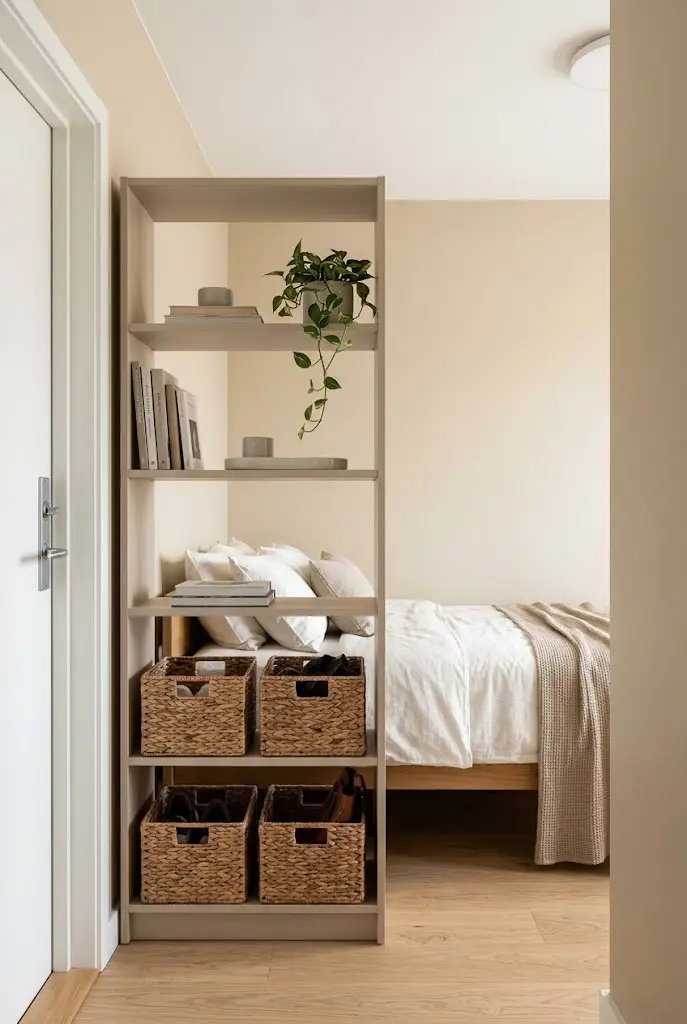
Many studios open directly into the main living area.
A bookshelf near the entrance can create the feeling of a small hallway without taking up much space.
Position the shelf so it partially shields the bed or sofa from the front door.
Use baskets on the lower shelves for shoes, bags, umbrellas, and other items that usually collect near the entrance.
Add a small tray for keys and one decorative object at eye level.
This simple placement makes walking into the apartment feel more organized.
6. Open Cube Divider
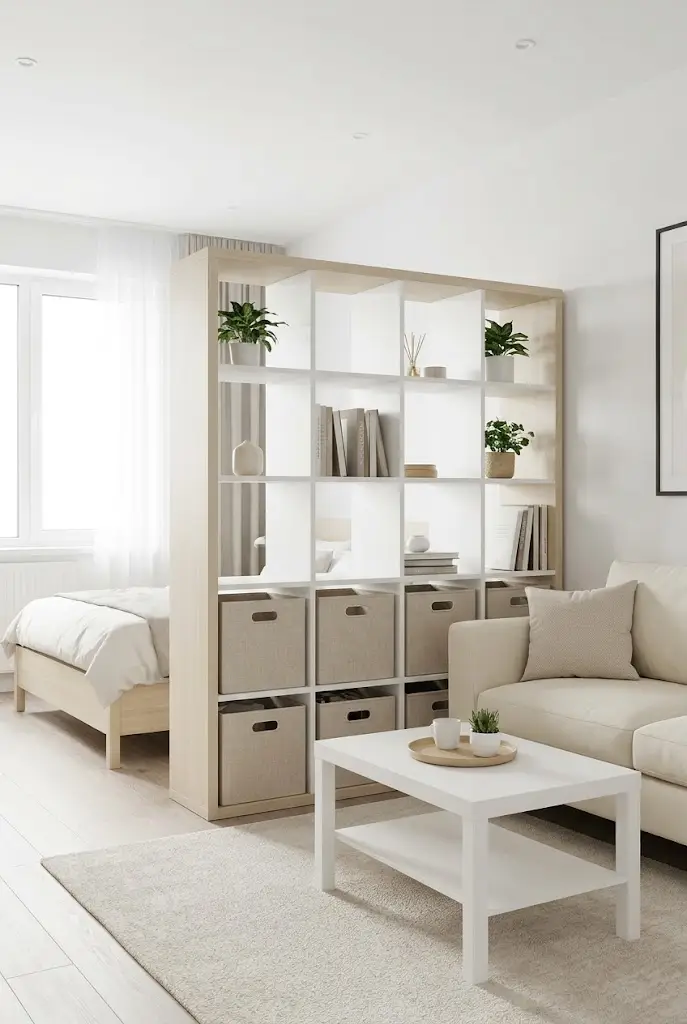
Cube shelving works especially well in compact apartments because each section can serve a different purpose.
Use some cubes for books, some for decorative objects, and others for storage baskets.
Keeping several cubes completely open prevents the divider from becoming visually heavy.
A cube unit can separate the bedroom from the living area while still allowing sightlines through the room.
For an even cleaner look, choose baskets in one matching material such as woven fiber, canvas, or light wood.
7. Half Height Shelf
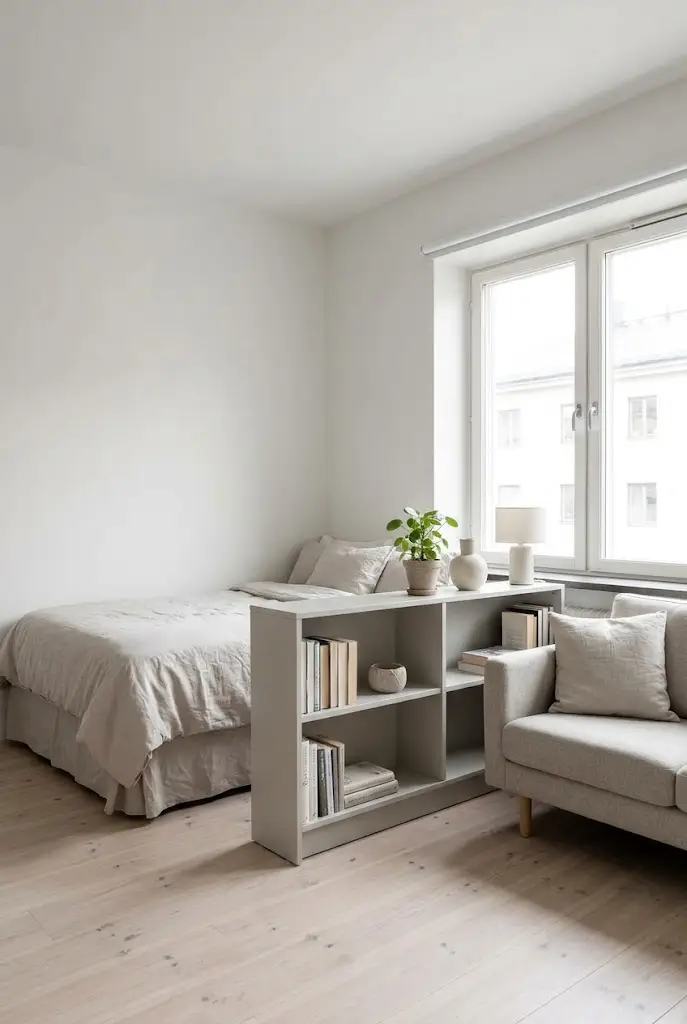
A room divider does not need to reach the ceiling.
A low bookshelf can define different zones while preserving an open view across the entire apartment.
Place one between the bed and sofa or between the living area and dining space.
The top surface can hold plants, lamps, framed art, or a few favorite objects.
This is one of my favorite approaches for very small studios because it provides structure without making the room feel enclosed.
It also works well when windows are limited and you cannot afford to block natural light.
8. Tall Open Shelving
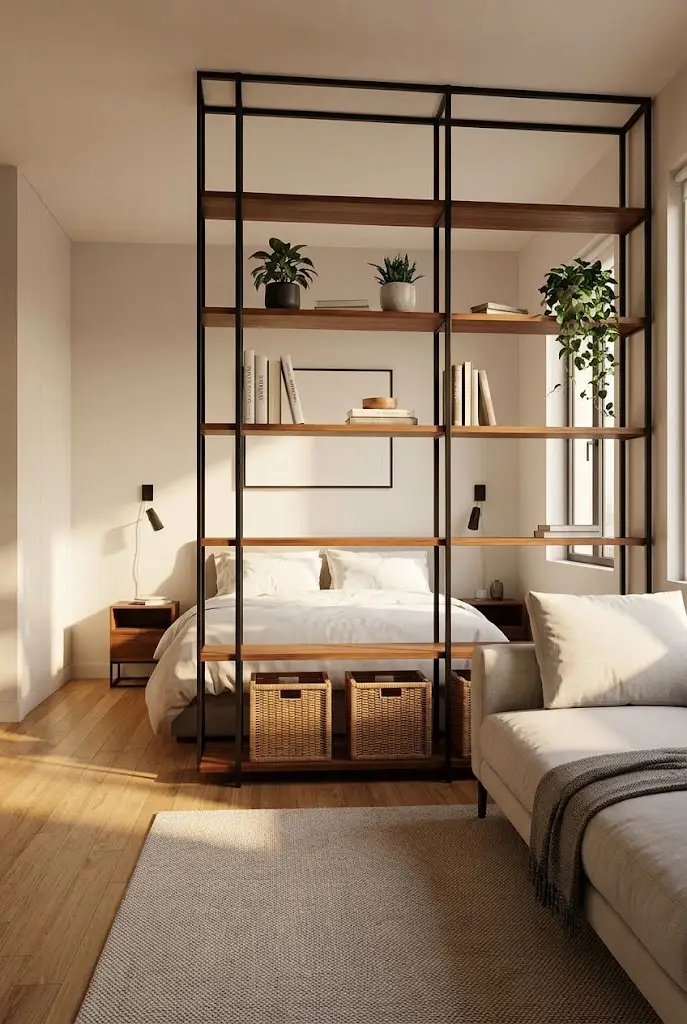
A tall open bookshelf creates stronger separation while still feeling lighter than a solid wall.
Use it beside the sleeping area when privacy is a priority.
Choose a design with slim frames and open sections rather than thick solid panels.
The upper shelves should stay visually light. A few books, a trailing plant, or a ceramic vase may be enough.
Store heavier and less attractive items in baskets near the bottom.
This arrangement draws the eye upward and helps the divider look deliberate rather than bulky.
9. Corner Shelf Zone
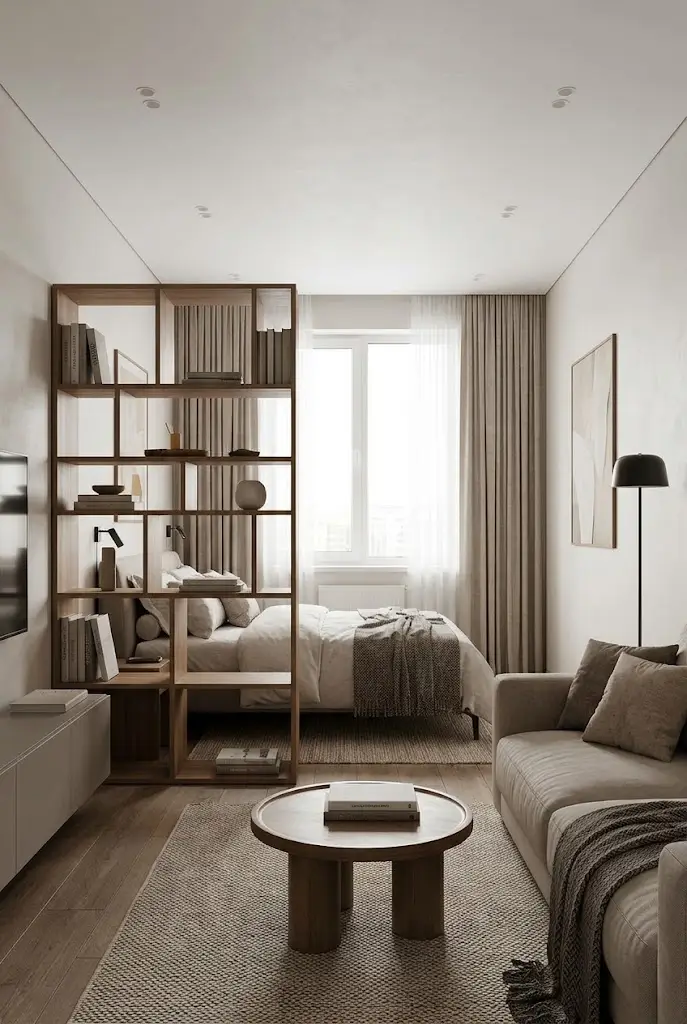
An awkward corner can become one of the most useful parts of a studio.
Place a bookshelf perpendicular to one wall to create a small enclosed zone.
The space behind it can become a bedroom, desk area, dressing spot, or reading corner.
This works especially well when the apartment has a wide rectangular layout with no natural architectural divisions.
Use a rug inside the new zone to strengthen the separation even more.
The shelf becomes the visual wall while the rug defines the floor area.
10. Desk Shelf Combo
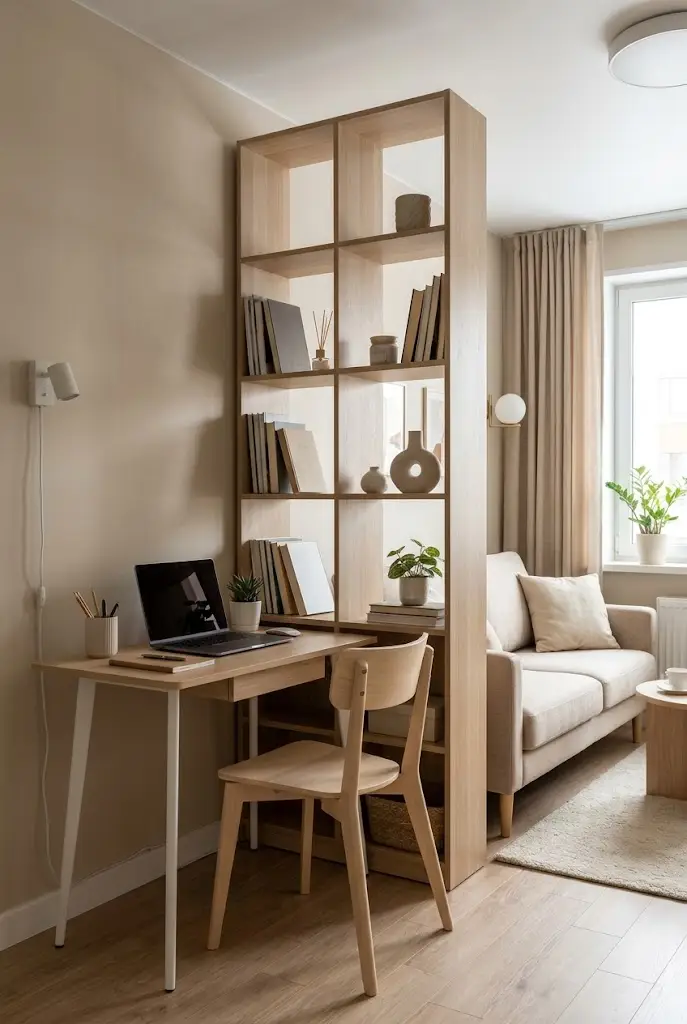
A bookshelf can separate your work area from the place where you relax.
Position an open shelf beside or behind a compact desk.
The divider creates a visual boundary around your workspace while providing storage for books, supplies, documents, and decor.
This can be especially helpful when working from home in a studio because the desk no longer feels like it belongs in the middle of your living room.
Keep the work side functional and the visible living room side more decorative.
That small styling difference helps each zone feel distinct.
11. Double Sided Storage
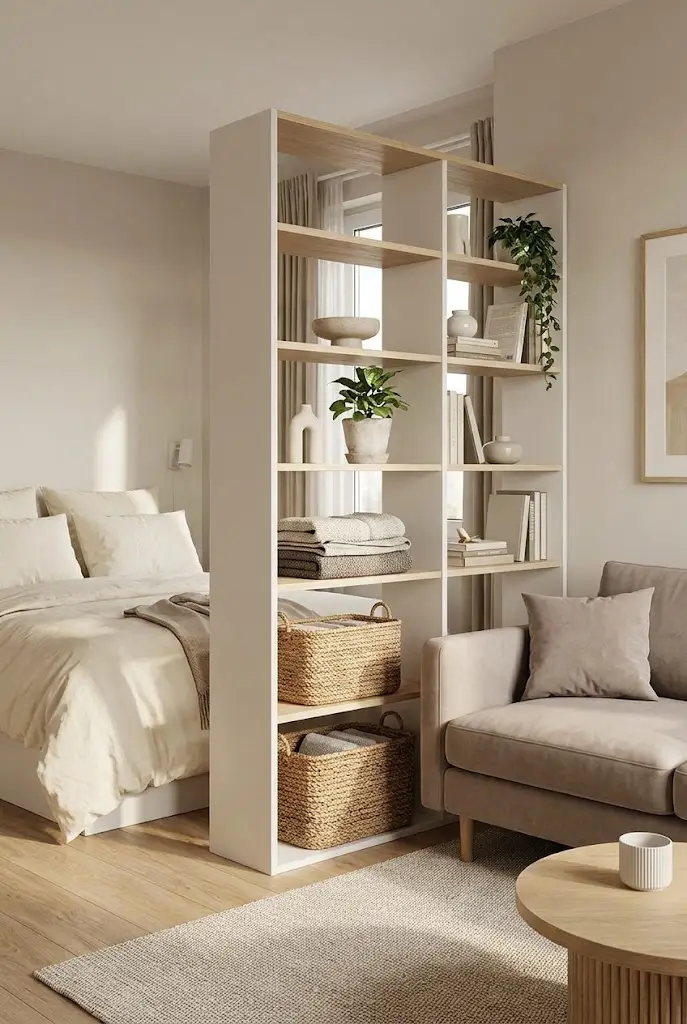
Treat both sides of the bookshelf as useful space.
On the bedroom side, store folded blankets, bedtime books, small baskets, or personal items.
On the living room side, display decor, plants, candles, and books.
A divider becomes far more valuable when it works from both directions.
Open shelving is especially good for this because objects can be reached from either side.
Just avoid filling every shelf. Some open sections help the unit feel lighter and allow glimpses of the room beyond.
12. Plant Filled Shelves
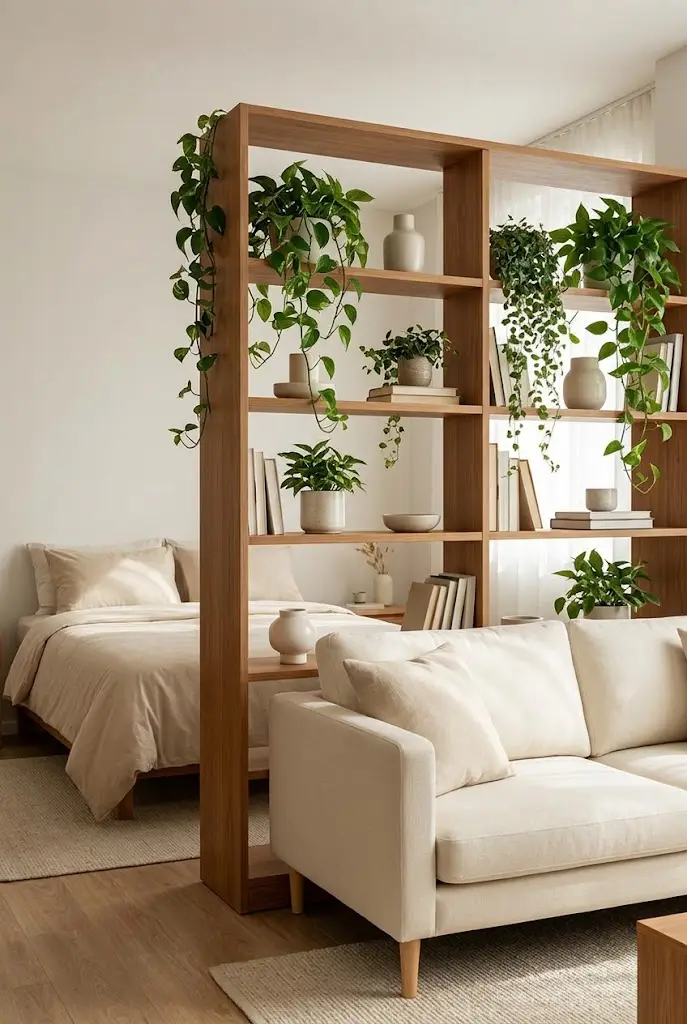
Plants can soften the straight lines of a bookshelf divider.
Place small plants, trailing greenery, and a few taller leaves throughout an open shelving unit.
The greenery creates partial privacy without producing the closed feeling of a solid partition.
Pothos, small trailing plants, and compact leafy varieties work particularly well visually, though plant choice should always match the amount of light available in the apartment.
Mix plants with books and simple ceramic pieces rather than turning every shelf into a dense display.
The result feels natural, relaxed, and very Pinterest friendly.
13. TV Shelf Divider
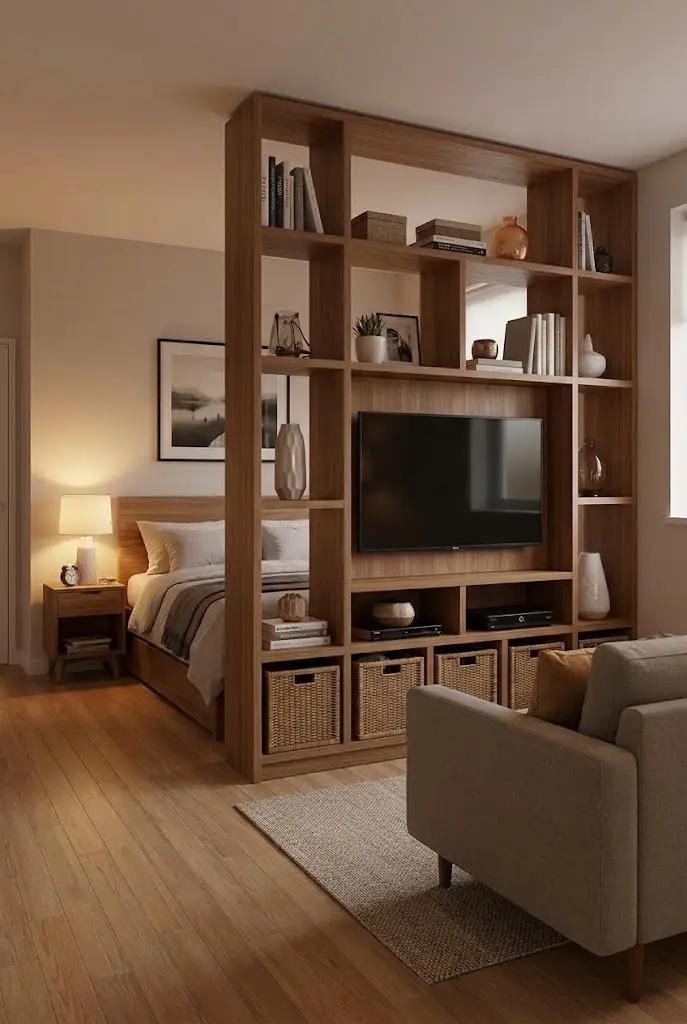
A bookshelf can help solve two problems at once when your studio lacks a natural place for the television.
Use a wide shelving unit between the bedroom and living area and position the television on the living room side.
The unit becomes an entertainment zone while creating privacy behind it.
Make sure the shelf is designed to safely support the television and manage cords carefully so both sides stay tidy.
Storage baskets below can hold remotes, cables, games, or small electronics.
This setup works particularly well in long studio apartments.
14. Dining Zone Shelf
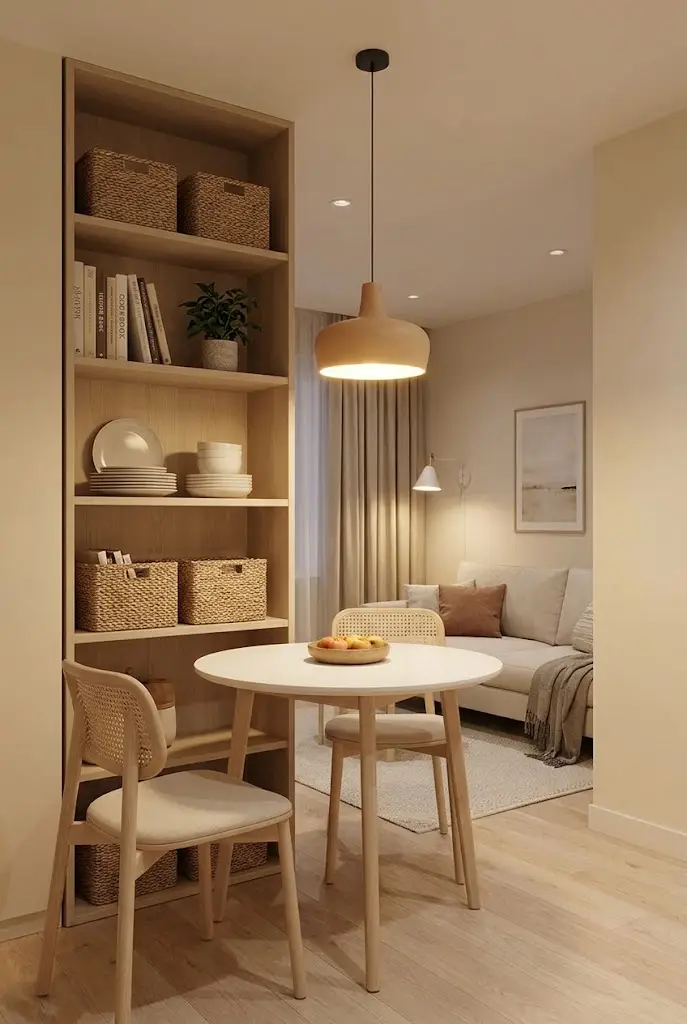
Use shelving to give a small dining table its own defined space.
Place a narrow bookshelf along one edge of the dining area.
The shelf can store dishes, glassware, cookbooks, napkins, or small baskets while also creating a visual border between dining and living zones.
A low unit is often enough.
Add a pendant style light above the table or a rug underneath it to reinforce the feeling of a separate dining spot.
Even a tiny table can feel intentional when the surrounding layout gives it a clear purpose.
15. Closet Style Divider
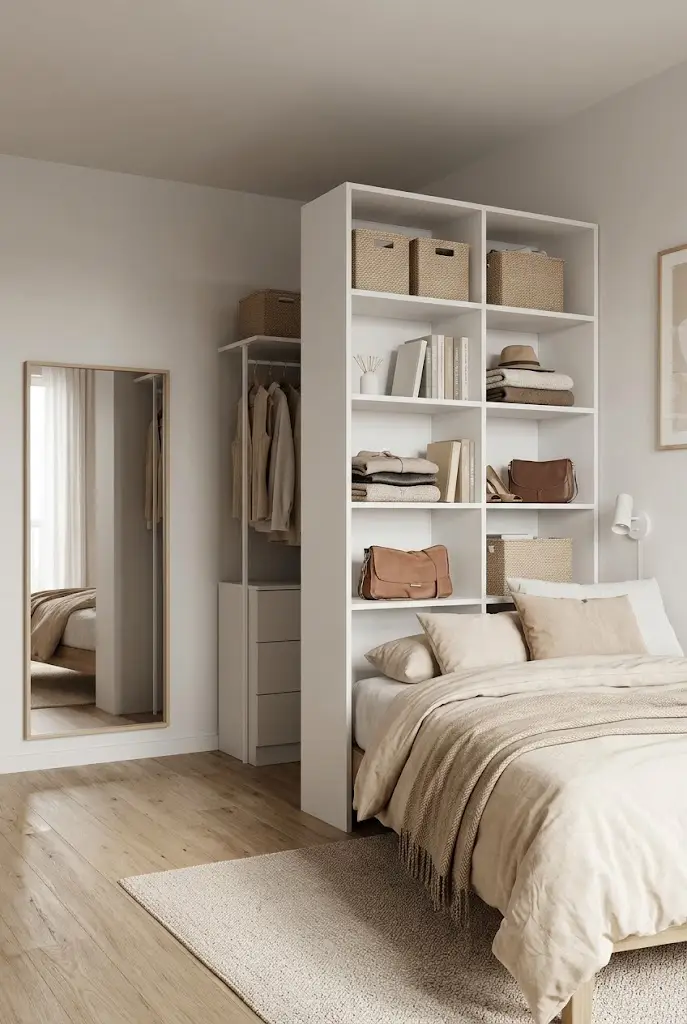
A deep bookshelf can help create a small dressing area near the bed.
Place the unit so it screens a clothing rack, mirror, or compact dresser from the rest of the apartment.
Use baskets and boxes on the shelf for accessories, folded clothing, and smaller personal items.
The result feels much calmer because clothing storage is no longer visible from every angle.
This idea can be especially useful in studios with very limited closet space.
Keep the bookshelf finish similar to nearby furniture so the divider feels integrated into the room.
16. Two Shelf Layout
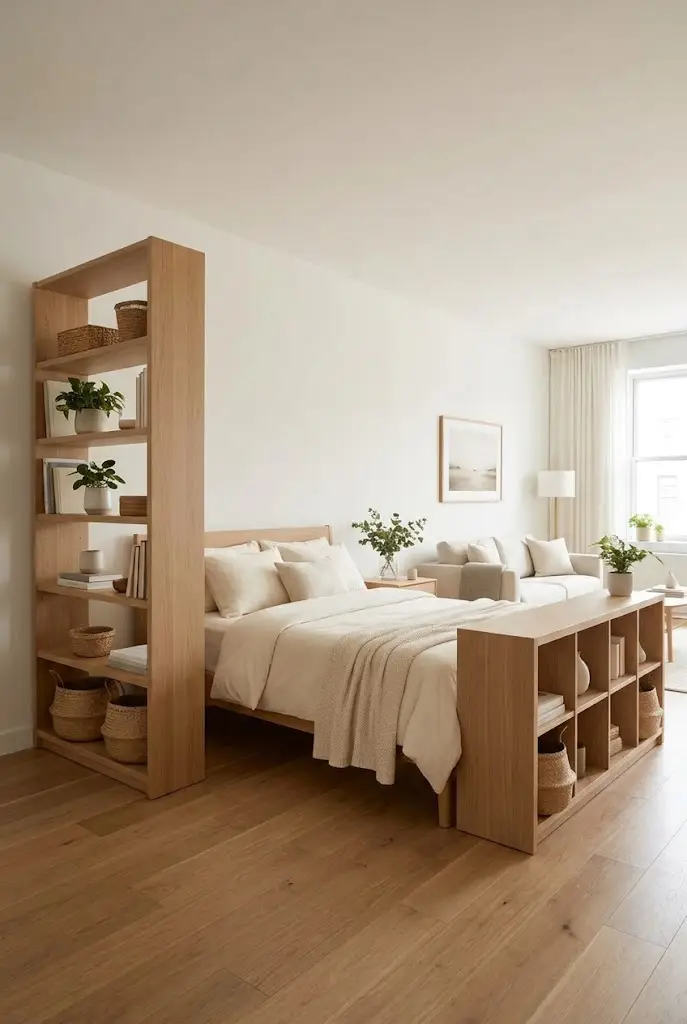
Two shelving units can create a stronger room within a room effect.
Place one shelf beside the bed and another at the foot, leaving a comfortable opening between them.
The sleeping area becomes much more defined while remaining accessible.
This works best in larger studios where there is enough room to maintain clear walking paths.
Use matching shelves to keep the setup cohesive.
You can also choose one tall shelf and one low shelf to create privacy without surrounding the bed with too much furniture.
17. Rotated Bookcase Layout
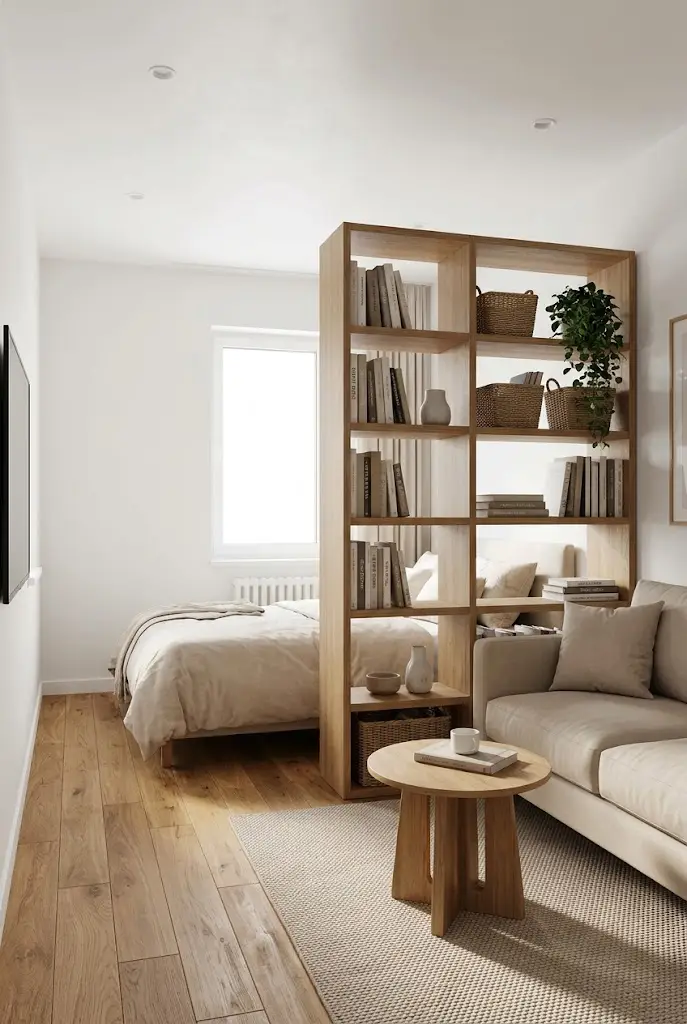
Sometimes the simplest layout change is turning a bookshelf ninety degrees.
A unit sitting flat against the wall provides storage but does very little to divide the apartment.
Rotate it so one end touches the wall and the rest extends into the room.
Suddenly, it becomes a functional partition.
I have seen this work well in studios where the furniture already looks attractive but the entire apartment still feels like one undefined space.
Before buying anything new, experimenting with the direction of furniture can reveal a much better layout.
Light First Placement
Bookshelf dividers work best when they organize a room without stealing its strongest feature: natural light.
Avoid placing a completely solid unit directly in front of the apartment’s main window.
Open back shelves are usually easier to work with because light can travel through them.
Think about how daylight moves across the space during the morning and afternoon before settling on the final position.
A divider that looks perfect at night may create a dark corner during the day.
Simple Shelf Styling
The objects on the bookshelf matter almost as much as the shelf itself.
Start with the items you genuinely need to store. Place heavier baskets, boxes, and books lower down.
Keep the middle and upper sections more open.
Mix practical storage with a few attractive pieces such as plants, ceramics, framed photos, or small lamps.
Try to leave some empty shelf space.
Visual breathing room makes an open divider feel intentional instead of cluttered.
Using similar baskets or storage boxes can also hide everyday items without creating a busy patchwork of colors.
Safe Furniture Placement
Tall shelving needs to be stable, especially when it is being used away from a wall.
Follow the manufacturer’s installation and anchoring instructions for the exact unit you choose. Tall or heavy bookcases may require appropriate anti tip hardware or another secure installation method.
Avoid placing unstable heavy objects on the highest shelves.
Frequently used items belong at a comfortable height, while heavier storage generally works better closer to the floor.
Good zoning should make a small apartment more functional without creating obstacles or safety problems.
A Better Studio Flow
The strongest studio apartment layout ideas with bookshelf dividers do more than hide a bed. They give each part of the apartment a clear purpose.
A shelf can turn one open room into a bedroom, living area, workspace, entryway, or dining zone while adding storage at the same time.
Start with the biggest problem in your current layout. It may be seeing the bed from the sofa, having no entryway, or struggling to separate work from relaxation.
Then place the bookshelf where it solves that specific problem.
You do not need to fill your apartment with partitions. One carefully positioned shelf can be enough to make a studio feel organized, comfortable, and much closer to a home with separate rooms.
Read More:
17 Studio Apartment Divider Ideas That Make One Room Feel Like Two
17 Cozy Studio Apartment Ideas to Make Your Home Feel Warm
Community
Join the conversation
Add a useful idea, ask a specific question, or share what worked in your space. Every comment is reviewed before it appears.